[SUMMARIES]
The OECD’s 15% global minimum tax in 2026 officially ends the era of 0% tax havens.
Multinationals are pivoting to “innovation hubs” that reward real economic substance.
Singapore’s 2026 Budget offers a 40% CIT rebate and new 400% AI tax deductions.
Koobiz provides expert company formation, accounting, and tax compliance to navigate this shift seamlessly.
[/SUMMARIES]
The era of routing profits through zero-tax jurisdictions is coming to an end. In 2026, the global tax landscape is shifting from traditional tax havens toward innovation-driven business hubs. As international tax rules introduce a global minimum rate, traditional offshore structures are becoming less effective. As a result, many multinational companies are moving operations to jurisdictions like Singapore, which offer tax incentives for real economic activities such as AI development and regional expansion.
To navigate this transition, businesses often rely on professional service providers such as Koobiz for company formation, accounting, and corporate banking support. This article explores the global tax changes taking effect in 2026, their impact on corporate strategy, and how Singapore’s latest Budget incentives support businesses expanding in the region.
The Breaking News: The 2026 Global Tax Reality

The global tax framework in 2026 is shaped by the OECD’s 15% global minimum tax under Pillar Two. The rules introduce top-up taxes to ensure multinational enterprises pay at least the minimum rate in each jurisdiction where they operate.
To understand this shift, it is important to review the key agreements and mechanisms that led to the implementation of this long-planned global tax reform.
Pre-2026: The Era of the Tax Haven
For decades, many jurisdictions competed by lowering corporate tax rates to attract multinational companies. Jurisdictions aggressively competed to attract corporate headquarters by slashing their statutory corporate income tax rates to zero or near-zero.
Companies would establish entities with no real employees or physical operations, purely to hold intellectual property and accumulate profits in a tax-free environment.
However, coordinated international tax reforms are gradually limiting the effectiveness of these structures. The implementation of complex tax mechanisms ensures that multinational enterprises (MNEs) pay a fair share of tax wherever they operate, fundamentally neutralizing the primary appeal of traditional tax havens. This reform represents one of the most significant changes to international tax rules in recent decades.
January 5, 2026: The OECD “Side-by-Side” Breakthrough
On January 5, 2026, the OECD finalized its highly anticipated “Side-by-Side” (SbS) package for the Pillar Two framework. Supported by more than 140 jurisdictions, the agreement confirms the implementation of the 15% global minimum tax.
The SbS package was a crucial breakthrough, as it provided administrative guidance and a safe harbor that effectively aligned the United States’ complex tax system with the global framework. Before this agreement, there was significant uncertainty regarding how US-headquartered multinationals would be treated under the global rules, specifically concerning the Income Inclusion Rule (IIR) and the Undertaxed Profits Rule (UTPR).
With this agreement reached in early 2026, countries gained clearer guidance on implementing the global minimum tax framework across major economies.
Today: The Immediate Fallout
As multinational enterprises now face top-up taxes regardless of where profits are booked, traditional zero-tax havens are losing their main advantage.
If profits are recorded in a jurisdiction with a 0% tax rate, the new rules allow the parent company’s jurisdiction—or the jurisdictions where subsidiaries operate—to apply mechanisms such as the Qualified Domestic Minimum Top-Up Tax (QDMTT) or the Income Inclusion Rule (IIR) to ensure taxation up to the 15% minimum rate.
As a result, the administrative burden of maintaining shell companies in traditional tax havens often outweighs the remaining tax advantages. Compliance costs, reputational considerations, and the likelihood of paying the 15% minimum tax somewhere within the corporate structure are reducing the effectiveness of traditional offshore tax strategies.
OECD estimates referenced in recent analyses suggest that Pillar Two could generate around US$220 billion in additional annual global tax revenue, significantly reducing profit shifting by multinational enterprises.
The Macro Impact: How Corporate Strategy is Changing
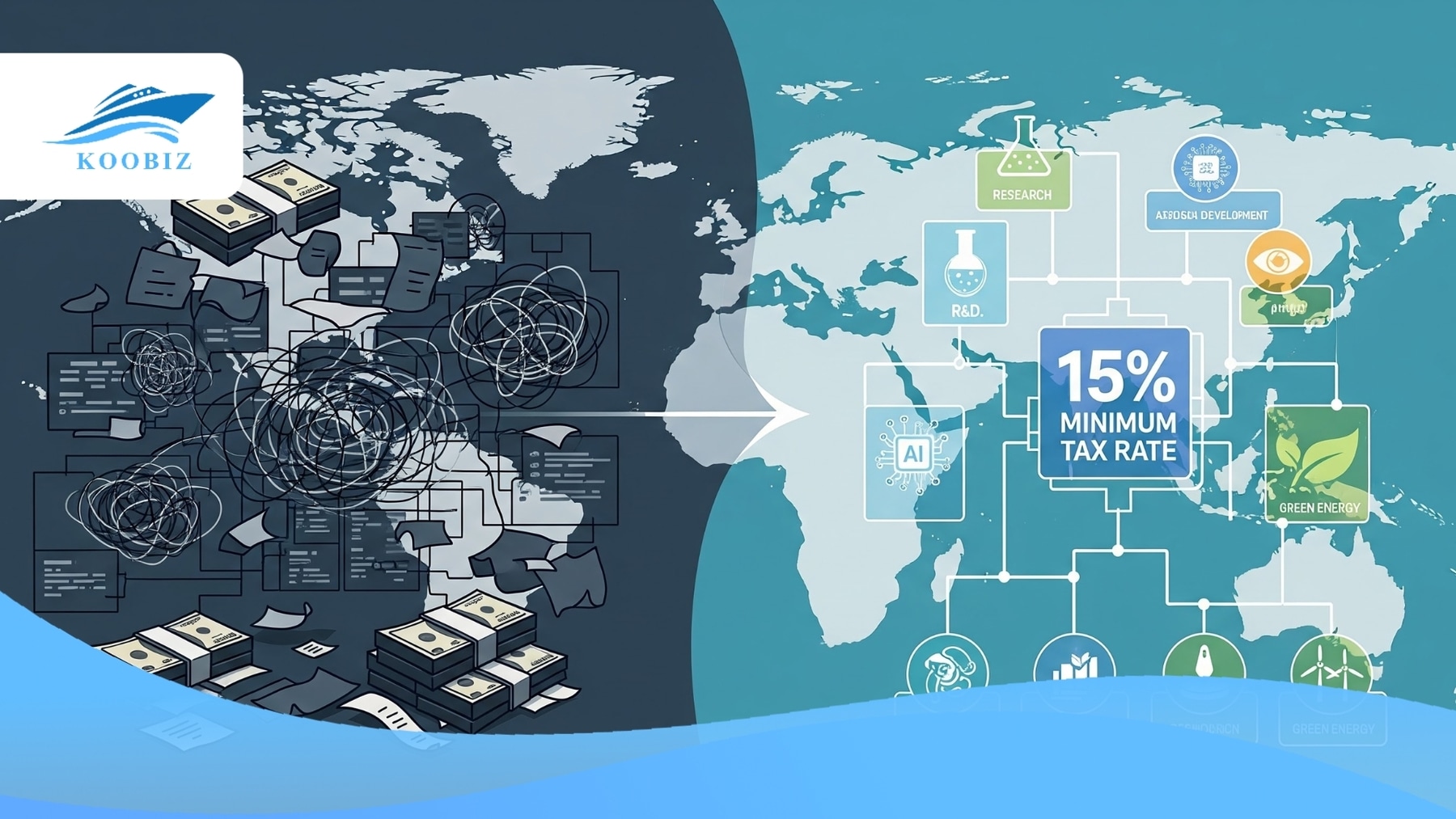
Corporate strategy is shifting from seeking zero-tax jurisdictions to prioritizing locations that offer tax incentives for real economic activities, particularly in research and development (R&D), green energy, and Artificial Intelligence (AI).
This shift is changing how corporate planners, legal teams, and Chief Financial Officers approach cross-border structuring and supply-chain planning.
Strategic Shift 1: From Paper Shells to Economic Substance
Chief Financial Officers and corporate planners are adjusting their strategies in response to the new global tax framework. The new question isn’t “Where can we pay zero tax?” but rather “Where can we get the best deductions for doing actual business?” Before 2026, corporate formation was heavily dictated by the legal and tax departments acting in isolation from the operational side of the business, often resulting in complex networks of dormant holding companies.
Today, tax strategy is increasingly aligned with operational activities. Many jurisdictions now enforce stricter economic substance requirements, requiring companies to demonstrate:
- A physical office space
- Adequate local expenditures
- Full-time employees actively managing the business
As a result, many corporations are consolidating their global structures and relocating capital and intellectual property to financial centers where they plan to hire talent, conduct research, and manage regional operations.
Strategic Shift 2: From Zero-Tax Rates to Targeted Tech Incentives
Global competition for foreign investment is evolving. Instead of lowering headline corporate tax rates, many countries are competing by offering targeted tax incentives for activities such as R&D, green energy, and Artificial Intelligence (AI).
Before 2026, some jurisdictions used very low or zero headline tax rates to attract companies primarily holding profits or intellectual property. Today, the 15% global minimum tax acts as a baseline, shifting competition for foreign direct investment toward targeted deductions, incentives, and grants.
Innovation-focused jurisdictions are creating frameworks where companies can still reduce their effective tax rate legally by investing in activities that support the local economy. This includes:
- Accelerated depreciation on high-tech equipment
- Super-deductions for employee training in advanced digital skills
- Cash rebates or grants for patent development
By encouraging innovation-driven investment rather than passive profit holding, these jurisdictions aim to build more resilient economies while remaining attractive to multinational corporations.
Recent CEO surveys indicate that more than 70% of multinational companies are adjusting supply chains and operations toward jurisdictions offering incentives linked to real economic substance.
Pillar Two Singapore 2026: The February Budget Spotlight
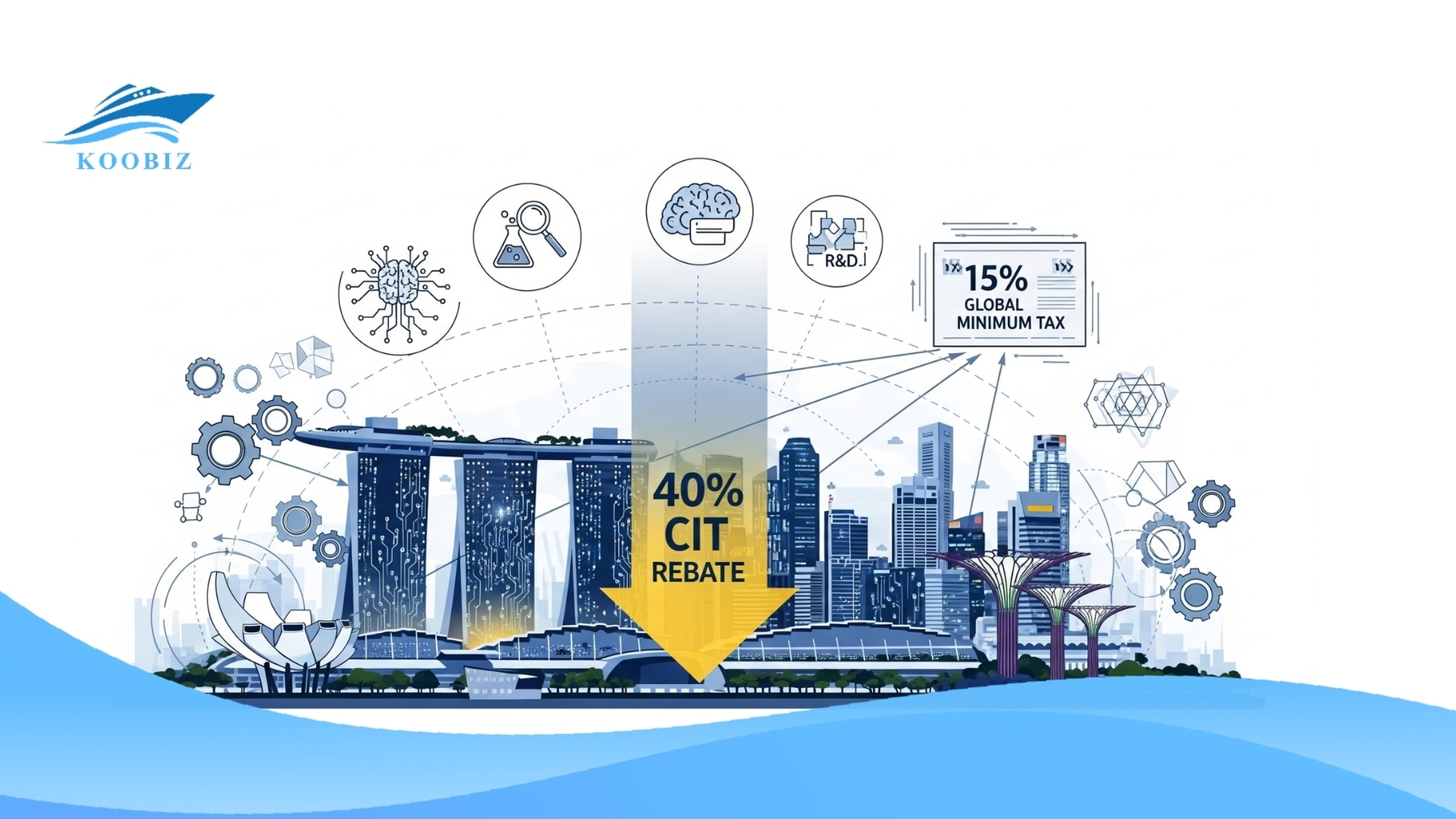
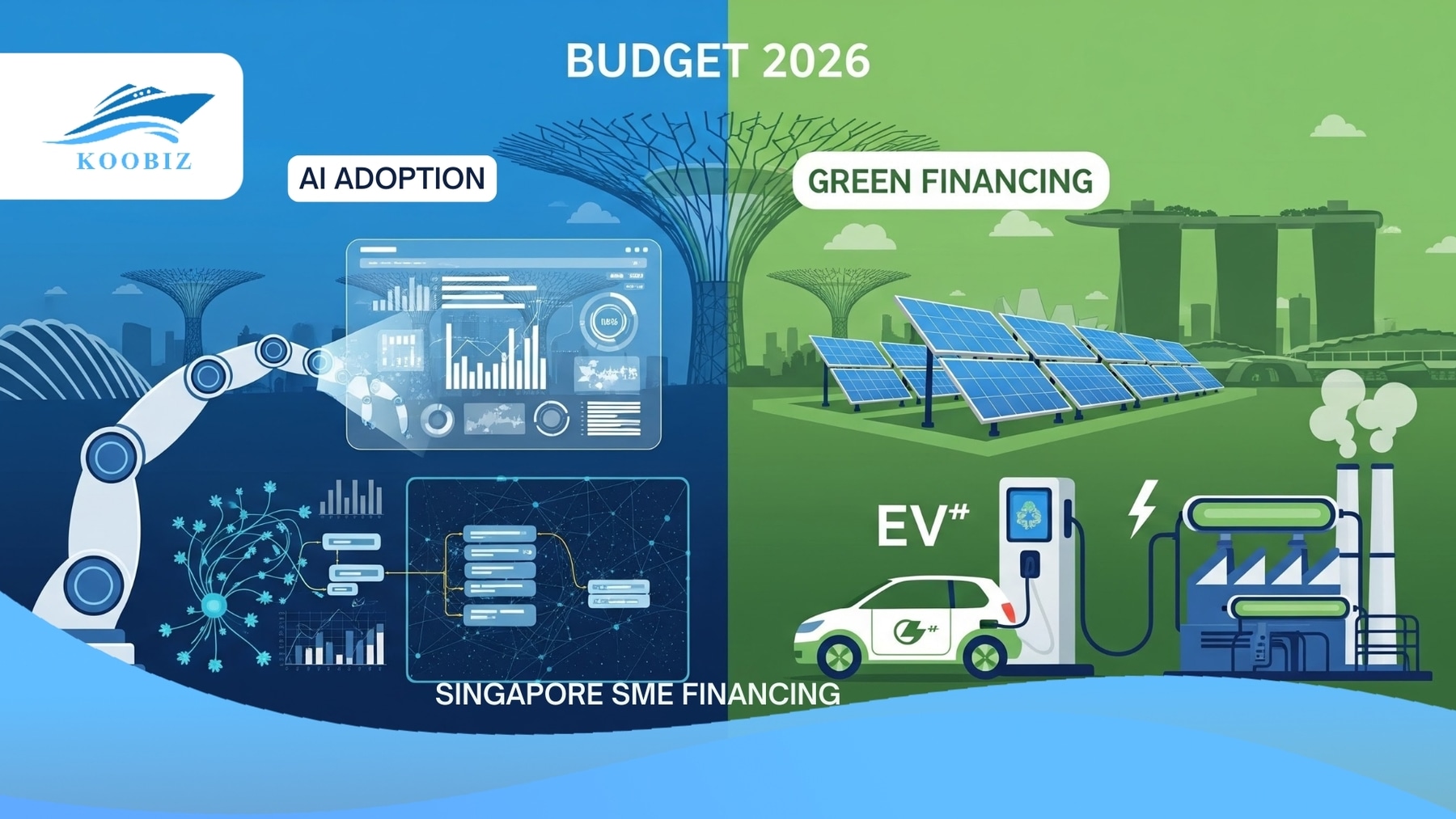
Singapore’s February 2026 Budget outlines how the country will implement the 15% global minimum tax while introducing a 40% corporate tax rebate and additional incentives supporting AI development and international expansion.
This fiscal policy provides a practical example of how modern innovation hubs design tax incentives to attract global businesses.
The Event
To see this shift in real-time, look at the Singapore FY2026 Budget delivered on February 12 by Prime Minister and Finance Minister Lawrence Wong. The budget was closely watched by the international business community, as it outlined Singapore’s response to the OECD Pillar Two framework.
While confirming the implementation of the Domestic Top-up Tax (DTT) and the Income Inclusion Rule (IIR) to ensure multinational enterprises meet the 15% effective tax rate, the government also introduced a series of targeted financial incentives. This approach signals to global investors that Singapore intends to comply with international tax rules while maintaining a competitive and business-friendly environment.
The Strategy
Rather than attempting to compete below the global 15% minimum tax rate, Singapore introduced several measures aimed at providing short-term operational relief for businesses:
- A 40% Corporate Income Tax (CIT) Rebate (capped at SG$30,000) for the Year of Assessment 2026 to help businesses manage rising costs.
- A minimum cash grant of SG$1,500 for active companies that employed at least one local worker in the previous year (CY 2025).
These measures aim to help companies manage the effects of global inflation, rising wage pressures, and supply chain disruptions. By focusing on operational relief rather than undermining the minimum tax rate, Singapore ensures that businesses operating within its borders maintain a healthy cash flow.
The “Innovation Hub” Push
In addition, Singapore is expanding incentives that support innovation and business development. They expanded several key programs to reward innovation:
- Enterprise Innovation Scheme (EIS): Allowing companies to claim a 400% tax deduction on qualifying AI-related expenditures, capped at SG$50,000 per Year of Assessment (YA) for YA 2027 and YA 2028, in addition to the existing 400% deductions available for broader R&D activities.
- Double Tax Deduction for Internationalisation (DTDi): Raising the automatic claim cap for this 200% tax deduction to SG$400,000, encouraging companies based in Singapore to expand internationally by covering costs for overseas market research, business missions, and trade fairs.
Business surveys in early 2026 indicate that many multinational companies are increasing their operational presence in jurisdictions such as Singapore that combine the 15% global minimum tax with R&D and AI incentives.
Ready to position your company in Singapore’s 2026 innovation hub environment? Koobiz can handle formation, banking, and EIS-compliant accounting end-to-end.
Singapore Company Formation Post-Pillar Two: Adapting with Koobiz
Adapting corporate strategy may involve reviewing existing offshore structures, aligning tax benefits with real operations, and leveraging Koobiz’s company formation and accounting services to maximize compliance and incentives.
Implementing this transition requires specialized expertise, accurate financial tracking, and familiarity with local regulatory frameworks.
The Compliance Challenge & Solution
Transitioning to an innovation hub means tax benefits are now tied to strict financial reporting. Companies must maintain detailed financial records distinguishing operational expenses from qualifying innovation expenditures in order to claim incentives such as the 400% AI deduction or the 40% CIT rebate. Incorrect expense classification or insufficient documentation may result in the loss of tax incentives or regulatory review.
This is where Koobiz steps in. By leveraging our expert accounting and bookkeeping services, your business ensures every qualifying expense is meticulously tracked. The professional team at Koobiz understands the exact nuances of the Enterprise Innovation Scheme, the DTDi, and standard corporate tax rebates. Koobiz helps businesses implement bookkeeping systems that accurately categorize AI investments, R&D expenses, and international expansion costs while maintaining compliance with Singapore tax regulations.
The Next Step: Seamless Company Formation
Businesses currently relying on traditional offshore structures may consider restructuring to align with the new global tax framework. Koobiz provides company formation services that support businesses establishing operations in innovation-focused jurisdictions such as Singapore, setting up your entities with the right foundation to thrive in the 2026 global economy.
Establishing or restructuring a corporate entity across jurisdictions can be complex, but service providers like Koobiz assist businesses throughout the process. We handle the end-to-end setup, including:
- Registering your new company with the Accounting and Corporate Regulatory Authority (ACRA)
- Securing the necessary corporate secretary services
- Providing registered office addresses
- Assisting with the process of opening corporate bank accounts with international financial institutions
By partnering with Koobiz, you are not just setting up a company; you are architecting a resilient, compliant, and highly optimized global business structure ready to capitalize on the future of international trade.