
Thực hiện free test
[SUMMARIES]
The OECD’s 15% global minimum tax in 2026 officially ends the era of 0% tax havens.
Multinationals are pivoting to “innovation hubs” that reward real economic substance.
Singapore’s 2026 Budget offers a 40% CIT rebate and new 400% AI tax deductions.
Koobiz provides expert company formation, accounting, and tax compliance to navigate this shift seamlessly.
[/SUMMARIES]
The era of routing profits through zero-tax jurisdictions is coming to an end. In 2026, the global tax landscape is shifting from traditional tax havens toward innovation-driven business hubs. As international tax rules introduce a global minimum rate, traditional offshore structures are becoming less effective. As a result, many multinational companies are moving operations to jurisdictions like Singapore, which offer tax incentives for real economic activities such as AI development and regional expansion.
To navigate this transition, businesses often rely on professional service providers such as Koobiz for company formation, accounting, and corporate banking support. This article explores the global tax changes taking effect in 2026, their impact on corporate strategy, and how Singapore’s latest Budget incentives support businesses expanding in the region.
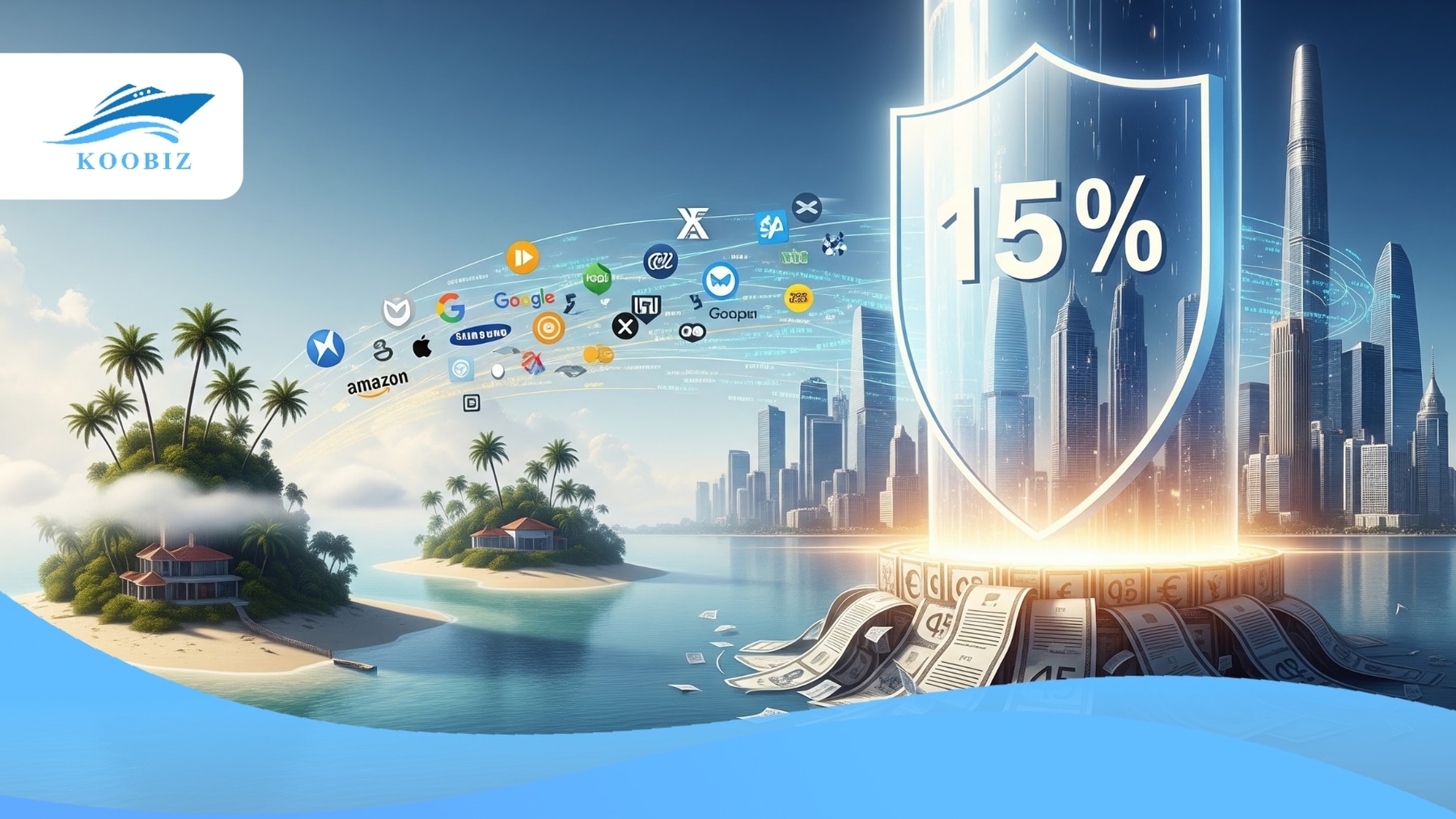
The global tax framework in 2026 is shaped by the OECD’s 15% global minimum tax under Pillar Two. The rules introduce top-up taxes to ensure multinational enterprises pay at least the minimum rate in each jurisdiction where they operate.
To understand this shift, it is important to review the key agreements and mechanisms that led to the implementation of this long-planned global tax reform.
For decades, many jurisdictions competed by lowering corporate tax rates to attract multinational companies. Jurisdictions aggressively competed to attract corporate headquarters by slashing their statutory corporate income tax rates to zero or near-zero.
Companies would establish entities with no real employees or physical operations, purely to hold intellectual property and accumulate profits in a tax-free environment.
However, coordinated international tax reforms are gradually limiting the effectiveness of these structures. The implementation of complex tax mechanisms ensures that multinational enterprises (MNEs) pay a fair share of tax wherever they operate, fundamentally neutralizing the primary appeal of traditional tax havens. This reform represents one of the most significant changes to international tax rules in recent decades.
On January 5, 2026, the OECD finalized its highly anticipated “Side-by-Side” (SbS) package for the Pillar Two framework. Supported by more than 140 jurisdictions, the agreement confirms the implementation of the 15% global minimum tax.
The SbS package was a crucial breakthrough, as it provided administrative guidance and a safe harbor that effectively aligned the United States’ complex tax system with the global framework. Before this agreement, there was significant uncertainty regarding how US-headquartered multinationals would be treated under the global rules, specifically concerning the Income Inclusion Rule (IIR) and the Undertaxed Profits Rule (UTPR).
With this agreement reached in early 2026, countries gained clearer guidance on implementing the global minimum tax framework across major economies.
As multinational enterprises now face top-up taxes regardless of where profits are booked, traditional zero-tax havens are losing their main advantage.
If profits are recorded in a jurisdiction with a 0% tax rate, the new rules allow the parent company’s jurisdiction—or the jurisdictions where subsidiaries operate—to apply mechanisms such as the Qualified Domestic Minimum Top-Up Tax (QDMTT) or the Income Inclusion Rule (IIR) to ensure taxation up to the 15% minimum rate.
As a result, the administrative burden of maintaining shell companies in traditional tax havens often outweighs the remaining tax advantages. Compliance costs, reputational considerations, and the likelihood of paying the 15% minimum tax somewhere within the corporate structure are reducing the effectiveness of traditional offshore tax strategies.
OECD estimates referenced in recent analyses suggest that Pillar Two could generate around US$220 billion in additional annual global tax revenue, significantly reducing profit shifting by multinational enterprises.
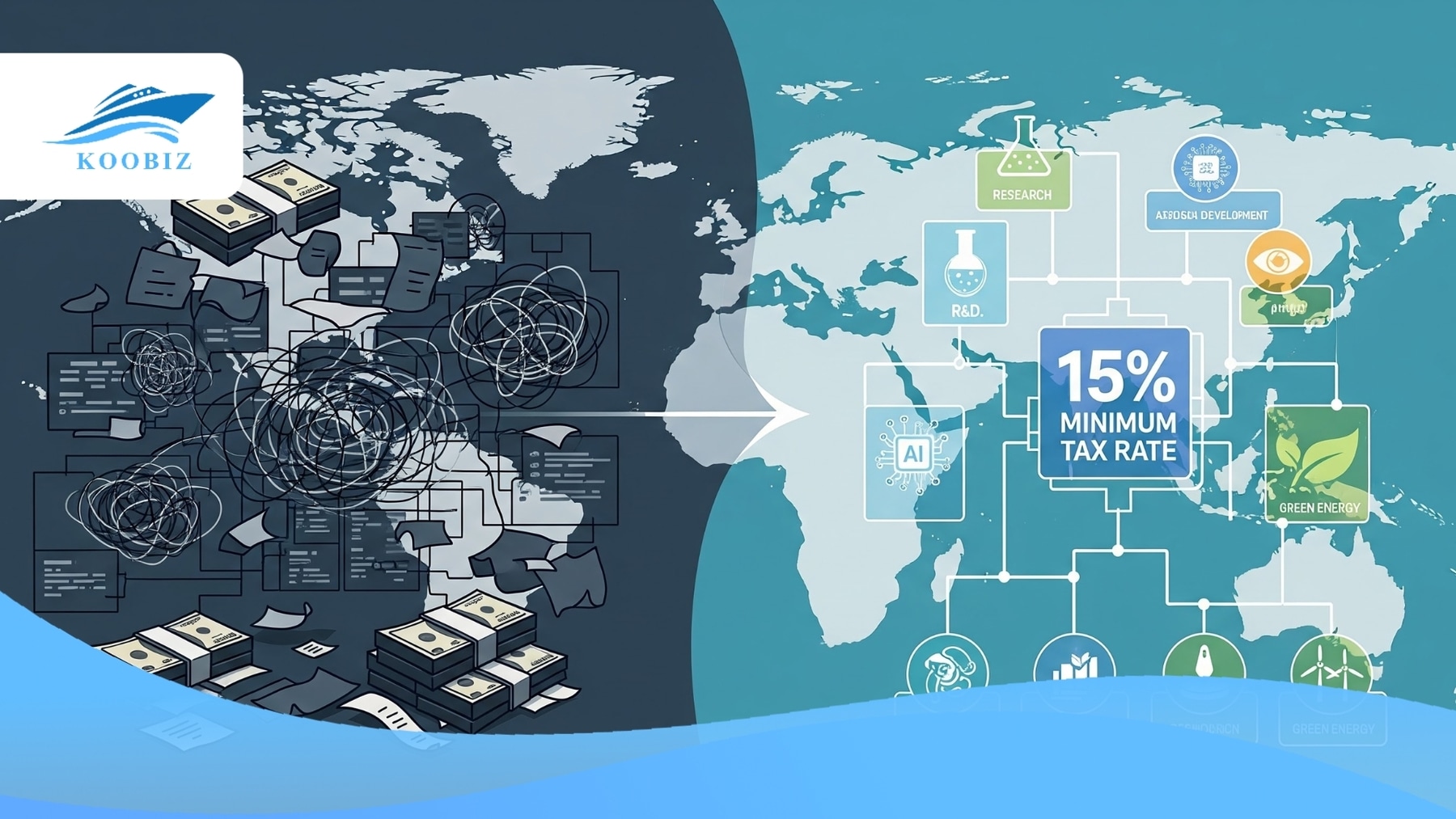
Corporate strategy is shifting from seeking zero-tax jurisdictions to prioritizing locations that offer tax incentives for real economic activities, particularly in research and development (R&D), green energy, and Artificial Intelligence (AI).
This shift is changing how corporate planners, legal teams, and Chief Financial Officers approach cross-border structuring and supply-chain planning.
Chief Financial Officers and corporate planners are adjusting their strategies in response to the new global tax framework. The new question isn’t “Where can we pay zero tax?” but rather “Where can we get the best deductions for doing actual business?” Before 2026, corporate formation was heavily dictated by the legal and tax departments acting in isolation from the operational side of the business, often resulting in complex networks of dormant holding companies.
Today, tax strategy is increasingly aligned with operational activities. Many jurisdictions now enforce stricter economic substance requirements, requiring companies to demonstrate:
As a result, many corporations are consolidating their global structures and relocating capital and intellectual property to financial centers where they plan to hire talent, conduct research, and manage regional operations.
Global competition for foreign investment is evolving. Instead of lowering headline corporate tax rates, many countries are competing by offering targeted tax incentives for activities such as R&D, green energy, and Artificial Intelligence (AI).
Before 2026, some jurisdictions used very low or zero headline tax rates to attract companies primarily holding profits or intellectual property. Today, the 15% global minimum tax acts as a baseline, shifting competition for foreign direct investment toward targeted deductions, incentives, and grants.
Innovation-focused jurisdictions are creating frameworks where companies can still reduce their effective tax rate legally by investing in activities that support the local economy. This includes:
By encouraging innovation-driven investment rather than passive profit holding, these jurisdictions aim to build more resilient economies while remaining attractive to multinational corporations.
Recent CEO surveys indicate that more than 70% of multinational companies are adjusting supply chains and operations toward jurisdictions offering incentives linked to real economic substance.
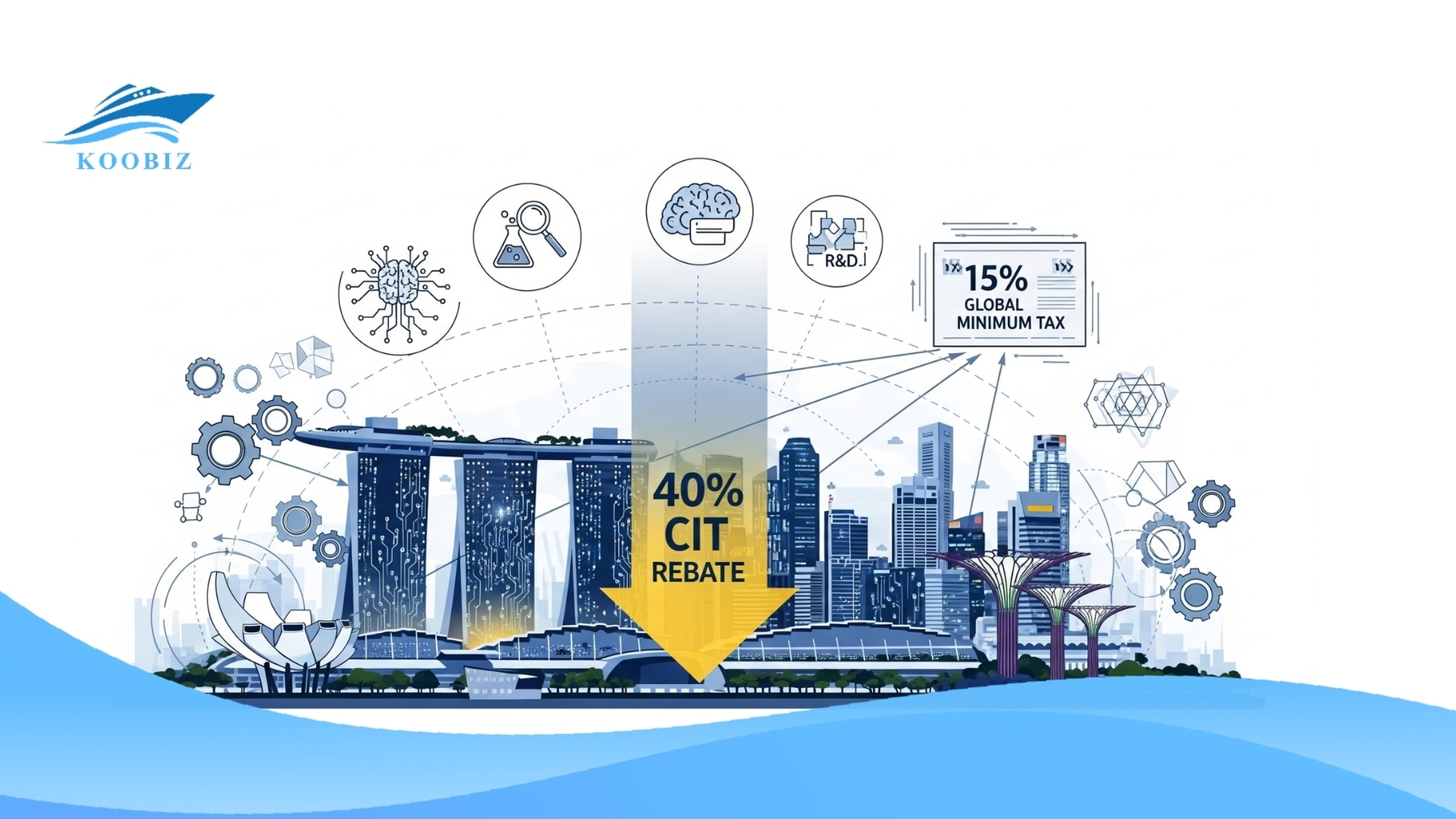
Singapore’s February 2026 Budget outlines how the country will implement the 15% global minimum tax while introducing a 40% corporate tax rebate and additional incentives supporting AI development and international expansion.
This fiscal policy provides a practical example of how modern innovation hubs design tax incentives to attract global businesses.
To see this shift in real-time, look at the Singapore FY2026 Budget delivered on February 12 by Prime Minister and Finance Minister Lawrence Wong. The budget was closely watched by the international business community, as it outlined Singapore’s response to the OECD Pillar Two framework.
While confirming the implementation of the Domestic Top-up Tax (DTT) and the Income Inclusion Rule (IIR) to ensure multinational enterprises meet the 15% effective tax rate, the government also introduced a series of targeted financial incentives. This approach signals to global investors that Singapore intends to comply with international tax rules while maintaining a competitive and business-friendly environment.
Rather than attempting to compete below the global 15% minimum tax rate, Singapore introduced several measures aimed at providing short-term operational relief for businesses:
These measures aim to help companies manage the effects of global inflation, rising wage pressures, and supply chain disruptions. By focusing on operational relief rather than undermining the minimum tax rate, Singapore ensures that businesses operating within its borders maintain a healthy cash flow.
In addition, Singapore is expanding incentives that support innovation and business development. They expanded several key programs to reward innovation:
Business surveys in early 2026 indicate that many multinational companies are increasing their operational presence in jurisdictions such as Singapore that combine the 15% global minimum tax with R&D and AI incentives.
Ready to position your company in Singapore’s 2026 innovation hub environment? Koobiz can handle formation, banking, and EIS-compliant accounting end-to-end.
Adapting corporate strategy may involve reviewing existing offshore structures, aligning tax benefits with real operations, and leveraging Koobiz’s company formation and accounting services to maximize compliance and incentives.
Implementing this transition requires specialized expertise, accurate financial tracking, and familiarity with local regulatory frameworks.
Transitioning to an innovation hub means tax benefits are now tied to strict financial reporting. Companies must maintain detailed financial records distinguishing operational expenses from qualifying innovation expenditures in order to claim incentives such as the 400% AI deduction or the 40% CIT rebate. Incorrect expense classification or insufficient documentation may result in the loss of tax incentives or regulatory review.
This is where Koobiz steps in. By leveraging our expert accounting and bookkeeping services, your business ensures every qualifying expense is meticulously tracked. The professional team at Koobiz understands the exact nuances of the Enterprise Innovation Scheme, the DTDi, and standard corporate tax rebates. Koobiz helps businesses implement bookkeeping systems that accurately categorize AI investments, R&D expenses, and international expansion costs while maintaining compliance with Singapore tax regulations.
Businesses currently relying on traditional offshore structures may consider restructuring to align with the new global tax framework. Koobiz provides company formation services that support businesses establishing operations in innovation-focused jurisdictions such as Singapore, setting up your entities with the right foundation to thrive in the 2026 global economy.
Establishing or restructuring a corporate entity across jurisdictions can be complex, but service providers like Koobiz assist businesses throughout the process. We handle the end-to-end setup, including:
By partnering with Koobiz, you are not just setting up a company; you are architecting a resilient, compliant, and highly optimized global business structure ready to capitalize on the future of international trade.
[SUMMARIES]
Singapore’s 2026 framework requires offer, acceptance, consideration, and legal intent for a contract to be enforceable.
Agreements are formed through written, digital, or conduct-based channels, commonly involving NDAs and shareholders’ agreements.
Vitiating factors like misrepresentation or duress can render these contracts void or unenforceable.
Breach remedies, such as damages or injunctions, are resolved through specialized forums like SICC, SIAC, or SIMC.
Ultimately, bespoke legal drafting is the primary strategy for ensuring robust business protection and risk management.
[/SUMMARIES]
In the rapidly evolving business landscape of 2026, Singapore remains a global gold standard for commercial legal frameworks. For business owners and investors, a solid grasp of Contract Law in Singapore is not just about compliance – it is a strategic asset that ensures certainty, manages risk, and protects long-term interests. Whether you are a tech startup, a growing SME, or an international corporation, this guide provides the most up-to-date insights into how contracts work in the Lion City.
At its core, Contract Law in Singapore is the body of rules governing agreements between parties. Rooted in English Common Law, Singapore’s system has evolved into a modern, transparent, and highly predictable framework.
Unlike some jurisdictions where bureaucracy can be stifling, Singapore Law emphasizes commercial certainty. It is designed to ensure that if you make a valid promise in a business context, the law will hold you to it or provide a remedy if the promise is broken.
In 2026, this framework was further integrated with digital economy standards (such as the EU-Singapore Digital Trade Agreement), ensuring that even the most complex cross-border digital transactions are governed by clear, enforceable principles. For businesses, understanding this law means knowing that your “handshake” (whether physical or digital) is backed by a world-class judicial system, including the Singapore International Commercial Court (SICC).
For a contract to be legally binding and enforceable in Singapore, four legal elements must be present: offer, acceptance, consideration, and intention to create legal relations. In 2026, these elements form the legal foundation of every business contract, whether executed via traditional paper, email, or blockchain-based smart contracts.
An offer is a definite proposal to enter into a contract on specific terms, made with the intention that it will become legally binding upon acceptance.
Core legal rules:
The offer must be sufficiently clear and complete. Under Singapore law, advertisements, catalogues, and website price lists are generally treated as invitations to treat rather than binding offers. An offer may be withdrawn before acceptance, lapse after a reasonable time, or be terminated by a counter-offer.
Business risk:
If commercial communications such as quotations or proposals are not clearly labelled as non-binding, a business may unintentionally create a binding offer that can be accepted at any time.
Acceptance is an unconditional and final agreement to the exact terms of the offer.
Core legal rules:
Singapore applies the Mirror Image Rule, meaning that acceptance must correspond precisely with the offer. Any variation constitutes a counter-offer, which terminates the original offer. As a general rule, acceptance only takes effect when it is communicated to the offeror. Electronic and digital forms of acceptance are recognised under Singapore law.
Business risk:
Responses that introduce conditions or modifications may prevent a contract from being formed, even where the parties believe they have reached agreement.
Consideration refers to the value exchanged between the parties in return for their contractual promises.
Core legal rules:
The law requires consideration to be legally sufficient but not commercially adequate. Courts will not normally assess whether the exchange represents a fair market price. Acts performed before a promise is made (past consideration) are generally not valid consideration for that promise.
Business risk:
Promises made out of goodwill, without any exchange of value, may be unenforceable. Businesses should ensure that every contractual obligation is supported by clearly defined consideration, even if only a nominal amount.
This element concerns whether the parties intended their agreement to have legal consequences.
Core legal rules:
In commercial transactions, Singapore courts strongly presume that parties intend to create legal relations. This presumption can be rebutted by clear wording, such as the use of “subject to contract” during negotiations.
Business risk:
Without careful drafting, parties may become legally bound at a preliminary stage, or conversely fail to create a binding contract when they intended to do so.

In Singapore’s modern business environment, contracts may be formed through several practical channels:
Understanding the main types of contracts commonly used in Singapore is essential for operating effectively in the local business environment. Each type of agreement serves a specific legal and commercial function in allocating risk, protecting assets, and regulating professional relationships.
Non-Disclosure Agreements (NDAs) are used to protect confidential and proprietary information shared during business discussions, negotiations, or collaborations.
Founders’ Agreements regulate the legal and commercial relationship between business founders at the early stages of a company’s formation.
Employment Contracts establish the legal relationship between employers and employees and must comply with applicable employment legislation.
Service and Vendor Agreements govern the provision of services or the supply of goods between commercial parties.
Shareholders’ Agreements provide contractual protection beyond what is contained in a company’s Constitution.

Even if a contract is signed, it may be invalid if its legal foundation is defective. Under Singapore law, such defects are known as vitiating factors. They may render a contract void (no legal effect from the outset) or voidable (capable of being rescinded by the innocent party). Common situations include:
A contract may be set aside if a party was induced to enter into it by a false statement of fact. This includes fraudulent, negligent, and innocent misrepresentation.Example: A supplier states that its software is certified for financial institutions when it is not, and the buyer signs based on that claim.
Where one party applies illegitimate commercial pressure, leaving the other with no real alternative but to agree, the contract or variation may be invalid.Example: A contractor threatens to stop work midway through a project unless the client agrees to pay a higher price.
Only fundamental mistakes affecting the substance of the agreement may invalidate a contract.Example: An online system lists industrial machinery at S$1 instead of S$100,000 due to a system error, and the buyer knows it is clearly a mistake but proceeds to order.
A contract may be unenforceable if it is extremely one-sided and results from the exploitation of a serious imbalance of bargaining power.Example: A large corporation imposes complex and harsh penalty clauses on a small startup that has no legal advice and no real ability to negotiate.
Contracts involving unlawful conduct or unreasonable restraints on trade will not be enforced.Example: A non-compete clause prevents a former employee from working in the same industry anywhere in the world for 10 years.
When a party does not perform its contractual obligations, a breach of contract occurs. Singapore law focuses on restoring the innocent party to the position it would have been in if the contract had been properly performed.

Singapore is widely recognised as a leading centre for commercial dispute resolution. Businesses may choose between three principal mechanisms depending on the nature of the dispute, the contractual arrangements between the parties, and their commercial objectives.
| Feature | Litigation | Arbitration | Mediation |
|---|---|---|---|
| Time | No fixed timeframe; varies by case complexity | ~13.8 months on average | Usually resolved within 8 weeks |
| Cost | Court filing fees + legal fees | Institutional arbitration fees | Mediation service fees |
| Confidentiality | Public proceedings | Private and confidential | Private and confidential |
Litigation involves resolving disputes through the Singapore Courts. For complex international commercial disputes, the Singapore International Commercial Court provides a specialised forum with both local and international judges. This mechanism results in a final and legally binding court judgment and is most suitable where authoritative legal interpretation or public precedent is required. Singapore courts have implemented electronic filing and digital case management systems to streamline procedural administration.
Arbitration is commonly selected for international and high-value commercial contracts and is frequently administered by the Singapore International Arbitration Centre. Disputes are determined by independent arbitrators rather than judges, and proceedings are conducted on a private and confidential basis. A key advantage of arbitration is that arbitral awards are enforceable in more than 160 countries under the New York Convention, making this mechanism particularly appropriate for cross-border transactions.
Mediation involves negotiated settlement with the assistance of a neutral mediator, typically facilitated by the Singapore International Mediation Centre. This process is generally faster and more cost-effective than litigation or arbitration and allows parties to adopt flexible commercial solutions beyond monetary compensation, such as revising contractual terms. Mediation is especially suitable where the parties wish to preserve long-term business relationships.

Professional legal consultation ensures full compliance with regulations
In 2026, many businesses rely on AI-generated or publicly available contract templates. While convenient, this approach creates significant legal risk under Singapore law.
Standard templates are problematic because:
For transactions involving high value, regulatory exposure, or long-term commitments, professional legal review is often necessary to ensure enforceability and risk control.
Effective contract management is essential for operating safely under Singapore law. Koobiz provides practical contract support tailored to commercial needs.
Koobiz assists businesses through:
Protect your business today. Contact Koobiz to ensure your legal foundations are as strong as your business vision.
[SUMMARIES]
Public Liability Insurance (PLI) protects Singapore businesses against third-party injury and property damage claims arising from daily operations.
It covers compensation, legal defence, and settlement costs, but excludes employee injuries, which fall under WICA.
PLI is especially important for SMEs, retailers, F&B outlets, and on-site service providers.
Many landlords and contracts require minimum coverage, commonly S$500,000 or S$1 million.
Choosing the right PLI policy helps businesses manage financial risk while meeting contractual and operational requirements.
[/SUMMARIES]
Public Liability Insurance in Singapore protects businesses against third-party injury and property damage claims arising from daily operations. It is essential for SMEs and tenants who deal with customers or operate in physical locations. With proper coverage, businesses can meet landlord and contract requirements while reducing financial risk from unexpected incidents.
Public Liability Insurance (PLI) protects your business against legal and compensation claims from third parties who suffer injury or property damage as a result of your business activities.
It applies when your company is held legally responsible for harm caused to people outside your organisation, whether at your premises, at a client’s site, or during business operations and events.
In Singapore, PLI is essential for businesses that deal with the public, operate physical locations, or provide on-site services. It typically covers:
For example, if a customer is injured on your premises or your employee damages a client’s property while working on-site, PLI helps cover the resulting financial losses.
Although PLI is not always legally required in Singapore, many landlords, clients, and government contracts require businesses to hold this insurance before operating or starting a project.

In Singapore, a standard Public Liability Insurance (PLI) policy provides financial protection against third-party claims arising from your business activities. Coverage generally falls into two key areas: bodily injury and property damage, and legal defence and settlement costs.
This coverage applies when third parties (excluding employees) suffer injury or property damage due to your business operations. It typically covers medical expenses, compensation payments, and the repair or replacement of damaged property.
Common examples include customers being injured on your premises or contractors accidentally damaging a client’s property while working on-site.
PLI also covers the legal costs of defending your business against third-party claims, including lawyer fees, court expenses, and settlement or court-awarded damages.
Even if a claim is disputed or unfounded, legal defence can be costly. PLI helps manage these expenses within your policy limits, reducing financial exposure and allowing you to focus on business operations.

While Public Liability Insurance (PLI) provides broad protection against third-party claims, it is not a catch-all policy. Certain risks are excluded because they are better covered by other types of insurance.
The most significant exclusion under a PLI policy is injury or illness suffered by your own employees. In Singapore, such claims are governed by the Work Injury Compensation Act (WICA), which is mandatory for most employers.
Most standard PLI policies also exclude:

While any business that interacts with the public faces liability risks, certain industries in Singapore have higher exposure due to strict regulations, high foot traffic, and on-site operations.
Retailers are particularly exposed to slip-and-fall incidents. In Singapore’s busy malls, even minor hazards can result in legal claims.
Common risk scenarios include:
Landlord requirement:
Most commercial landlords (such as CapitaLand and Mapletree) require tenants to maintain a minimum level of PLI coverage before handing over the premises.
Contractors working at client premises are responsible for accidental property damage and third-party injuries arising from their work.
Key risks include:
Contractual necessity:
Management corporations (MCST) commonly deny site access to contractors who cannot provide a valid Certificate of Insurance (COI).
In addition to physical accidents, F&B operators face health-related liability risks.
Food poisoning coverage:Often required to meet Singapore Food Agency (SFA) licensing conditions, this extension covers claims from customers who fall ill after consuming contaminated food.
Common claims include:
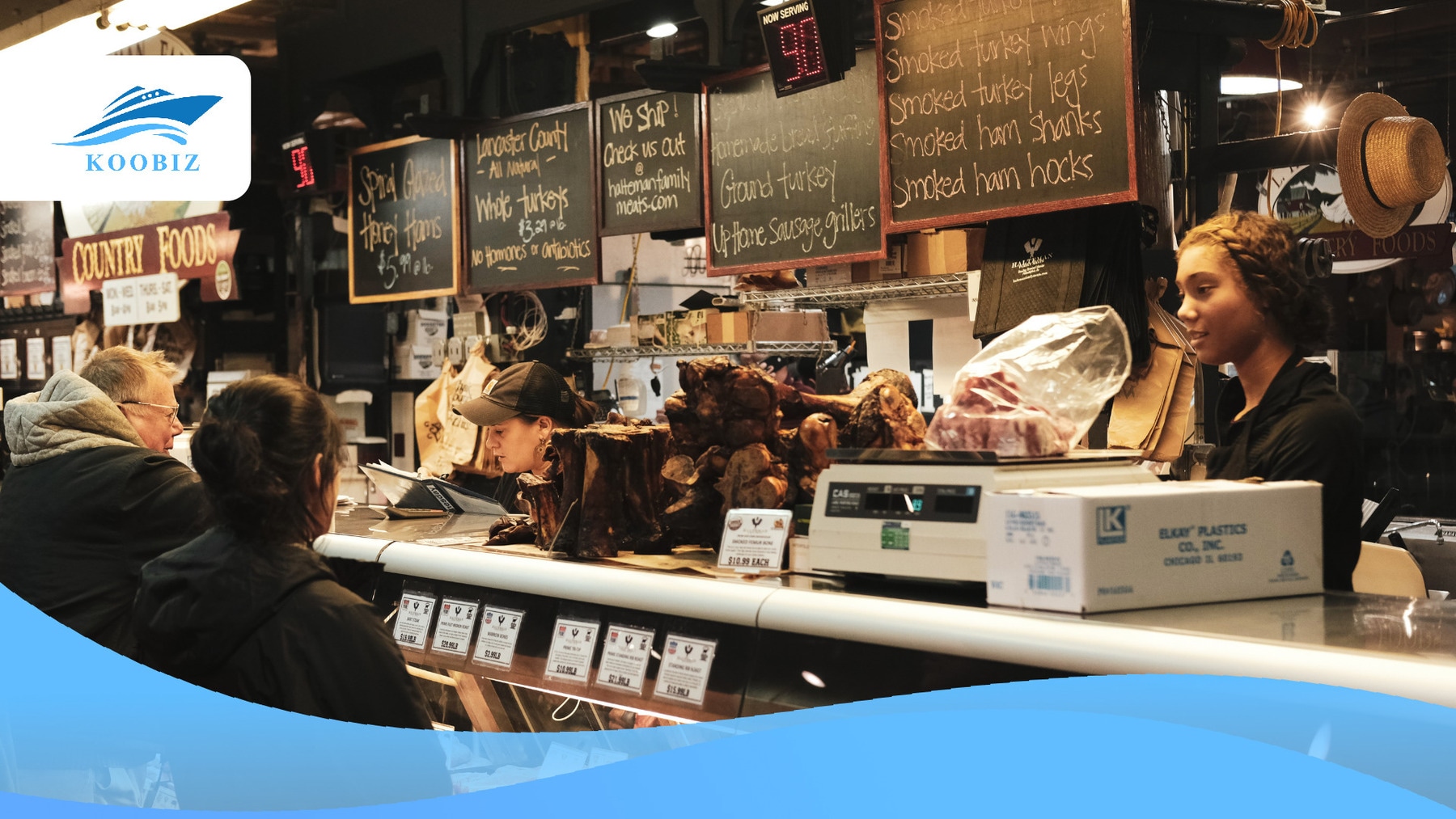
Real-life incidents show how quickly unexpected accidents can turn into costly legal claims. For many SMEs in Singapore, a single liability claim can be financially damaging without proper insurance protection.
Retail Shop Slip-and-Fall
A customer slipped on a wet floor in a retail store after a spill was not cleaned up promptly. The customer suffered a back injury and filed a claim for medical expenses and loss of income. Public Liability Insurance covered the legal defence costs and compensation payout, preventing the business owner from paying out of pocket.
Contractor Damaging Client Property
A renovation contractor accidentally drilled into a concealed water pipe, causing flooding and damage to a client’s flooring and furniture. The client claimed for repair costs and business interruption losses. The contractor’s Public Liability Insurance paid for the property damage and settlement costs.
Food Poisoning Incident at an F&B OutletSeveral customers reported food poisoning after dining at a small restaurant. They demanded compensation for medical treatment and emotional distress. The restaurant’s Public Liability Insurance helped cover the legal expenses and compensation claims, allowing the business to continue operating without severe financial strain.
These examples highlight that accidents can happen even in well-managed businesses. Public Liability Insurance acts as a financial safety net, protecting business owners from sudden and potentially overwhelming liability claims.
The cost of Public Liability Insurance (PLI) in Singapore is not fixed. Instead, it is calculated based on your business risk profile, industry type, annual turnover, and the specific scope of activities insured.
As a general estimate:
Note: These figures are indicative and subject to the insurer’s underwriting criteria, chosen limits, and prevailing GST.
The most significant factor affecting your premium is the Limit of Indemnity the maximum amount the insurer will pay for a single claim or within the policy period. In Singapore, the choice usually comes down to two standard tiers:
For businesses in high-risk sectors like F&B or renovation, opting for a higher limit is crucial. A single serious injury or major fire could easily exceed a lower cap, leaving your business to pay the difference out-of-pocket. When choosing your policy, it is vital to prioritize a limit that meets your contractual obligations and realistic risk exposure over simply picking the cheapest premium.
Public Liability Insurance is frequently confused with other business covers. However, each serves a distinct purpose. In Singapore, a “one-size-fits-all” approach often leaves businesses exposed to costly gaps.
Below is a comparison to help you identify the right combination for your business:
| Type of Insurance | What It Covers | Who It Protects | Is It Mandatory in Singapore? |
|---|---|---|---|
| Public Liability (PLI) | Third-party bodily injury & property damage from business operations. | Customers, visitors, and the general public. | Contractual. Required by most landlords and clients. |
| Professional Indemnity (PI) | Financial loss arising from errors, omissions, or negligent advice. | Clients receiving your professional services. | Professional Requirement. Mandatory for lawyers, auditors, and doctors. |
| Work Injury Compensation (WICA) | Medical expenses and loss of wages for work-related injuries/illness. | Your employees (Local & Foreign). | Legal Mandate. Compulsory for most employees under MOM law. |
How They Work Together (Examples):
Most Singapore SMEs opt for an “SME Package” which bundles PLI and WICA together. However, if your business involves advisory or specialized services (IT, Design, Consulting), adding a PI policy is essential to protect your professional reputation.

Choosing the right Public Liability Insurance policy is about matching coverage to your business risks and operational needs in Singapore not simply selecting the cheapest option.
By selecting coverage based on risk exposure, required limits, and business needs rather than price alone, you secure meaningful protection instead of basic compliance.
Many SMEs in Singapore buy Public Liability Insurance for compliance, not protection only to discover coverage gaps when claims are rejected. The most common mistakes include:
Koobiz helps Singapore businesses choose the right Public Liability Insurance based on their industry, risk exposure, and contractual requirements. Instead of one-size-fits-all policies, Koobiz recommends coverage that reflects your actual business activities.
With Koobiz, you can:
Koobiz simplifies the process, helping SMEs secure reliable protection without unnecessary complexity.
[/SUMMARIES]
Prime Location: Singapore remains a top global hub for startups due to its pro-business policies, 100% foreign ownership allowance, and attractive tax exemptions.
Top Profitable Sectors: High-yield industries include FinTech, E-commerce, Health & Wellness, F&B (Cloud Kitchens), and specialized B2B Consulting.
Seamless Setup Process: Legally starting a business requires choosing an entity, ACRA registration, opening a bank account, and appointing a corporate secretary.
Koobiz Support: Koobiz provides end-to-end solutions, from company incorporation and nominee director services to corporate bank account advisory, tax, and accounting.
[/SUMMARIES]
Choosing the right business to start in Singapore is not just about having a good idea. Long-term profitability depends on selecting a scalable model, complying with local regulations, and having reliable corporate support such as Koobiz to handle incorporation and compliance. This guide outlines the 10 most profitable business ideas in Singapore for 2026, along with practical incorporation steps and key considerations for both foreign and local founders.
Yes, Singapore remains one of the most attractive jurisdictions to start a business, supported by competitive tax rates, a strategic geographic location, and strong government-backed startup initiatives.
The following factors explain why Singapore continues to rank as a leading global business hub:
Singapore ranks #1 globally in the World Bank’s Business Ready (B-READY) 2025 report for overall business readiness and operational efficiency, proving its unparalleled regulatory environment.
Based on current market demand, the 10 most profitable business ideas in Singapore include E-commerce, FinTech, Health and Wellness, F&B, Corporate Services, EdTech, Digital Marketing, Green Tech, Cleaning Services, and Professional Consulting.
These sectors deliver strong return on investment (ROI) driven by changing consumer behaviour, targeted government initiatives, and rapid technological adoption. Below is a practical breakdown of each business idea to help you assess alignment with your capital structure and operational expertise.
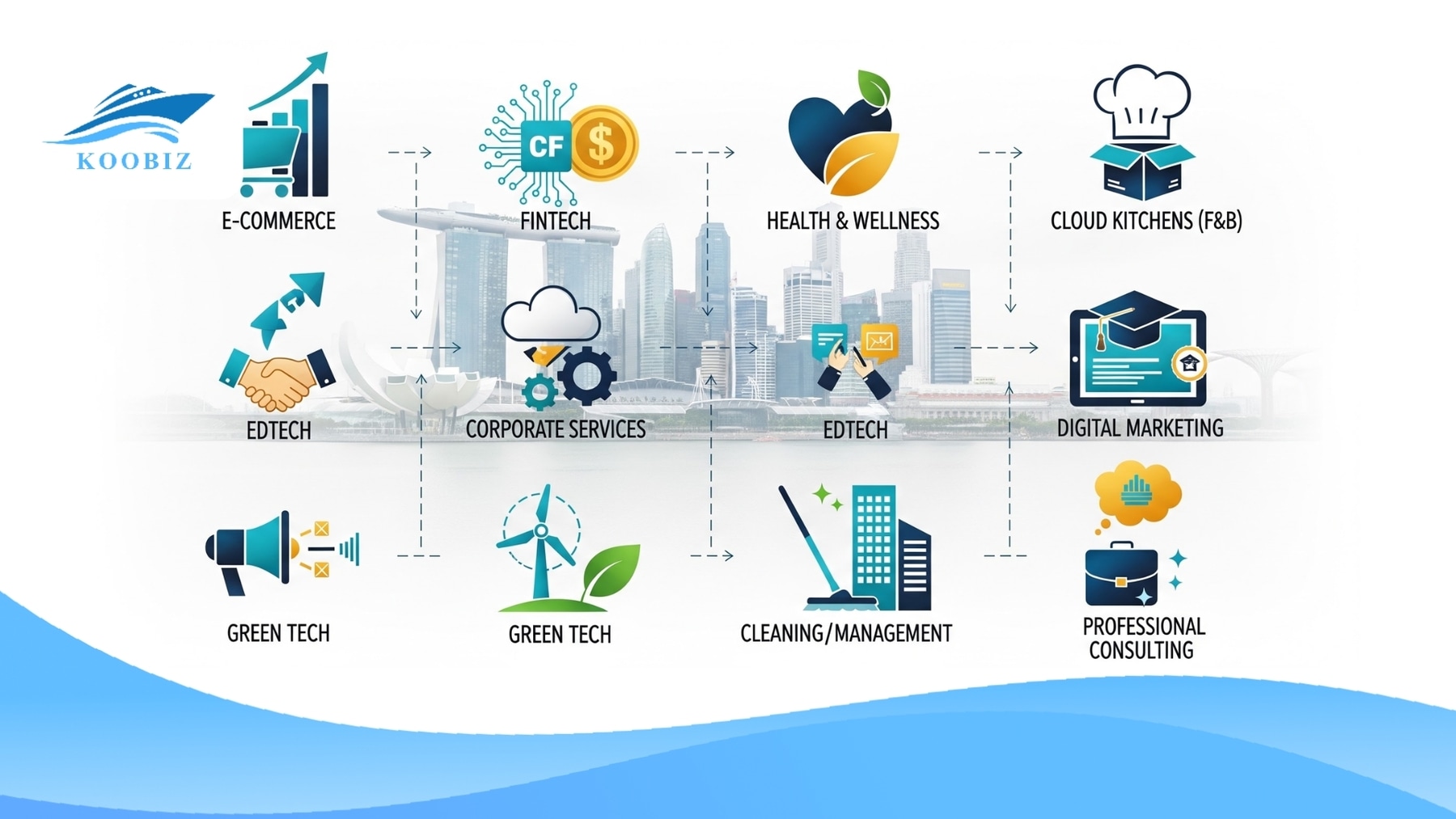
Singapore’s digital retail sector continues to expand, positioning e-commerce as one of the most accessible and scalable business models. Singapore’s excellent logistics infrastructure, anchored by Changi Airport and the Port of Singapore, makes it the perfect base to sell to the broader ASEAN market.
Singapore is recognised as one of Asia’s leading FinTech hubs. With active regulatory oversight and innovation support from the Monetary Authority of Singapore (MAS), starting a business in blockchain tech, digital payments, or WealthTech offers strong long-term commercial potential.
Singapore has a rapidly aging population and a highly stressed corporate workforce, driving sustained demand for health and wellness services like boutique fitness studios, mental health apps, and specialized nutrition consulting.
The modern “Cloud Kitchen” (or ghost kitchen) model has significantly improved cost efficiency within the traditional F&B sector by operating as a delivery-only food business tailored to health-conscious demographics.
With thousands of new companies registering in Singapore every month, B2B services (like corporate secretaries, tax consultants, and HR recruiters) highlight the sustained and recurring demand for corporate compliance and advisory services.
Education is a top priority for both individuals and employers in Singapore. Starting an enrichment center, offering specialized tutoring, or developing an EdTech platform can generate strong and predictable returns, especially with the modern shift toward lifelong learning.
As more businesses migrate online, specialized digital marketing agencies focusing on specific niches—such as TikTok marketing for F&B or SEO for corporate services—can command premium monthly retainers.
The Singapore Green Plan 2030 has created significant commercial opportunities for sustainability-focused businesses. Ideas include renewable energy consulting, sustainable packaging, and carbon footprint tracking software.
Commercial cleaning and facility management is a stable business model with predictable cash flow. Corporate offices, retail malls, and high-end residential condos require constant, reliable maintenance.
If you have years of corporate experience, monetizing your knowledge through a specialized consulting firm (such as cybersecurity advisory or D&I HR training) can be a highly profitable and scalable business model.
Setting up a business in Singapore typically involves four essential legal and operational steps: choosing your entity, registering with ACRA, opening a corporate bank account, and appointing a qualified corporate secretary for compliance.
Following these steps ensures your business operates legally, efficiently, and benefits from Singapore’s tax framework from the outset. Below is a practical step-by-step overview of how to convert your business idea into a legally incorporated Singapore company.
Before registering, you must decide on the legal structure, with the Private Limited Company (Pte Ltd) as it is the most commonly adopted structure for growth-oriented businesses.
Accounting and Corporate Regulatory Authority (ACRA) is Singapore’s national company registrar and regulator. You must submit your official incorporation application via the BizFile+ portal.
Once incorporated, opening a corporate bank account is crucial for managing your capital, receiving client payments, and paying employees.
Under the Singapore Companies Act, every company must legally appoint a qualified Company Secretary within six months of incorporation.
Professional secretarial support significantly improves compliance rates and makes companies much more attractive to investors (per industry benchmarks), compared to self-managed entities.
Beyond incorporation, entrepreneurs should assess four additional strategic considerations: foreign ownership viability, entity structure comparison, common failure risks, and access to government startup grants based on compliance.
Beyond the basics, addressing these complex queries will safeguard your investment, mitigate legal risks, and unlock additional financial resources from the government.
The Short Answer: Yes, absolutely. You can own 100% of a Singapore company without ever physically relocating to the country.
The Details: However, the law mandates that every company must have at least one ordinarily resident Director (a Singapore Citizen, Permanent Resident, or EntrePass holder). If you wish to remain overseas, you must utilize a Nominee Director service. Koobiz provides Nominee Director services to meet this statutory requirement while preserving full operational control for foreign owners.
The Short Answer: The Private Limited (Pte Ltd) definitely wins on liability protection and tax efficiency, while the Sole Proprietorship is only optimal for extremely simple, low-risk setups.
The Details: In a Sole Proprietorship, the owner and the business are the same legal entity, meaning personal assets are at risk if the business is sued or goes bankrupt. Conversely, a Pte Ltd limits your liability to your share capital. Furthermore, Sole Proprietors are taxed at personal income tax rates (which can go up to 24%), whereas Pte Ltd companies benefit from corporate tax rates (capped at 17%) and generous startup exemptions. For any serious entrepreneur, a Pte Ltd is the definitive choice.
The Short Answer: The most common reasons businesses fail in Singapore are poor cash flow management, lack of market differentiation, and failure to comply with statutory tax regulations.
The Details: Cash flow management is a critical factor for startup survival. Additionally, ignoring tax filings with the Inland Revenue Authority of Singapore (IRAS) leads to compounding penalties that can cripple a new venture. By utilizing Koobiz’s professional accounting, auditing, and tax services, founders can maintain clear financial visibility and significantly reduce compliance-related risks.
The Short Answer: Yes, the Singapore government offers a wealth of financial grants and incentives to foster innovation and business growth.
The Details: Programs such as the Startup SG Founder grant provide capital matching for first-time entrepreneurs, while the Enterprise Development Grant (EDG) supports businesses upgrading their technology or expanding overseas. However, to qualify for these grants, companies must maintain impeccable financial records and demonstrate strong corporate governance. Having a professional accounting firm like Koobiz manage your books drastically increases your chances of successful grant applications.
Ready to Launch Your Profitable Business in Singapore?
Knowing what business to start in Singapore is only the beginning of your entrepreneurial journey. Executing that idea flawlessly requires a solid legal foundation, meticulous financial management, and a trusted corporate partner.
At Koobiz, we specialize in turning your profitable ideas into fully compliant, operational businesses. From seamless Company Incorporation and Nominee Director Services to expert Corporate Bank Account Advisory, Tax, Accounting, and Auditing, we handle the bureaucratic heavy lifting so you can focus on what you do best: growing your business.
Avoid regulatory and compliance delays that can impact early-stage growth. Visit Koobiz.com today and consult with our experts to kickstart your Singapore business journey with confidence.
[SUMMARIES]
Definition: A trademark distinguishes your goods or services and is separate from your ACRA business registration.
Eligibility: Your mark must be distinctive and not descriptive to pass the IPOS examination.
Process: The 5-step trademark registration process includes Priority Search, Classification, Filing (Form TM4), Examination, and Certification.
Timeline & Cost: Expect a 9-12 month process with fees starting around S$280 per class for online filing.
Global Reach: You can use the Madrid Protocol to extend trademark protection from Singapore to over 130 countries.
[/SUMMARIES]
Incorporating a company does not automatically protect your brand name, a common misconception we often see at Koobiz. To legally protect your brand and prevent misuse, you must register a trademark with the Intellectual Property Office of Singapore (IPOS). This guide explains how to register a trademark in Singapore, including the 5-step registration process, expected costs, timelines, and options for international trademark protection.
In Singapore, a trademark is a “sign” used in the course of trade to distinguish your goods or services from those of other traders. It may consist of a letter, word, name, signature, numeral, logo, label, shape, colour, aspect of packaging, or any combination of these elements.
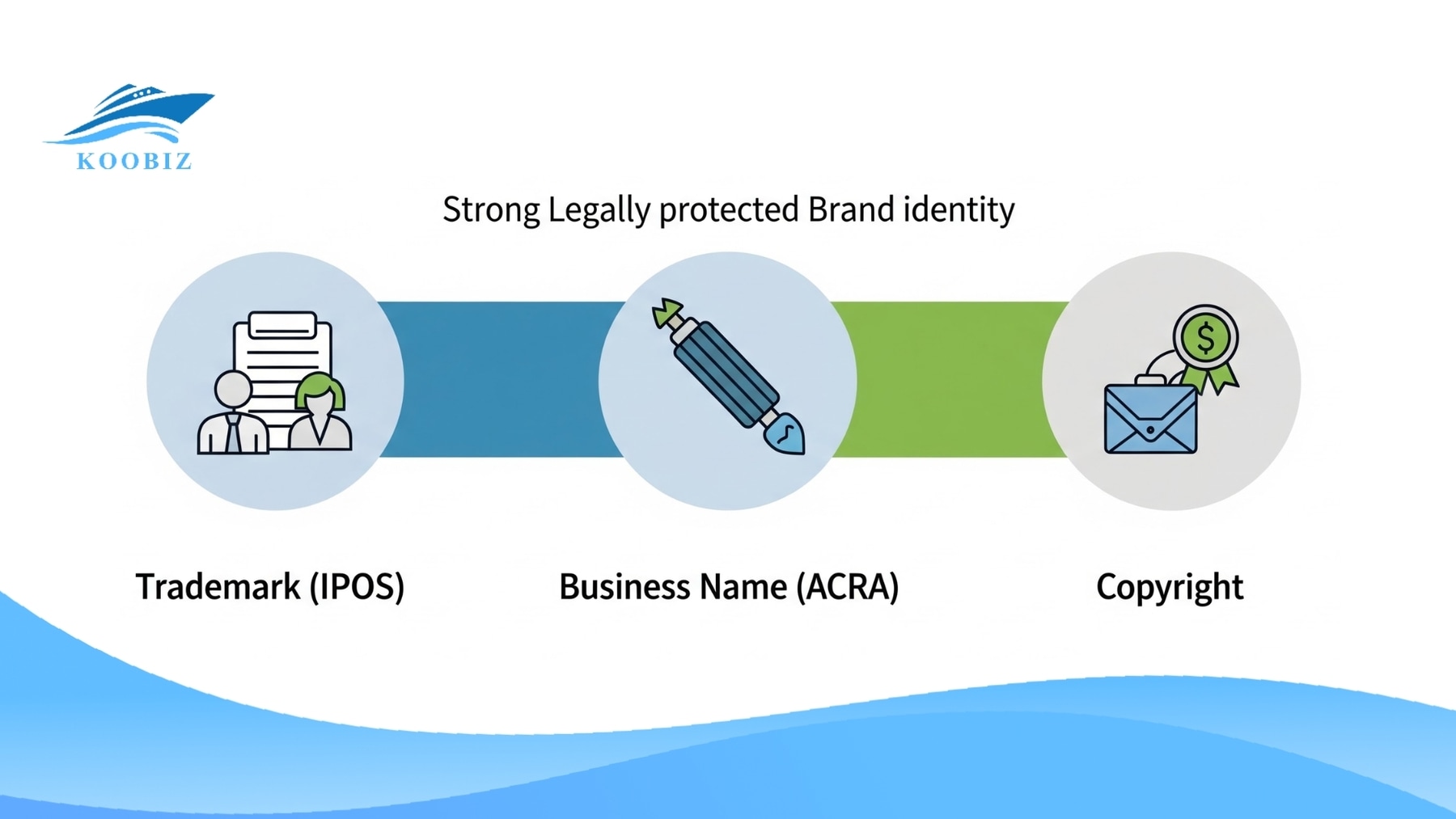
To better understand the value of a trademark, it is helpful to compare it with other common business identifiers used in Singapore.
| Feature | Business Name (ACRA) | Trademark (IPOS) | Copyright |
|---|---|---|---|
| Primary Purpose | Identifies the brand of goods or services to distinguish them from competitors. | Identifies the brand of goods/services to distinguish from competitors. | Protects original creative works (art, literature, code). |
| Registration Authority | Accounting & Corporate Regulatory Authority (ACRA). | Intellectual Property Office of Singapore (IPOS). | No formal registration required (automatic protection upon creation). |
| Protection Scope | Prevents others from registering the exact same company name. | Prevents others from using identical or confusingly similar marks in the same or related industries. | Prevents unauthorized copying of the work. |
Common Misconception: Business Name (ACRA) vs. Trademark (IPOS)
As we regularly advise our clients at Koobiz, registering your business name with ACRA does NOT give you ownership of the brand.
Without a trademark, you have limited recourse if a competitor copies your brand name.
A trademark may be eligible for registration in Singapore if it meets the requirement of distinctiveness and does not conflict with existing registered marks.
However, not every brand name or logo can be registered as a trademark. To be accepted by IPOS, your mark must pass the “distinctiveness” test.
A mark that is purely descriptive or generic will be rejected.
Use this “Dos and Don’ts” table to quickly assess your brand name:
| Eligible (Strong Marks) | Not Eligible (Weak Marks) |
|---|---|
| Invented Words: Unique names with no prior meaning.
(e.g., “Kodak”, “Xerox”) |
Descriptive Terms: Words describing the product’s quality, quantity, or function.
(e.g., “Super Fast” for delivery, “Best Apple” for fruit) |
| Arbitrary Words: Common words used in an unrelated context.
(e.g., “Apple” for computers, “Shell” for petrol) |
Generic Terms: Common names for the product itself.
(e.g., “Computer” for selling laptops, “Cafe” for a coffee shop) |
| Unique Logos: Stylized graphics designed specifically for the brand. | Deceptive Marks: Marks that mislead consumers about the nature of the goods.
(e.g., “Organic” for 100% synthetic products) |
In addition, the mark must not be identical or confusingly similar to an existing registered trademark. This is why the preliminary search step is critical.
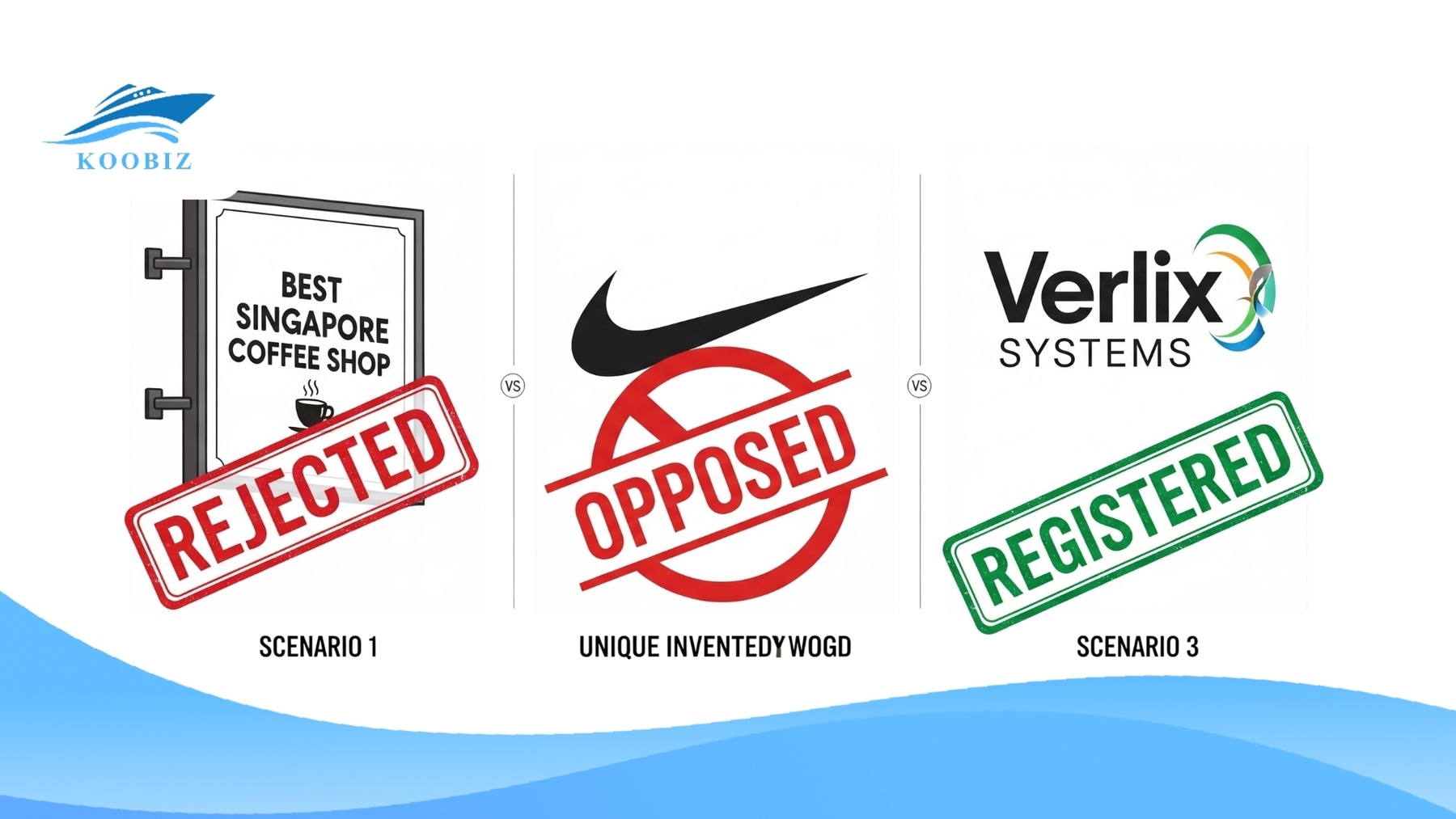
To illustrate the legal concepts above, let’s examine three hypothetical scenarios commonly seen in the Singapore market. These examples illustrate why applications pass or fail during the IPOS examination.
The trademark registration process consists of five sequential steps mandated by IPOS to ensure legal clarity and fairness.
Below is an overview of the key actions involved and the estimated timeline for each step:
| Step | Action Required | Estimated Timeline |
|---|---|---|
| 1. Search | Check IPOS database for conflicting marks | 1 Day |
| 2. Classify | Select goods/services category (Nice Class) | 1 Day |
| 3. File | Submit Form TM4 & pay fees via SingPass | ~1 Hour |
| 4. Process | IPOS Examination & Public Journal Publication | 4-6 Months |
| 5. Result | Issuance of Registration Certificate | Total estimated timeline: 9–12 months |
Navigating the IPOS trademark system can be challenging for first-time applicants. Below is a detailed breakdown of the procedure to help you secure your intellectual property rights efficiently.
Before filing, you must determine if a similar mark already exists. You can do this via the IPOS Digital Hub. This step is non-negotiable; filing an application for a mark that conflicts with an existing one will result in rejection and the forfeiture of your application fees. A thorough search should cover similar phonetics and visual elements, not just identical spellings.
You must categorize your goods or services according to the International Classification of Goods and Services (Nice Classification). There are 45 classes in total (Classes 1-34 for goods, Classes 35-45 for services). For instance, if you are a Koobiz client running a coffee shop that also sells branded t-shirts, you might need to register under Class 43 (Food and Drink Services) and Class 25 (Clothing). Correct classification is vital because your trademark is only protected within the classes you register.
Once searched and classified, submit your application online via the IPOS Digital Hub using Form TM4. You will need a SingPass account to access the portal. The application requires:
After filing, IPOS examiners will review your application to ensure it meets legal requirements. If there are no objections (or if you resolve them), your trademark will be published in the Trade Marks Journal for two months. During this period, third parties (e.g., competitors) can oppose your registration if they believe it infringes on their rights.
If there is no opposition after the two-month publication period, IPOS will issue a Certificate of Registration. Once registered, your trademark is protected for 10 years from the date of application.
There are two main categories of costs involved: the official government fees and potential professional service fees.
Understanding these costs is essential for proper budgeting. The fees payable to IPOS depend on whether you file online via the IPOS Digital Hub and whether you select items from the pre-approved database.
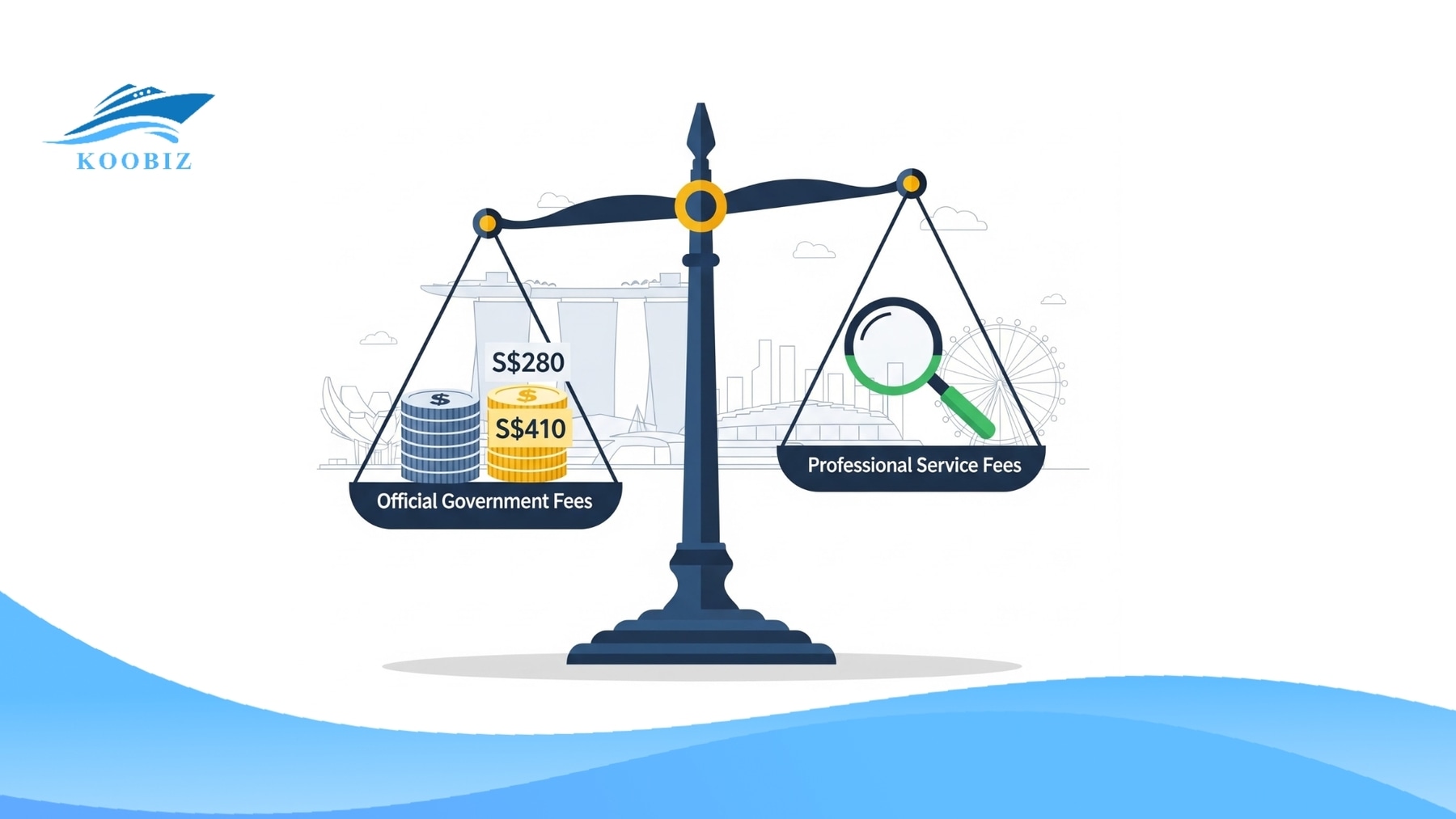
Fees are subject to change. Always refer to the IPOS Digital Hub for the latest rates.
| Filing Method | Condition | Fee (per class) |
|---|---|---|
| Online (IPOS Digital Hub) | Description selected from pre-approved database | S$280 |
| Online (IPOS Digital Hub) | Description entered manually (non-standard) | S$410 |
Note: Manual (paper) filing is no longer encouraged, as IPOS has largely shifted to digital services.
While you can file yourself to save money, it comes with risks.
Koobiz Insight: Many businesses attempt DIY filing to reduce upfront costs, only to discover their application is rejected several months later. IPOS strongly encourages using their pre-approved database to minimize objections. Engaging a professional helps ensure your trademark search is thorough and your classifications are accurate, protecting your investment.
The trademark registration process in Singapore typically takes approximately 9 to 12 months from the application date to the issuance of the certificate.
To help you manage your expectations, here is the estimated timeline for each stage of the process:
| Stage | Estimated Duration | What Happens? |
|---|---|---|
| 1. Examination | 4 – 6 Months | IPOS checks if your mark complies with the Trade Marks Act. |
| 2. Publication | 2 Months (Fixed) | Your mark is published in the Trade Marks Journal for public scrutiny. |
| 3. Certification | 1 – 2 Months | If no opposition arises, the registration certificate is issued. |
| Total | ~ 9 – 12 Months | Assuming a straightforward application. |
The “Bumpy Road” Scenario (18+ Months)
If your application faces an objection (from IPOS examiners regarding distinctiveness) or an opposition (from a competitor), the timeline can extend significantly. This highlights why thorough preparation in the Search and Classification steps is crucial to avoid delays.
Once your trademark is successfully registered and the certificate is issued, the journey does not end there. A trademark is a living asset that requires active management to maintain its validity and value.
Securing the certificate is just the beginning. To maximise the value of your intellectual property, business owners should focus on three strategic pillars: maintenance, growth, and risk management.
Neglecting these post-registration duties can lead to the loss of your rights or missed opportunities for expansion.
A Singapore trademark is valid for 10 years from the date of filing. It is not a “register once, keep forever” asset and requires active maintenance.
Your Singapore trademark is territorial—it only protects you within Singapore. If your business plans to export or expand, you need a global strategy.
Note: In practice, international trademark filings are often coordinated alongside regional expansion to ensure brands enter new markets with adequate protection.
Even with a registered mark, you may face challenges. Understanding common pitfalls helps you mitigate risks early.
1. Dealing with Rejections (Objections) If IPOS examiners refuse your application, it is usually due to:
2. Dealing with Oppositions Opposition occurs during the 2-month publication stage when a third party (usually a competitor) formally objects.
Conclusion
Registering a trademark in Singapore is a strategic step that transforms your brand from a mere logo into a legally protected asset. By following the 5-step process—Search, Classify, File, Examine, and Register—you ensure that the goodwill you build belongs exclusively to you.
At Koobiz, we understand that building a business involves many moving parts, from Singapore company incorporation and corporate banking to ongoing tax and accounting compliance. While you focus on growing your business and brand value, let us handle the foundational corporate services to ensure your entity is compliant and ready for success.
Visit Koobiz.com today to learn how we can support your business journey in Singapore.
[SUMMARIES]
Foundation: Singapore contract law is primarily based on English Common Law, ensuring a robust and predictable legal framework for businesses.
Validity:A binding contract needs just four things: a clear Offer, a matching Acceptance, an exchange of something valuable (Consideration), and the intention to be legally bound.
Enforcement: Breaking a major term (Condition) lets you walk away. Breaking a minor one (Warranty) usually just means asking for compensation.
[/SUMMARIES]
Think of Contract Law Singapore as the rulebook for every business deal in Singapore. It’s what makes promises enforceable and keeps relationships fair. Yet, many business owners only think about it when something goes wrong.
At Koobiz, while helping clients with Singapore company incorporation and bank account opening, we see how a solid understanding of contracts is key to long-term stability. This guide breaks down the legal jargon into plain English, covering everything from making a valid agreement to fixing problems when they arise.

Singapore Contract Law is a hybrid system characterized by its pro-business stance and predictability. It relies on two main pillars:
For you, this means your agreements must play by both the established “judge-made” rules and these specific written laws.
There are four fundamental elements required to form a legally binding contract in Singapore: Offer, Acceptance, Consideration, and Intention to Create Legal Relations.
For any agreement to be legally binding in Singapore, it must have these four ingredients. Miss one, and it’s not a real contract—just a discussion.
This is a clear, definite proposal to do something (like sell goods or provide a service) on specific terms. It’s more than just an advertisement or price inquiry; it’s the starting point.
This is a clear and unconditional “yes” to all the terms of the offer. If you say “I accept, but only if…”, you’ve actually made a new offer. In today’s fast email world, a simple “Confirmed” or “Okay” can legally seal the deal.
This is what each side brings to the table—the value exchanged. It could be money, a service, a product, or a promise. The law doesn’t check if it’s a “good” deal, just that something of value is swapped. Selling a factory for $1? Strange, but legally valid.
Both parties must intend for the agreement to be legally binding. In business deals, the law always assumes you do. With friends or family, it’s the opposite. The safest bet? Put it in writing to avoid any “I was just joking” moments.
In a commercial context—such as signing a service agreement with Koobiz for tax and accounting services—the law presumes that the parties intend to be legally bound. The burden of proof falls heavily on anyone arguing otherwise. Conversely, in social or domestic arrangements, the presumption is that there is no legal intent. However, lines can blur in family businesses or partnerships between friends. Therefore, explicitly stating the intent in a written document is the best safeguard against ambiguity.
In the hierarchy of contractual terms, “Conditions” are vital terms going to the root of the contract, while “Warranties” are secondary terms, and the distinction determines your rights upon a breach.
After a contract is created, the real work is deciphering what it says. Not every promise has the same significance. Identifying which terms are binding and which aren’t is crucial: it determines whether you can exit the agreement or remain obligated to a non-performing partner, potentially only seeking monetary remedies.
Explicit terms are those the parties clearly agree to, whether in writing or spoken. These are the clauses you negotiate—price, timeline, deliverables. But you also need to be mindful of implied terms. Implied terms aren’t written down but are read into the contract by a court or statute. For example, under the Sale of Goods Act, goods sold are assumed to be of “satisfactory quality.” Even if your sales contract doesn’t mention quality, the law imposes this obligation. For Koobiz—especially in trading—overlooking implied terms can lead to unexpected liabilities.
Classifying terms correctly is essential for dispute resolution:
| Term Type | Definition | Remedy for Breach |
|---|---|---|
| Condition | A fundamental term going to the root of the contract (e.g., delivery date for perishable goods). | Terminate Contract + Claim Damages. |
| Warranty | A minor term or secondary obligation (e.g., packaging material). | Claim Damages Only (Contract continues). |
| Innominate | An intermediate term. | Depends on severity: Terminate if benefit is substantially lost, otherwise damages. |
A breach of contract occurs when a party fails to perform their obligations without lawful excuse. The legal response should follow a calculated workflow to restore the innocent party to the position they would have been in had the contract been performed.
When the other party doesn’t hold up their end, don’t panic. Follow this logical approach:
Before taking action, determine when the breach occurred.
Once a breach is confirmed, you must choose the appropriate legal remedy.
For most commercial services, such as the audit services Koobiz facilitates, seeking Damages is the standard and most practical path.
Conclusion
Understanding the basics of Singapore Contract Law isn’t about being a lawyer—it’s about being a savvy business owner. It transforms agreements from potential risks into tools for clear communication and security.
A well-made contract is an investment that prevents costly disputes and builds stronger partnerships.
At Koobiz, we understand that legal compliance is just one piece of the puzzle. As your trusted partner in Singapore, we offer a comprehensive ecosystem for your business success:
Don’t let legal complexities slow down your growth. Visit Koobiz.com today to establish a solid foundation for your business in Singapore.
(Note: This article is for informational purposes only and does not constitute legal advice. For specific legal matters, always consult with a qualified Singapore lawyer.)
[SUMMARIES]
Mandatory Compliance: Business insurance in Singapore is not optional for all. WICA is a must-have if you employ manual workers or staff earning SGD 2,600 or less per month.
Bundled Efficiency: SME insurance packages bundle key covers like Public Liability and property insurance, often saving money compared to buying separate policies.
Industry Specifics: Different industries need different coverage. For example, retailers should protect their stock, while tech firms often need cyber liability insurance.
Strategic Growth: The right insurance is an investment. It protects your finances from unexpected events like lawsuits or property damage, securing your business’s future.
Expert Support: Getting compliant and setting up your company is simpler with professional support from a provider like Koobiz.
[/SUMMARIES]
Launching your business in Singapore is full of potential, but it also involves risks—from workplace accidents to customer disputes. For small and medium enterprises (SMEs), choosing the right Business Insurance Singapore package is a crucial first step to secure your progress and keep your operations running smoothly. While you concentrate on strategy and growth, a solid insurance plan acts as your safety net, ensuring a single unexpected event doesn’t undo all your hard work.
At Koobiz, we know that whether you’re forming a company, opening a bank account, or handling taxes, compliance and protection are equally important. This guide will walk you through the essentials of SME insurance, from mandatory WICA rules to choosing the best bundled plans for your industry.
Think of an SME Business Insurance Package as a convenient, all-in-one policy made for small to medium businesses. It combines important protections—like coverage for public accidents, property damage, and employee injuries—into a single, often more affordable contract.
To see why these bundles are more efficient than buying separate policies, let’s compare the two approaches. Companies like AIG, Chubb, and NTUC Income offer these ready-made solutions to cover the most common risks businesses face.
| Feature | SME Package (Bundled) | Standalone Policies (Individual) |
|---|---|---|
| Cost Efficiency | High (Often 20-30% cheaper) | Low (Full premium for each risk) |
| Administration | Simple (Single policy & renewal date) | Complex (Multiple policies & dates) |
| Coverage Scope | Covers core operational risks comprehensively | Highly customizable but fragmented |
| Best For | Startups & SMEs | Large Corporations & MNCs |
Instead of managing several different policies for fire, theft, and liability, you manage just one. For new businesses using Koobiz‘s incorporation services, choosing a package means getting essential protection from day one without a complicated process.
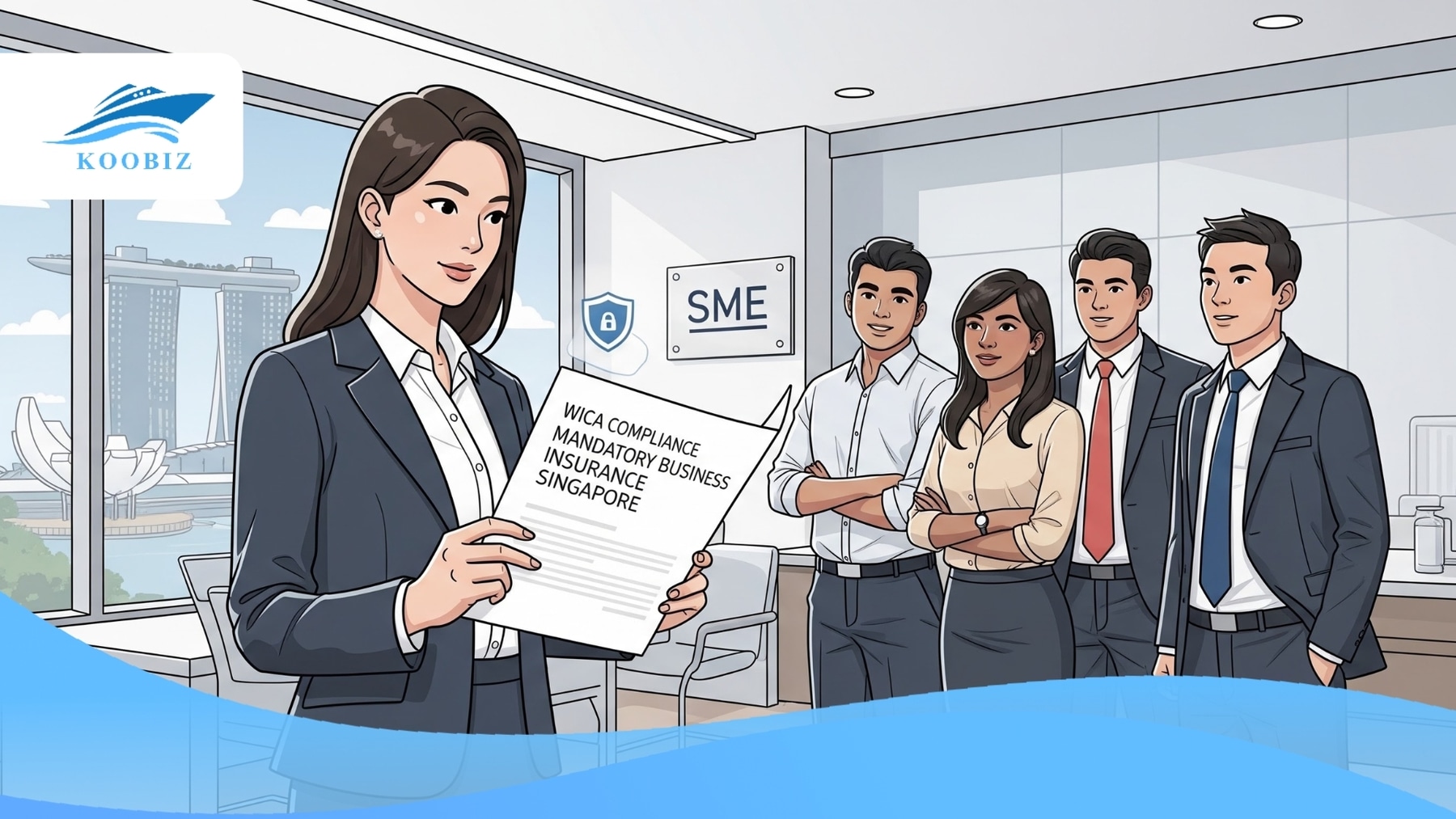
Yes, business insurance is mandatory for SMEs in Singapore, specifically regarding the Work Injury Compensation Act (WICA).
To check if your business must buy this cover by law, use this simple checklist based on official regulations:
You are legally required to buy WICA if:
Penalty Alert: Non-compliance is a serious offense. Failure to maintain adequate insurance for these employees is punishable by a fine of up to SGD 10,000 or imprisonment for up to 12 months, or both.
While other types like Public Liability insurance aren’t required by the government, they are often required by your landlord or in client contracts. So for most operating businesses, having insurance is practically essential.
A good SME package usually includes three core protections: Work Injury Compensation (WICA), Public Liability, and Property All Risks Insurance. Here’s how each one protects your business:
| Coverage Type | What it Protects | Real-Life Scenario |
|---|---|---|
| Work Injury Compensation (WICA) | Employees: Covers medical bills & lost wages for work-related injuries or illnesses. | A chef slips in your kitchen and fractures a wrist, requiring surgery and 2 weeks of medical leave. |
| Public Liability Insurance | Third Parties: Covers legal costs & damages for injury or property damage to others. | A customer trips over a loose cable in your office and sues your company for medical expenses. |
| Property All Risks | Assets: Covers loss or damage to inventory, equipment, furniture, and renovations. | A fire caused by a faulty socket destroys $20,000 worth of laptops and office furniture overnight. |
Let’s look at why each of these is vital for your business security.

This coverage handles the costs if an employee gets injured or sick because of their work. In Singapore, employers must pay compensation even if the accident wasn’t their fault. Note: Updated limits apply from November 1, 2025.
For Koobiz clients hiring their first team, we stress that WICA is a legal necessity that also protects your company’s finances from large, unexpected claims.
This protects your business if a client, supplier, or member of the public sues you for injury or property damage caused by your operations.
In today’s world, this coverage is key to protecting your finances from potentially devastating lawsuits.
This safeguards your physical business assets from unexpected events. “All Risks” is broader than basic “Fire” insurance.
If you have a lot of money tied up in stock or equipment, this coverage is crucial for a quick recovery.
Understanding the value of an insurance premium (which can start from around $300/year) is easier with real scenarios. Insurance moves the financial risk from your business to the insurer.
Scenario: A kitchen assistant in a busy cafe slips on a wet floor, fracturing an ankle. They require surgery and are given 2 months of medical leave.
Scenario: During a presentation at a client’s office, your marketing executive accidentally knocks a pitcher of water over the client’s high-end laptop, destroying it.
Insight: A single moderate incident can cost 10x to 50x the price of your annual premium. For a small business operating on tight margins, this protection is not a luxury—it is survival.
When comparing top providers, AIG, Chubb, and NTUC Income lead the market, each catering to different business needs. Use the comparison table below to identify which provider aligns with your operational scale.
| Insurer | Best For | Key Strength | Ideal Business Type |
|---|---|---|---|
| AIG | Customization | Modular “Top-up” options for specific risks | Retail & Professional Services |
| Chubb | Premium Coverage | High sub-limits for stock & financial strength | F&B & Manufacturing |
| NTUC Income | Cost-Efficiency | Affordable baseline protection | Startups & Micro-SMEs |
| MSIG | Niche Protection | Includes Fidelity Guarantee (Employee Theft) | Retail with cash handling |
The “best” plan isn’t the cheapest;it’s the one that reliably supports you when you need to make a claim. At Koobiz, we help clients review these options during company setup to budget correctly from the start.

Selecting the right insurance means matching coverage to your main business activities. A generic package might not cover your specific risks.
Find your business profile below for tailored advice:
Who you are: Cafes, Restaurants, Boutiques, Salons.
Your Primary Risk: Physical Assets & Foot Traffic.
If you hold inventory or welcome customers into a shop, standard office insurance isn’t enough. You need specific add-ons:
Who you are: Software Startups, Accountants, Marketing Agencies, Consultants.
Your Primary Risk: Intangible Errors & Data Liability.
Your assets are your code and your advice, not furniture. Standard property insurance is less critical than liability protection:
Who you are: Contractors, Interior Designers, Handyman Services.
Your Primary Risk: Third-Party Damage & Machinery.
Working on client sites increases the risk of damaging their property or your own tools:
Who you are: Lazada/Shopee Sellers, Dropshippers.
Your Primary Risk: Supply Chain & Product Safety.
Even without a physical shop, you face liability for the goods you sell:
Your premium is the price you pay for insurance, based on your risk level. Exclusions are things the policy definitely does not cover.
Your insurance cost isn’t random; it’s calculated based on probability and severity.
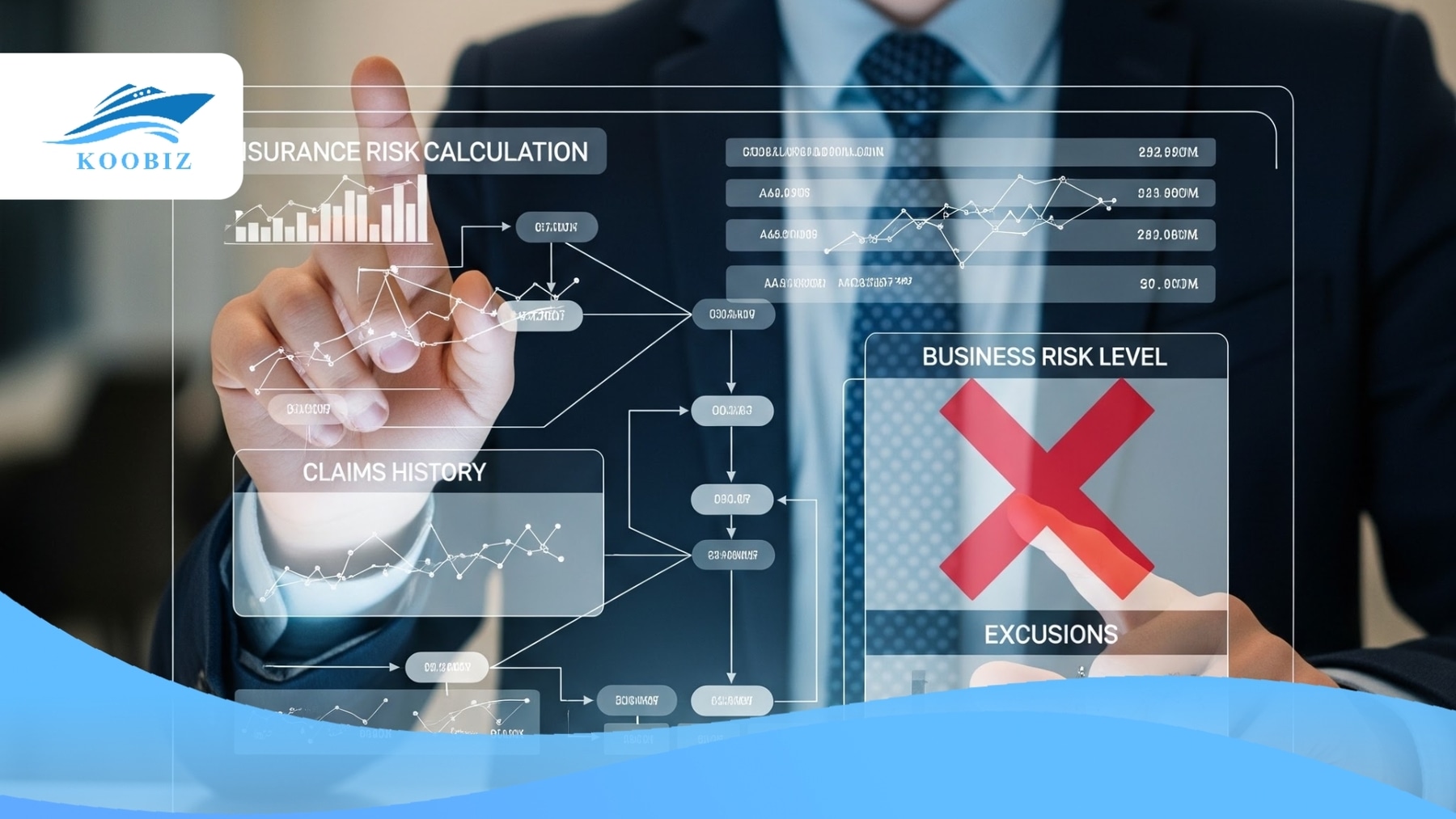
Exclusions are the “red lines” in your contract. If a claim falls under these categories, it will be rejected immediately.
Knowing this process beforehand ensures you don’t panic when an actual incident occurs, allowing Koobiz clients to focus on business recovery while the insurance handles the financial hit. Avoid common pitfalls by following the protocol below.
| Stage | DO THIS | NEVER DO THIS |
|---|---|---|
| 1. Immediate Response | Notify your agent instantly. Speed is key to a valid claim. | Never admit liability. Do not say “It was my fault” or apologize to third parties, as this voids legal defense. |
| 2. Damage Control | Mitigate further loss. e.g., turn off the water main or board up a broken window. | Do not dispose of damaged items. Keep burnt or broken assets for the loss adjuster to inspect. |
| 3. Evidence Gathering | Document everything. Take wide and close-up photos, save CCTV footage, and keep police/medical reports. | Do not clean up too early. Do not alter the scene significantly before documenting the initial state. |
| 4. Submission | Be factual. Submit the claim form with all invoices within the deadline (usually 30 days). | Do not speculate. If you don’t know the cause of fire, say “Unknown.” Do not guess. |
About Koobiz
Navigating the business landscape in Singapore requires more than just insurance; it requires a solid corporate foundation. Koobiz is your trusted partner for seamless market entry and operation. We specialize in Company Incorporation services, helping you set up your Singapore entity strictly adhering to ACRA regulations.
Beyond setup, we assist with Opening Corporate Bank Accounts with top Singaporean banks, ensuring your financial infrastructure is ready for business. Our comprehensive suite of services also includes Tax, Accounting, and Auditing, ensuring that as you grow, your compliance remains impeccable. Secure your business structure with Koobiz today, so you can focus on what you do best—growing your empire.
Visit us at koobiz.com to learn more.
[SUMMARIES]
Definition: The Singapore Standard Industrial Classification (SSIC) is a required 5-digit code that classifies your main business activity for official registration (ACRA).
Importance: The right code decides your tax duties, necessary business licenses, and access to government support (e.g., grants).
Search Method: Use the official SingStat online search tool or check the latest PDF directory. Focus on keywords that best describe what your business does to earn money.
Dual Activities: You can register a Primary and a Secondary SSIC code. The Primary must be for the activity that brings in most of your income.
Banking Impact: Some SSIC codes (e.g., for cryptocurrency or precious stones) are seen as higher risk and may make opening a corporate bank account more difficult.
[/SUMMARIES]
Every entrepreneur registering a company in Singapore must navigate the crucial step of defining their business activity through the Singapore Standard Industrial Classification (SSIC).This isn’t just a box to tick. The code you choose affects your legal rules, tax benefits, and even your chances of getting a business bank account. At Koobiz, we often help clients who feel overwhelmed by the many code options, guiding them to a choice that matches their real operations.
This guide will explain what an SSIC code is, show you a reliable way to search SSIC code lists, and share common codes for popular industries. We’ll also cover rules for businesses with more than one activity and why getting this right is crucial for smooth operations in 2026 and beyond.
The Singapore Standard Industrial Classification (SSIC) is a mandatory 5-digit numerical code that categorizes economic activities for all business entities in Singapore.
It’s the national standard used for statistics and, most importantly, is required by ACRA when you incorporate your company to state your main income-generating activity.
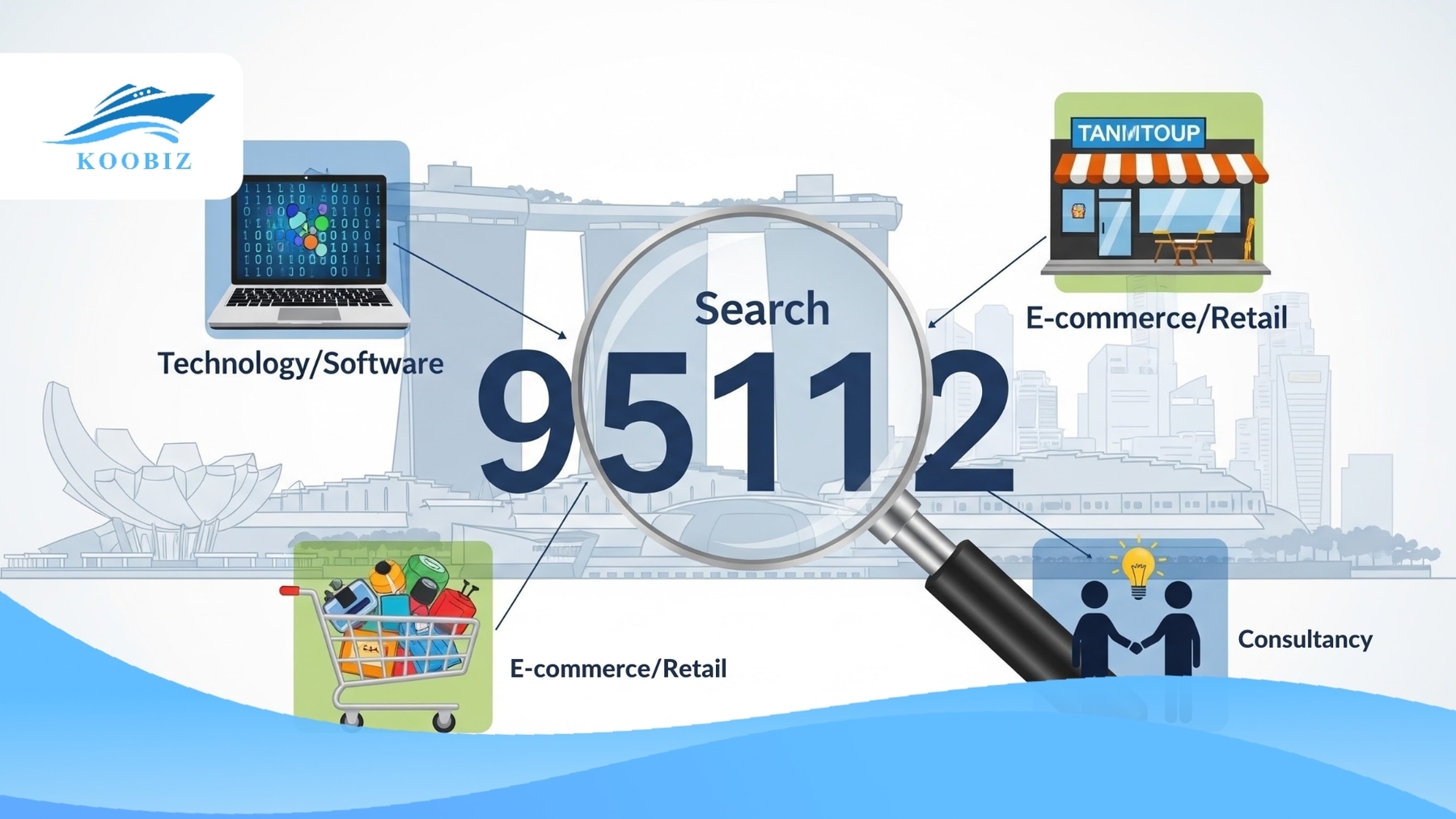
The best way is to use the official online tools. Follow these steps to find the right 5-digit code for your business.
While there are many categories, most new businesses fall into areas like Tech, Retail, or Services. Here are some frequently used codes for 2025-2026.
The technology sector is one of the most active in Singapore. If you are launching a startup, you will likely use one of the following:
With the rise of digital storefronts, selecting the right retail code is essential to distinguish between physical and online operations:
Many foreign investors set up companies in Singapore for asset management or professional services:
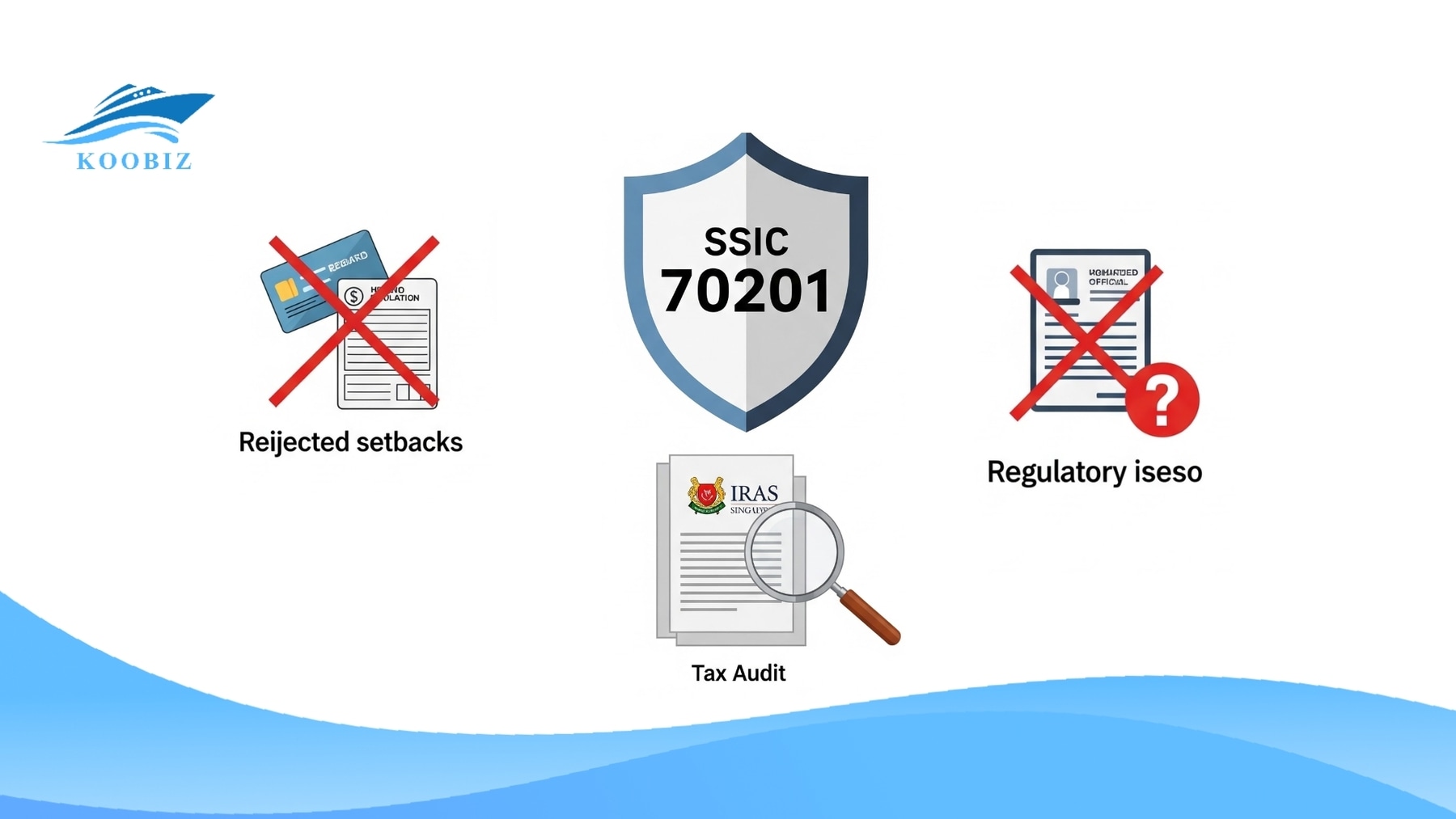
Critical Compliance Alert:
Yes, it is critical. Picking the wrong code is a compliance mistake that can cause serious problems.
3 Key Risks of Misclassification:
Many companies do more than one thing. ACRA allows you to register two codes: a Primary (main) and a Secondary one.
Here is how to distinguish between the two classifications:
| Feature | Primary SSIC Code | Secondary SSIC Code |
|---|---|---|
| Definition | The core business activity. | Supplementary or minor activity. |
| Revenue Share | Must generate the majority (>50%) of revenue. | Generates a smaller portion of revenue. |
| Resource Usage | Consumes the most manpower/capital. | Uses shared or minor resources. |
| Priority | Used for public listing and categorization. | Optional, but recommended for clarity. |
Example Scenario:
If Koobiz mostly provides corporate secretarial services (70% income) but also sells some software (30% income), the Primary code should be for corporate services, and the Secondary for software development.
Some codes mean your business needs a special license before you can operate. Picking these codes triggers a review by specific government bodies.
| Industry | SSIC Prefix/Code | Regulatory Authority | Requirement |
|---|---|---|---|
| Food & Beverage | 56xxxx | SFA (Singapore Food Agency) | Food Shop License |
| Real Estate | 68201 | CEA (Council for Estate Agencies) | KEO/Salesperson License |
| Architecture | 71111 | BOA (Board of Architects) | Practising Certificate |
| Employment | 78104 | MOM (Ministry of Manpower) | EA License |
If you choose one of these codes but don’t have or plan to get the required license, your ACRA application may be delayed, or you could operate illegally.
Yes, you can. Business models evolve, and ACRA allows you to update your activities at any time.
How to Change Your SSIC Code (4 Steps):
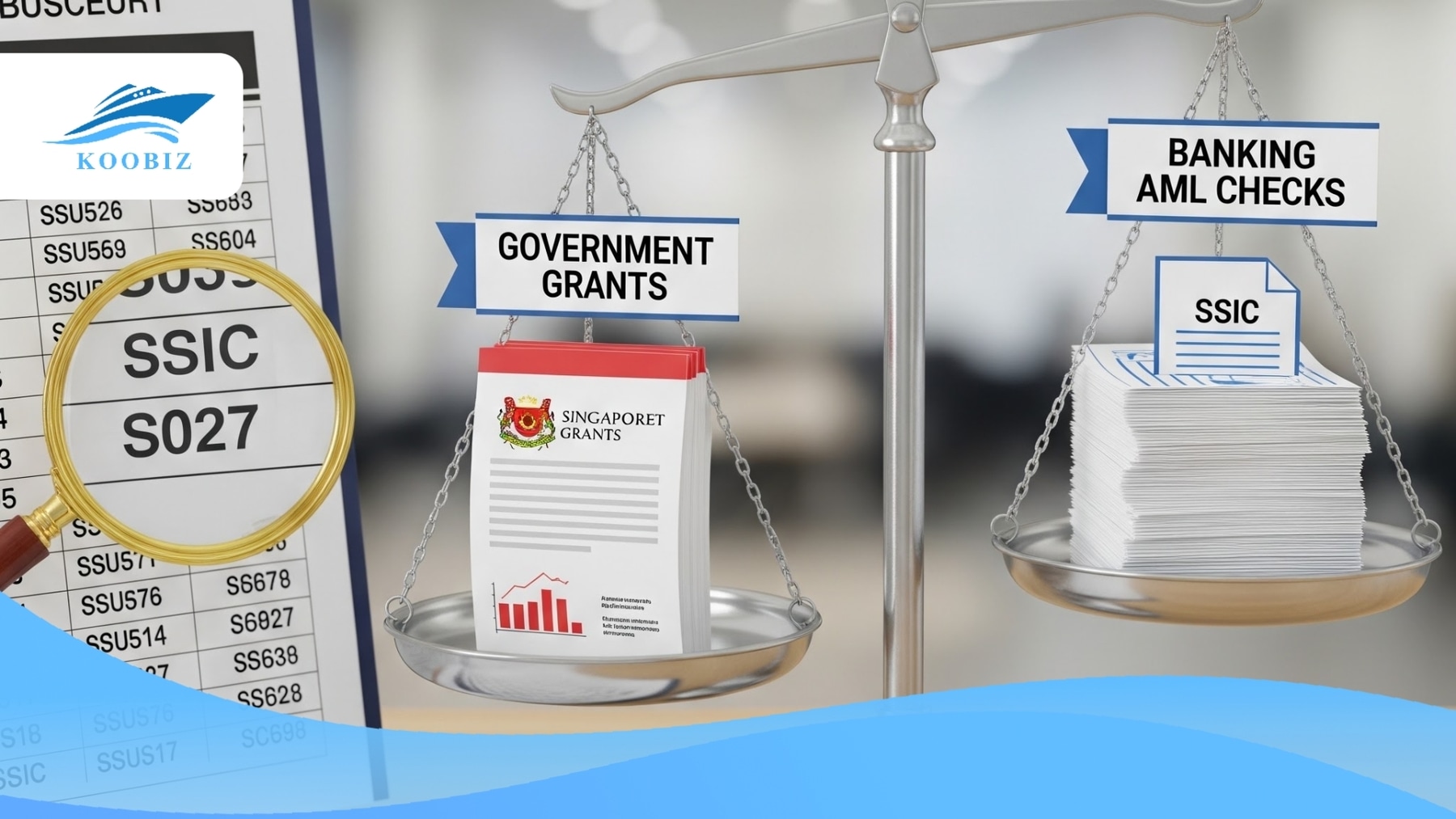
Yes, it impacts both your funding and your financial access. This is often an overlooked aspect that financial consultants at Koobiz emphasize to clients ensuring a smooth operational start.
1. Impact on Government Grants
AAgencies like Enterprise Singapore use SSIC codes to check if you qualify for grants (like the Productivity Solutions Grant).
2. Impact on Banking (AML Checks)
Banks check your SSIC code as part of their safety (AML) checks. Some codes are flagged as higher risk.
Conclusion
Choosing the right SSIC code sets up your Singapore business for correct reporting and smooth growth. It’s more than a quick search; it’s about truly understanding your main business, its future needs, and how banks see you. Accuracy here saves you from legal and administrative troubles later.
At Koobiz, we help entrepreneurs with every step of starting a business in Singapore. . From helping you search SSIC code databases to managing your company formation, tax, accounting, and audit requirements, our team ensures your business is set up for success from day one. If you need assistance opening a bank account in Singapore or clarifying your business activity, contact Koobiz today for expert support.
[SUMMARIES]
Digital vs. Traditional: Digital banks such as ANEXT and GXS dominate the micro-loan segment (below S$30,000) due to instant approvals. Traditional banks like DBS and UOB remain the preferred option for larger working capital loans of up to S$500,000.
Interest Rate Reality: In 2026, unsecured business loans in Singapore typically carry effective interest rates (EIR) of 7%–11% p.a. for banks, compared to 12%–24% p.a. for fintech lenders.
Government Support: The Enterprise Financing Scheme (EFS) remains the backbone of SME lending, with the Working Capital Loan (WCL) cap permanently set at S$500,000.
Budget 2026 Focus: Anticipated measures include enhanced support for AI Adoption and Green Financing, building on previous digitalization frameworks.
Approval Speed: InvoiceNow adoption has become a key requirement for SMEs seeking access to fast-track “Green Lane” loan approvals.
[/SUMMARIES]
Securing the right funding is critical for business growth in Singapore in 2026. With options ranging from traditional banks like DBS to digital challengers such as ANEXT, SMEs must balance interest costs with approval speed. At Koobiz, we support Singapore company incorporation and banking setup, helping businesses navigate small business loan options efficiently. This guide compares top 2026 loan options, interest rate trends, and expected Budget 2026 grants to help you make the right choice.
Top SME Business Loans in Singapore (2026): Traditional Banks vs. Digital Banks |
|---|
| There are three main categories of SME lenders in Singapore: traditional banks, digital banks, and private fintech lenders. Choosing the right option requires balancing interest cost, approval speed, and accessibility. |
|---|
Here is the quick snapshot of the 2026 lending landscape:
| Key Feature | Traditional Banks (DBS, UOB) | Digital Banks (ANEXT, GXS) | Fintech Lenders (Funding Societies) |
|---|---|---|---|
| Interest Rate (EIR) | Lowest (7% – 11%) | Moderate (9% – 15%) | High (12% – 24%) |
| Max Loan Amount | High (Up to S$500k) | Low (S$30k-S$100k) | Variable |
| Speed to Cash | Slow (1-2 Weeks) | Instant (24 Hours) | Fast (24-48 Hours) |
Best for Lowest Rates & High Loan Amounts: Traditional Banks (DBS/UOB).
Best for Startups & Speed: Digital Banks (ANEXT/GXS).
Best for Bad Credit / Flexibility: Fintech Lenders.
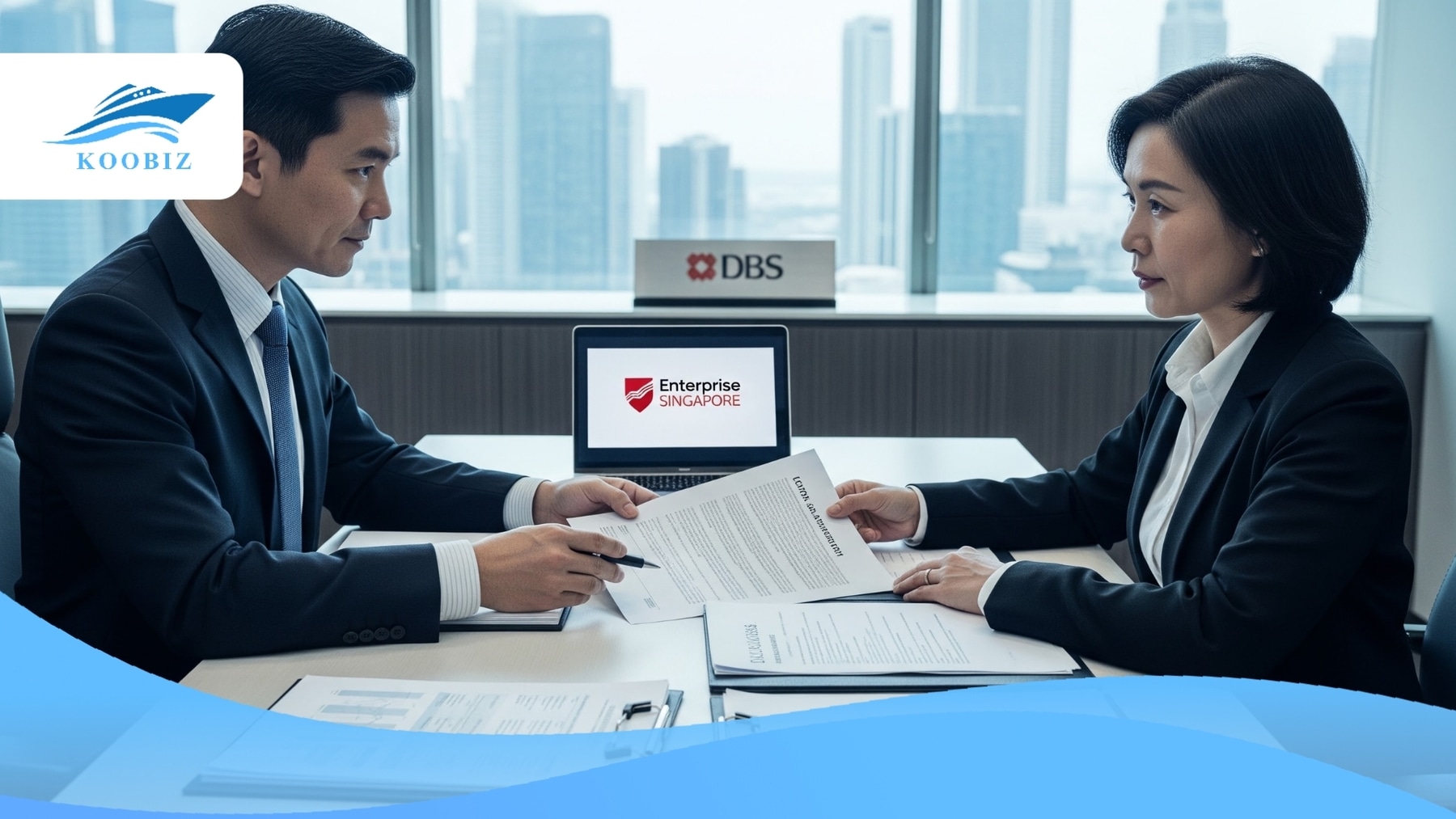
DBS Working Capital Loan and UOB BizMoney continue to be preferred options for mature businesses seeking larger funding amounts at competitive rates.
Specifically, these banks are the main participating financial institutions under the Enterprise Financing Scheme – Working Capital Loan (EFS-WCL). If your company has been incorporated for at least two years and records annual turnover above S$300,000, these banks typically offer the lowest cost of funding. The key advantage is the government risk-sharing mechanism, which co-shares default risk and allows banks to extend loans of up to S$500,000. However, be prepared for a rigorous credit assessment involving detailed financial statements and scrutiny of the directors’ Credit Bureau Singapore (CBS) ratings.
ANEXT Bank (by Ant Group) and GXS Bank (Grab-Singtel) have significantly expanded access to financing for asset-light companies or businesses that are too young for traditional banks.
These digital banks assess creditworthiness using alternative data, such as e-commerce transaction history or real-time Grab platform data, instead of relying solely on audited financial statements. For newly incorporated companies that have opened a digital bank account, these lenders are often the first financing option considered. For instance, the ANEXT Business Loan offers financing up to S$100,000 with no financial documents required for smaller amounts, making it ideal for immediate liquidity needs.
SME loan interest rates in Singapore generally consist of a base rate (often SORA) plus a spread, with 2026 Effective Interest Rates (EIR) ranging between 7% and 11% for bank loans.
To understand the true cost of borrowing, business owners must look past the “advertised” rates. The table below illustrates the difference between advertised flat rates and the actual effective interest rate (EIR).
| Lender Type | Advertised “Flat” Rate | Real Cost (EIR)* | Notes |
|---|---|---|---|
| Traditional Banks (DBS, UOB) | From ~5.0% p.a. | 7% – 11% p.a. | Lowest cost, strict criteria. |
| Digital Banks (ANEXT, GXS) | From ~6.8% p.a. | 9% – 15% p.a. | Higher rate for speed & convenience. |
| Private Lenders (Fintechs) | From ~1% per month | 12% – 24% p.a. | Short-term bridge capital. |
*Disclaimer: Rates are estimated as of February 2026 and are subject to change based on market conditions and individual credit assessment. Please verify latest rates directly with the respective financial institutions.
Key Warning:
In the current 2026 economic climate, while global central banks have moderated their hiking cycles, rates have not returned to the near-zero levels of the past decade. For unsecured business term loans from major banks, SMEs should expect an EIR of approximately 7% to 10%.
Yes, your business may qualify for government risk-sharing schemes such as the EFS if it is registered in Singapore and has at least 30% local shareholding.
However, meeting the government’s baseline criteria does not guarantee bank approval. Applicants must satisfy two separate layers of assessment: official government requirements and individual bank credit criteria.
These are the strict requirements set by Enterprise Singapore. If you miss one, you are automatically disqualified from the EFS scheme.
Even if you meet the government rules above, individual banks may still reject your application based on their own risk assessment.
There are three primary types of business financing available in Singapore: unsecured term loans, invoice financing, and green financing.
Choosing the appropriate financing structure depends on whether the business requires a lump sum for expansion or flexible funding for daily operations.

Best for: General business expansion, renovation, or marketing campaigns.
Unsecured term loans are lump-sum cash injections that do not require you to pledge physical assets (like property) as collateral.
This is the most common form of financing for SMEs in Singapore. The “security” is usually in the form of a Personal Guarantee (PG) from the directors. These loans are suitable for investments where returns are realized over time. Repayment is typically structured over 1 to 5 years with fixed monthly installments.
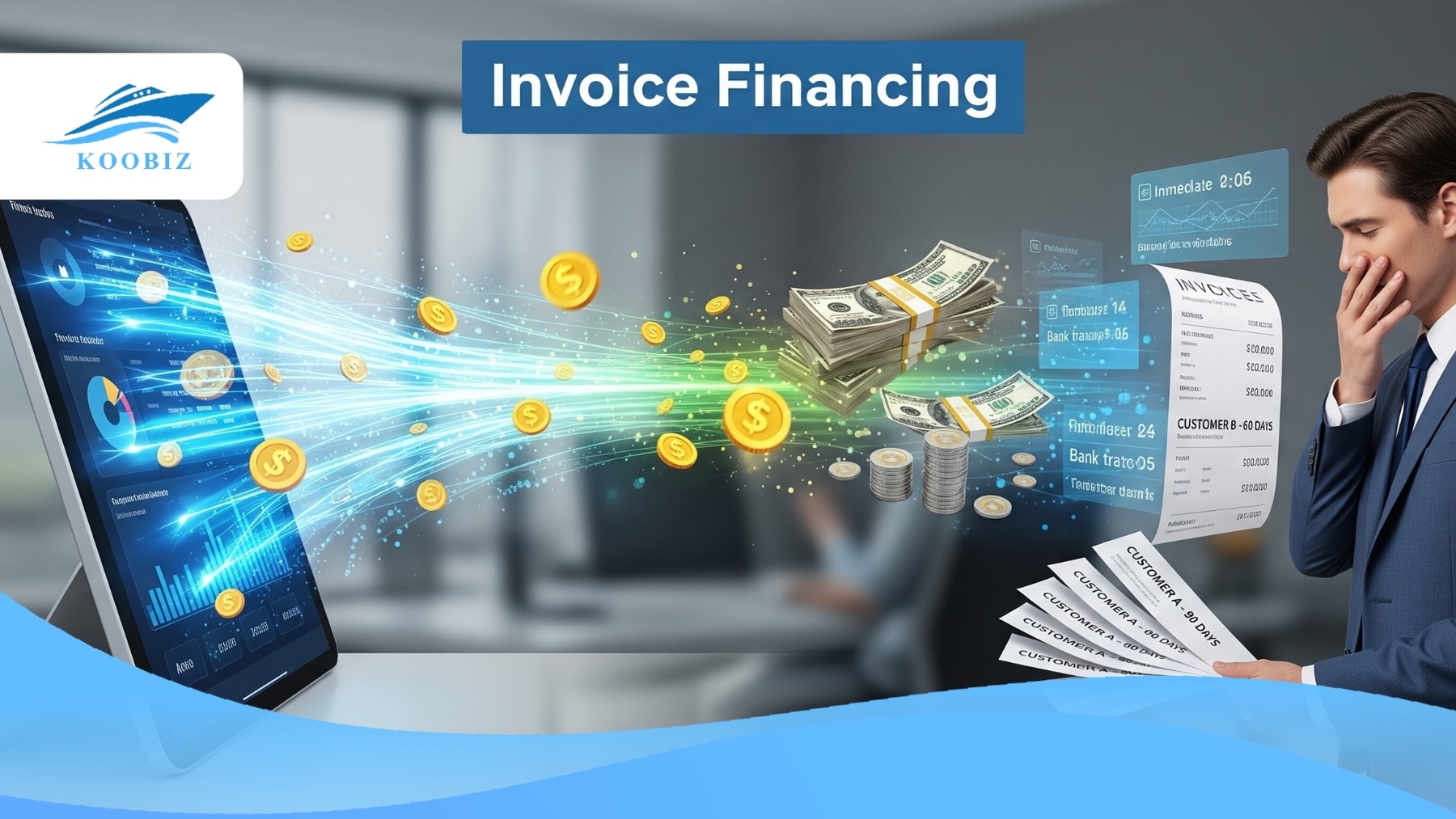
Best for: B2B companies with slow-paying clients (60-90 day terms) needing immediate cash flow.
Invoice financing (or factoring) allows businesses to borrow money against amounts due from customers, unlocking cash tied up in unpaid invoices.
This is particularly useful for B2B companies with long payment cycles. Instead of waiting for the client to pay, a lender (often a fintech such as Validus or Funding Societies) advances up to 80% of the invoice value immediately. Once the client pays, the remaining balance is released to you minus a fee. This solves cash flow gaps without adding long-term debt to the balance sheet.
Best for: Sustainability projects (Solar, EV fleets) seeking interest rate discounts.
Green Financing refers to loans specifically designed to fund sustainability projects, offering lower interest rates to companies that meet specific environmental criteria.
By 2026, green financing has become a mainstream funding option for SMEs. Banks like OCBC and UOB offer “SME Sustainable Financing” frameworks. If your business is investing in energy-efficient equipment, solar installation, or electric vehicle fleets, you can access “Green Loans” which often come with rate discounts of 0.5% to 1% lower than standard packages.
Singapore Budget 2026 is expected to prioritize AI adoption and sustainability, with targeted enhancements to existing SME grant frameworks.
Based on pre-budget recommendations and market trends, here are the two major areas where we anticipate enhanced support:
Industry analysts expect the Productivity Solutions Grant (PSG) to be expanded to cover more advanced AI applications.
The Energy Efficiency Grant (EEG) is projected to roll out to more sectors beyond manufacturing and food services.
Businesses should monitor the official Budget announcements in mid-February and assess grant eligibility before applying for SME loans.
The Enterprise Financing Scheme (EFS) is a comprehensive government program that consolidates various financing needs.
It is the backbone of SME lending in Singapore, where Enterprise Singapore shares the default risk with banks to encourage lending. Navigating the specific “EFS Variants” is crucial to getting the right limit for your business.
| Scheme Variant | Max Loan Quantum | Best Use Case |
|---|---|---|
| Working Capital (EFS-WCL) | S$500,000 | Daily cash flow, payroll, and rent. |
| Trade Loan (EFS-TL) | S$10 Million | Import/export needs and inventory stocking. |
| Project Loan (EFS-X) | Variable (High) | Overseas expansion and infrastructure projects. |
Critical Reality Check: Understanding EFS Risk-Sharing
MYTH: “If I default, the government pays the 70% risk-share portion.”
REALITY: You are 100% liable for the full amount. The “Risk-Share” is an insurance policy for the bank, not you. It encourages banks to lend, but in the event of default, the borrower and guarantors remain fully liable for the outstanding debt, including potential legal action.
Rejection by a major bank does not end the financing process; it indicates the need to explore alternative lenders aligned with the business’s risk profile.
If an application has been declined by DBS, OCBC, or UOB, identifying the underlying reason helps determine the most suitable alternative financing option.
The Solution: Licensed Money Lenders (LMLs)
The Solution: Venture Debt
The Solution: Invoice Factoring (Fintechs)
InvoiceNow is Singapore’s nationwide E-invoicing network based on Peppol, which allows lenders to verify transaction data instantly, leading to “Green Lane” loan approvals.
In the 2026 lending environment, approval speed has become a critical factor.
| Adopting InvoiceNow is not only about paperless invoicing; it significantly reduces manual verification delays at banks. |
|---|
By simply linking your accounting software to the InvoiceNow network, you create a verified digital footprint that banks can readily validate, allowing applications to be prioritised for faster review.
Conclusion
The landscape for Small Business Loans in Singapore in 2026 is diverse, ranging from government-backed schemes offering stability to AI-driven digital banks offering speed. Whether you are an established SME targeting the EFS Working Capital Loan or a startup leveraging GXS or ANEXT for quick liquidity, the key is to align the financing type with your business stage and needs.
However, the foundation of any successful loan application is a properly structured business. This means having your incorporation documents, tax filings, and management accounts in perfect order.
Need help getting your Singapore business loan-ready?
At Koobiz, we specialize in the foundational services that banks require. From seamless Company Incorporation to professional Accounting & Tax filing, we ensure your business credibility is high from day one. We also assist foreign entrepreneurs in navigating the corporate bank account opening process, connecting you with the right bankers at DBS, OCBC, UOB, and digital banks.
Visit Koobiz.com today to build a bankable business in Singapore.