Category: Corporate Secretarial

  • Understanding the Singapore Company Constitution: M&AA vs. Model Clauses

    Understanding the Singapore Company Constitution: M&AA vs. Model Clauses

    [SUMMARIES]

    The Singapore Company Constitution replaces the former Memorandum and Articles of Association as the supreme binding document governing internal management and shareholder rights.

    Founders must choose between ACRA’s standard Model Constitution for cost-efficiency or a Customized Constitution to accommodate complex share structures and investor needs.

    Amendments to this statutory contract require a Special Resolution with a 75% shareholder majority, ensuring rigorous consensus for governance changes.

    [/SUMMARIES]

    The Singapore Company Constitution is the supreme legal document that governs the internal management, rights, and obligations of a company and its members under the Companies Act 1967. For business owners, understanding this document is the foundation of corporate governance. Previously known as the Memorandum and Articles of Association (M&AA), the modern Constitution consolidates these regulations into a single, cohesive framework essential for every locally incorporated entity.

    Koobiz specializes in helping businesses navigate these requirements seamlessly during incorporation. Whether you choose the standard model or a bespoke document, getting this right from the start is critical.

    To comprehend the evolution of this document, one must look at the legislative changes introduced by the Companies (Amendment) Act 2014, effective from January 3, 2016. Before this, companies maintained two separate documents (Memorandum and Articles). Today, this distinction is abolished for new companies, streamlining the process. Older companies can continue using their existing M&AA, which is now legally “deemed” to be their constitution, though updating it to align with modern provisions is highly recommended.

    The most pressing decision for new entrepreneurs is choosing between the standard “Model Constitution” provided by ACRA and a “Customized Constitution.” This choice dictates the flexibility of your company regarding share transfers and decision-making.

    What is a Singapore Company Constitution?

    A Singapore Company Constitution acts as a binding contract between the company and its members. Deriving its authority from Section 22 of the Companies Act 1967, it serves as the ultimate rulebook for internal administration.

    Singapore Constitution: contract & internal management rules
    Singapore Constitution: contract & internal management rules

    Unlike commercial contracts, the Constitution governs the relationship between directors and shareholders including decision-making processes, power distribution, and member rights. If no specific constitution is filed during incorporation, the Model Constitution applies by default.

    Furthermore, the Constitution is a public document available for purchase via ACRA’s BizFile+ portal, allowing creditors and investors to review key rules regarding borrowing limits and share-transfer restrictions before entering into businesses.

    What are the Mandatory Sections Required by Law?
     

    The Mandatory Sections Required by Law
    The Mandatory Sections Required by Law
     

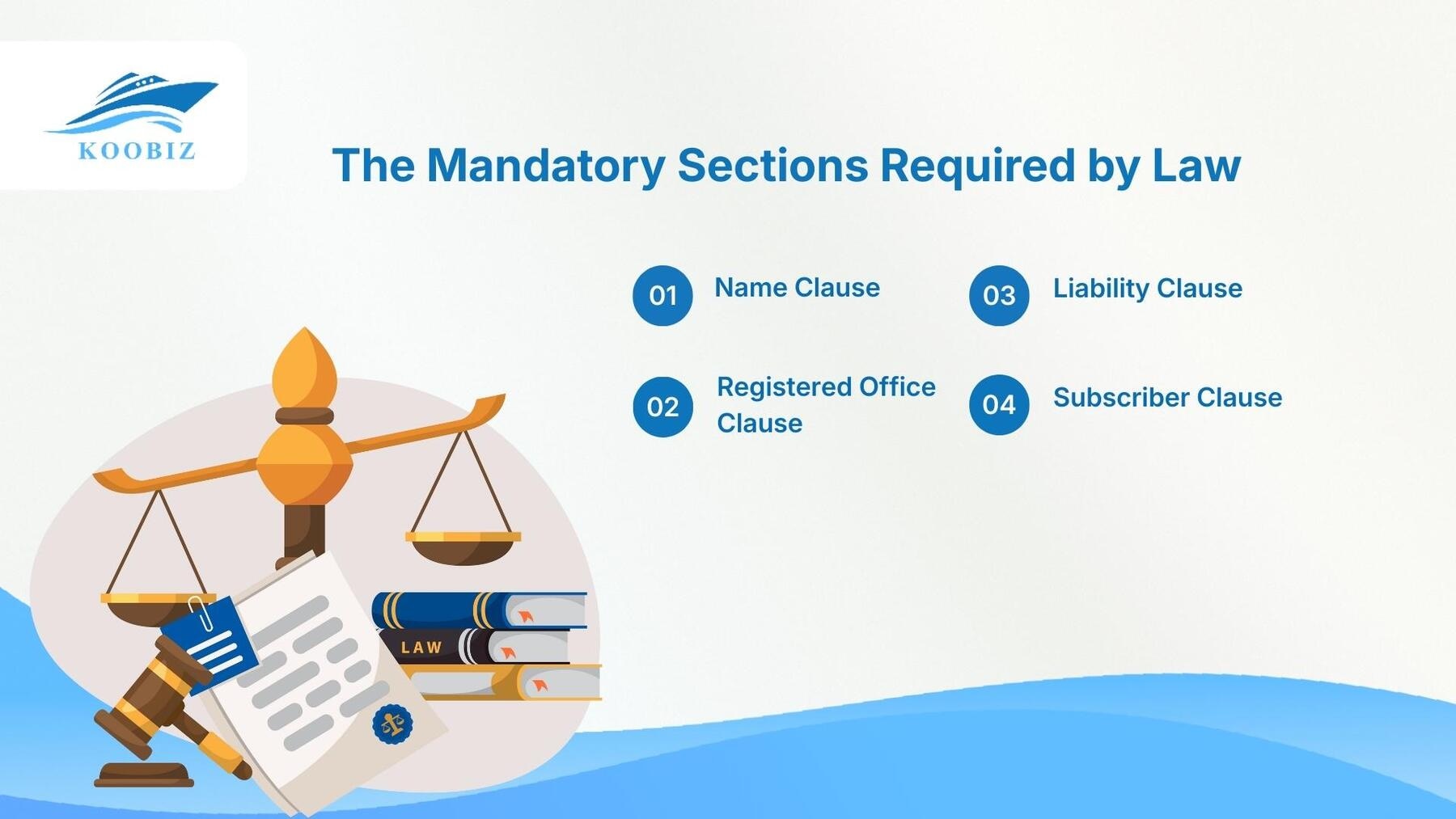
    While modern constitutions are flexible, Section 22 of the Companies Act mandates certain clauses to establish the entity’s identity and scope. The following four sections are standard and essential:

    1. Name Clause: The full, approved name of the company, matching exactly with the name reserved with ACRA. Private limited companies must include “Private Limited” or “Pte. Ltd.” as part of the name.
    2. Registered Office Clause: The constitution must declare that the registered office is situated in the Republic of Singapore. This establishes jurisdiction and the address for official legal notices.
    3. Liability Clause: For a company limited by shares, it must explicitly state that “the liability of the members is limited.” with a view to protecting shareholders from personal liability for company debts.
    4. Subscriber Clause: The document must state each initial subscriber’s full name, addresses and occupations along with a declaration that they desire to form the company and agree to take up the number of shares specified.

    Note: The Capital Clause (specifying authorized capital) is no longer mandatory following the abolition of authorized share capital and par value. Share capital is now declared directly via share allotment filings on BizFile+.

    5 Critical Considerations When Drafting Your Constitution
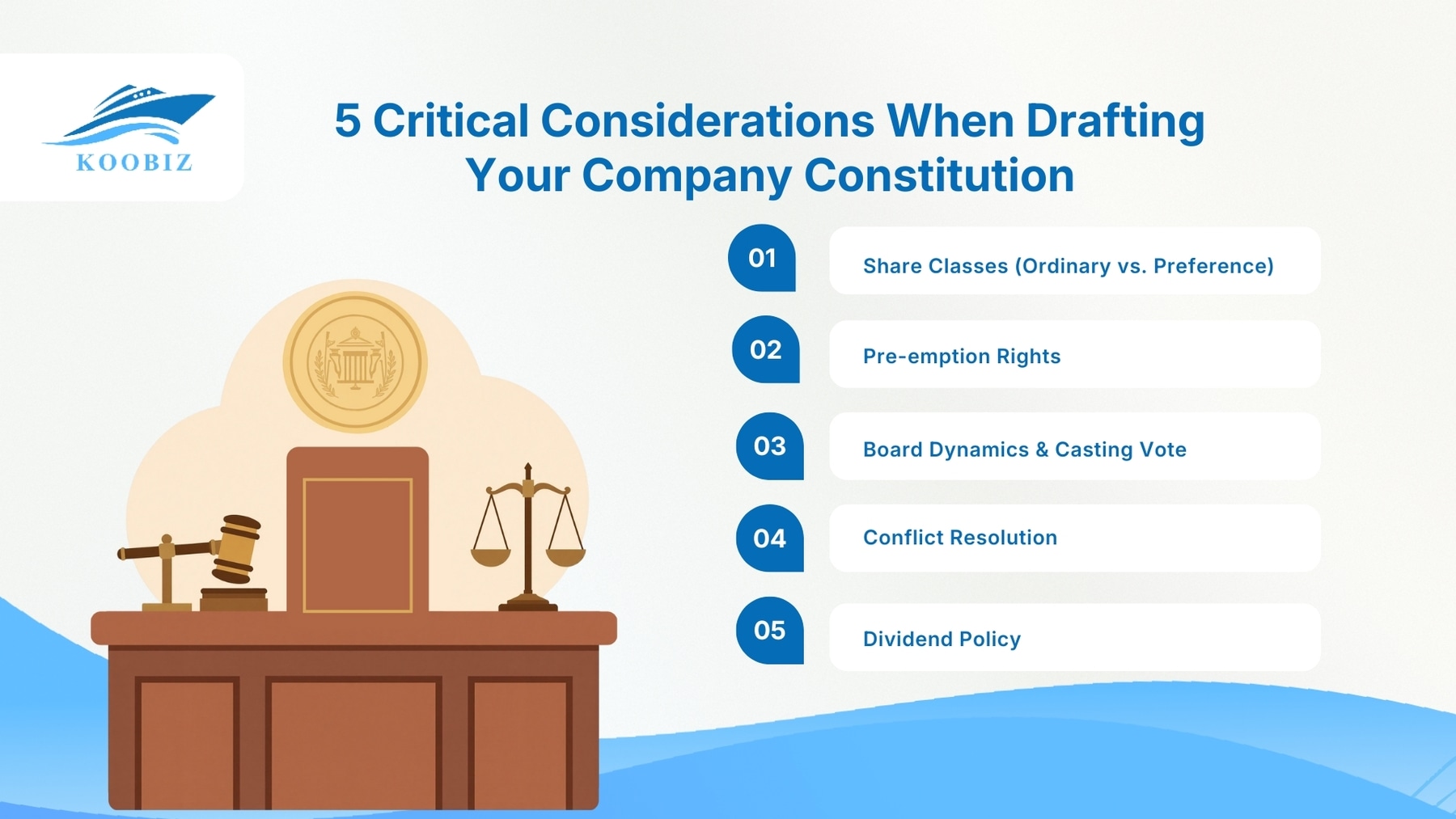
    5 Critical Considerations When Drafting Your Company Constitution
    5 Critical Considerations When Drafting Your Company Constitution

    Before adopting a standard template, evaluate these five strategic factors that determine power balance and financial fluidity:

    • Share Classes (Ordinary vs. Preference): Startups seeking investment often need “Preference Shares” (priority on dividends, no voting rights). The standard Model Constitution usually accounts only for ordinary shares.
    • Pre-emption Rights: This protects existing shareholders from dilution by requiring any selling shareholders to offer their shares to current members before external parties This is vital for maintaining control in private companies.
    • Board Dynamics & Casting Vote: A clause giving the Chairman a “casting vote” to prevent deadlock in case of a tie vote
    • Conflict Resolution: Your constitution can outline mediation or arbitration mechanisms to resolve disputes without resorting to winding up the company.
    • Dividend Policy: our constitution sets specific rules on how and when these are declared, offering transparency to investors.

    Model Constitution vs. Customized Constitution: Which is Right for You?

    The Model Constitution offers cost-efficiency while a Customized Constitution offers flexibility.

    The Model Constitution: A statutory template provided in the Companies (Model Constitutions) Regulations 2015.

    • Pros: Free, legally robust, and automatically compliant. Ideal for single-shareholder companies.
    • Cons: Rigid. Lacking specific protections like “tag-along” or “drag-along” rights crucial for VC-backed startups in a standard scenario.

    The Customized Constitution: A bespoke document drafted by professionals.

    • Pros: Tailored to specific needs. Allows for dual-class share structures and entrenched provisions.
    • Cons: Incurs legal drafting fees and requires more preparation time.

    How to Register and Submit Your Constitution to ACRA

    Submission is a mandatory step in the incorporation workflow via the BizFile+ portal.

    Log in to BizFile+: Use your SingPass to access ACRA’s filing system. Navigate to “Start a New Local Company”.

    Select Constitution Type:

    1. If adopting the Model Constitution, simply check the box for “Constitution of a Private Company Limited by Shares”.
    2. If using a Custom Constitution, upload the full PDF document containing the mandatory clauses.

    Digital Endorsement: ACRA sends an email notification to all appointed directors and shareholders. They must log in to BizFile+ and digitally endorse the application to confirm their agreement.

    Koobiz can handle this entire submission process for you, ensuring your Constitution is correctly formatted and lodged so you can focus on your business.

    How to “Buy” or Retrieve a Company Constitution?

    You can retrieve a constitution in two ways:

    • Adoption (Free): New business owners can download or select the Model Constitution for free during incorporation.
    • Due Diligence (Purchase): To view another company’s constitution (e.g., a competitor or partner), you can purchase “Extracts” from the ACRA iShop. As a public record, any member of the public can buy a copy (typically SGD 11 to SGD 26) to verify governance rules.

    Can You Amend the Constitution After Incorporation?

    Yes, via a Special Resolution, which requires at least 75% of the votes from shareholders.

    The Process:

    1. Proposal & Meeting: Directors/Shareholders propose the change at a General Meeting.
    2. Voting: A 75% majority is required to pass the resolution.
    3. Lodgement: The company must file a “Notice of Resolution” and the new constitution via BizFile+ within 14 days.

    Important Note on Entrenched Provisions:

    If you wish to add or remove “Entrenched Provisions” (clauses deliberately made difficult to change), Section 26A of the Companies Act usually requires unanimous agreement (100%) from all members,.

    Start Your Incorporation Journey with Koobiz

    Ready to incorporate your Singapore company with the right governance structure?

    Whether you need a simple Model Constitution or complex customized clauses, Koobiz provides expert incorporation and corporate secretarial services to ensure your business foundation is legally sound. We handle the drafting, registration, and ACRA submission so you can focus on growth.

    Visit koobiz.com today to incorporate your company with confidence.
  • What is an LLP? Meaning, Benefits, and Registration for Singapore Businesses

    What is an LLP? Meaning, Benefits, and Registration for Singapore Businesses

    [SUMMARIES]

    A Limited Liability Partnership (LLP) is a hybrid business structure that combines the operational flexibility of a partnership with the legal protection of a separate corporate personality, effectively shielding partners from personal liability for the negligence of their colleagues.

    Taxation is applied on a “pass-through” basis where the entity itself is not taxed; instead, profits are distributed to partners and subject to their personal progressive income tax rates, unlike the flat corporate rates and exemptions available to Private Limited companies.

    While LLPs offer lower compliance costs by requiring only an annual declaration of solvency rather than complex audits, they are unsuitable for scalable startups seeking Venture Capital, as the inability to issue shares makes raising external funding difficult.

    [/SUMMARIES]

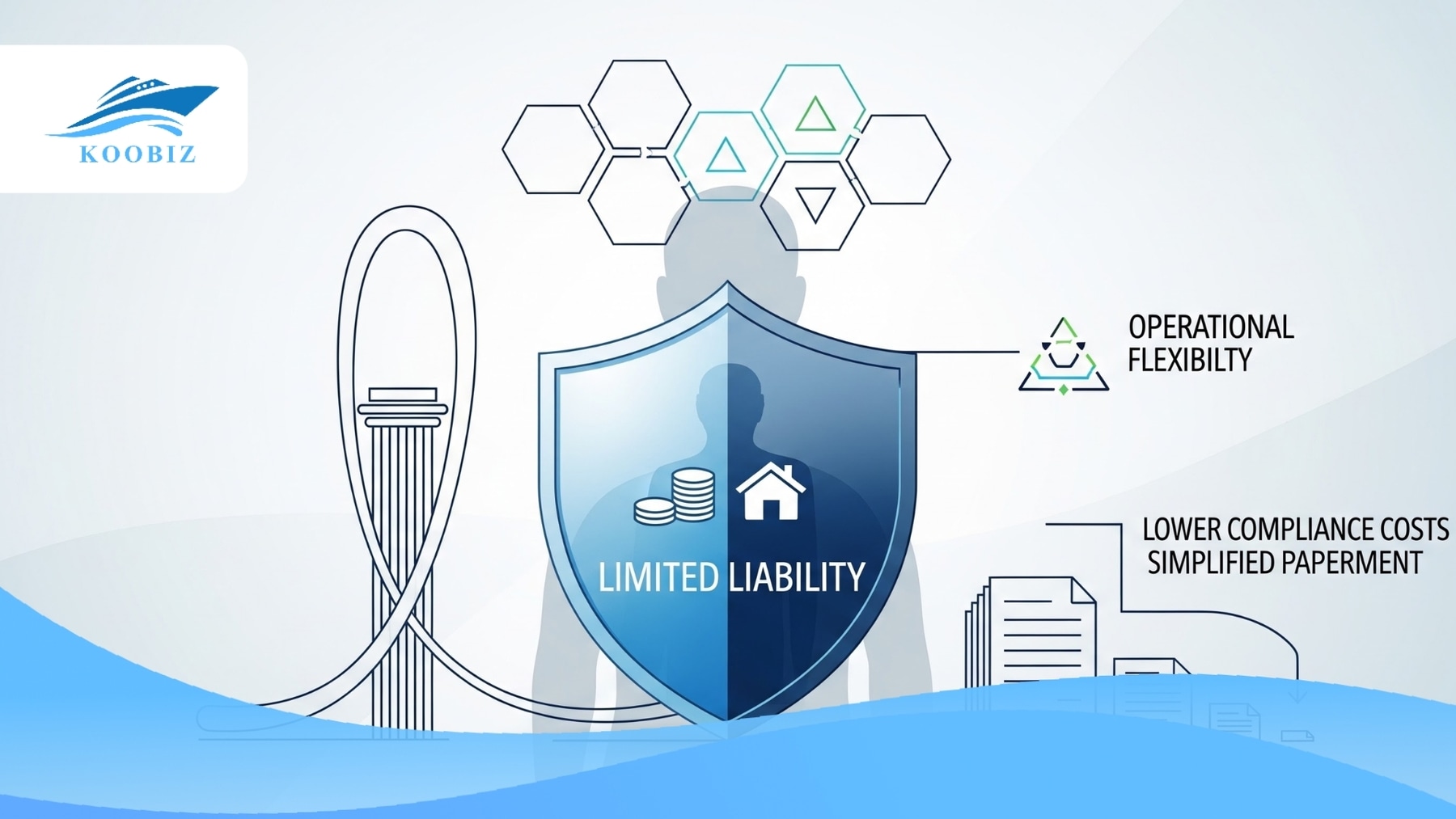
    A Limited Liability Partnership (LLP) in Singapore is a hybrid business structure that combines the operational flexibility of a general partnership with the legal protection of a private limited company. It is an ideal entity for professionals and small business owners who seek to limit their personal liability without the administrative burden of a corporation.

    Specifically, unlike a sole proprietorship where the owner and business are one, an LLP possesses a separate legal personality, meaning partners are not personally liable for the business’s debts or the negligence of other partners. This structure is governed by the Limited Liability Partnerships Act 2005 and is regulated by the Accounting and Corporate Regulatory Authority (ACRA).

    To navigate the business landscape effectively, it is crucial to compare the LLP against other common structures like Private Limited (Pte Ltd) companies and Sole Proprietorships. While an LLP offers tax transparency and lower compliance costs, a Pte Ltd might be superior for raising capital. Understanding these nuances is key to making an informed decision.

    In the following sections, we will provide a comprehensive guide covering the detailed meaning, distinct benefits, tax implications, and a step-by-step registration process for setting up an LLP in Singapore. Whether you are a local entrepreneur or a foreign professional, this guide will clarify the path to incorporation.

    What is a Limited Liability Partnership (LLP) in Singapore?

    LLP - separate legal personality and the ability to own property in its own name
    LLP – separate legal personality and the ability to own property in its own name

    A Limited Liability Partnership (LLP) is a corporate body formed by being registered under the LLP Act, characterized by its separate legal personality and the ability to own property in its own name. It essentially serves as a “middle ground” between a partnership and a company, offering the best of both worlds for specific professional groups.

    To understand this structure more deeply, we must look at its core legal foundation. An LLP is capable of suing and being sued in its own name, acquiring, owning, holding, and developing property, and having a common seal. This distinction is vital because, in a traditional general partnership, the partners are the firm. In an LLP, the firm exists independently of its partners.

    This structure is particularly popular among chartered professions—such as lawyers, accountants, and architects—where partners want to work together but do not want to be held personally responsible for the professional malpractice or negligence of their colleagues. The liability of a partner is limited to their agreed contribution to the LLP, shielding their personal assets (like their home or personal savings) from business claims, provided they were not the ones directly at fault.

    What are the Key Features and Benefits of an LLP Structure?

    Key features that define the LLP structure
    Key features that define the LLP structure

    There are three primary features that define the LLP structure: separate legal personality, perpetual succession, and operational flexibility combined with limited liability. These attributes make the LLP a compelling choice for small teams and professional services.

    • Separate Legal Identity: As mentioned, the LLP is a body corporate. This means the LLP is liable for its own debts and obligations. A partner’s personal assets are protected from the liabilities of the LLP. This is a significant upgrade from a Sole Proprietorship.
    • Perpetual Succession: The existence of the LLP is not dependent on its partners. Any change in the partners (due to resignation, death, or bankruptcy) does not affect the existence, rights, or liabilities of the LLP. This ensures business continuity and stability for clients and stakeholders.
    • Lower Compliance Costs: A LLP has fewer statutory requirements. They simply need to lodge an annual declaration of solvency.
    • Operational Flexibility: The internal governance of an LLP is typically determined by the LLP agreement between partners. This allows the partners to create a management structure tailored to their needs, rather than follow the rigid hierarchy of a corporation.

    LLP vs. Pte Ltd vs. Sole Proprietorship: Which Structure is Right for You?

    The LLP wins on flexibility and lower compliance costs, the Private Limited (Pte Ltd) company is superior for scalability and tax incentives, while the Sole Proprietorship is optimal for simplicity and zero setup cost but carries the highest risk. Choosing the right structure depends entirely on your business goals, risk appetite, and capital needs.

    To help you make an informed decision, let’s analyze the critical differences between these entities in the table below.

    Feature Sole Proprietorship Limited Liability Partnership (LLP) Private Limited (Pte Ltd)
    Liability Unlimited. The owner is personally liable for all debts and losses. Limited. Partners are protected from the firm’s debts and other partners’ negligence. Limited. Shareholders are only liable up to the amount of their share capital.
    Taxation Personal Income Tax (0% – 24%). No corporate exemptions. Personal Income Tax (0% – 24%). No corporate exemptions. Corporate Tax (Flat 17%). Eligible for significant tax exemptions (e.g., SUTE).
    Scalability Limited to personal savings or loans. Hard to scale. Difficult to raise external capital (investors usually want shares). Easy to raise capital by issuing new shares to investors.
    Credibility Low perception of scale. Professional image, suitable for service firms (lawyers, architects). High credibility, preferred by banks and large suppliers.

    Koobiz Insight: If you are planning to raise Venture Capital or sell shares in the future, a Pte Ltd is the standard requirement. However, if you are a group of lawyers or consultants keeping profits within the team, an LLP is often more tax-efficient and easier to manage. Koobiz can assist you in evaluating these options based on your specific financial projections.

    What are the Requirements to Register an LLP in Singapore?

    Registering an LLP requires four fundamental components: a minimum of two partners, at least one locally resident manager, a registered local address, and a unique business name. These are the statutory minimums mandated by ACRA to ensure the entity has a legal footing and accountability in Singapore.

    Specifically, ensuring you meet these criteria beforehand will prevent delays during the application process.

    • Partners: An LLP is required to have at least two partners. These can be individuals (min. 18 years old) or corporate bodies (other companies). There is no cap on the maximum number of partners.
    • Managers: at least one manager is an “ordinarily resident” in Singapore. This person must be a Singapore Citizen, Permanent Resident, or an EntrePass/Employment Pass holder. The manager is responsible for statutory compliance. Note that a partner can also be a manager.
    • Registered Address: A P.O. Box is not accepted. A physical address in Singapore is mandatory. This can be a commercial office or a residential home (under the Home Office Scheme).
    • Compliance Declaration: All partners have to be included in a statement of non-disqualification (e.g., not an undischarged bankrupt) and consent to act as managers/partners.

    How to Register an LLP with ACRA? (Step-by-Step Guide)

    The registration process involves three main steps: Name Reservation, Registration Filing via BizFile+, and Payment of Fees, resulting in the issuance of a Unique Entity Number (UEN). The entire process is digital and can typically be completed within 15 to 30 minutes if all documents are in order.

    Let’s break down the execution of these steps to ensure a smooth incorporation experience.

    Step 1: Reserve the LLP Name:

    Log in to ACRA’s BizFile+ portal using your Singpass. Submit your proposed LLP name. The name will be rejected if it is identical to an existing entity, undesirable (vulgar), or similar to reserved names. Once approved, the name is reserved for 120 days.

    Step 2: Submit Registration Details:

    Registration of the new business entity:

    • Details of partners and managers (ID numbers, addresses).
    • The registered office address.
    • The nature of business activities (SSIC Codes).
    • Endorsements from the appointed partners/managers (they will receive an email to accept their appointment via BizFile+).

    Step 3: Pay the Registration Fee:

    The registration fee for an LLP is SGD 100. After payment and endorsement, ACRA will issue an email notification confirming the registration – this serves as your official Certificate of Incorporation. You will also receive your Business Profile, which acts as the firm’s “birth certificate.”

    Need Professional Help? Koobiz offers comprehensive incorporation services to handle the entire ACRA registration process for you, ensuring you start your business on the right legal footing without the hassle.

    What are the Tax Implications and Compliance Requirements for an LLP?

    Managing an Limited Liability Partnership (LLP)
    Managing an Limited Liability Partnership (LLP)

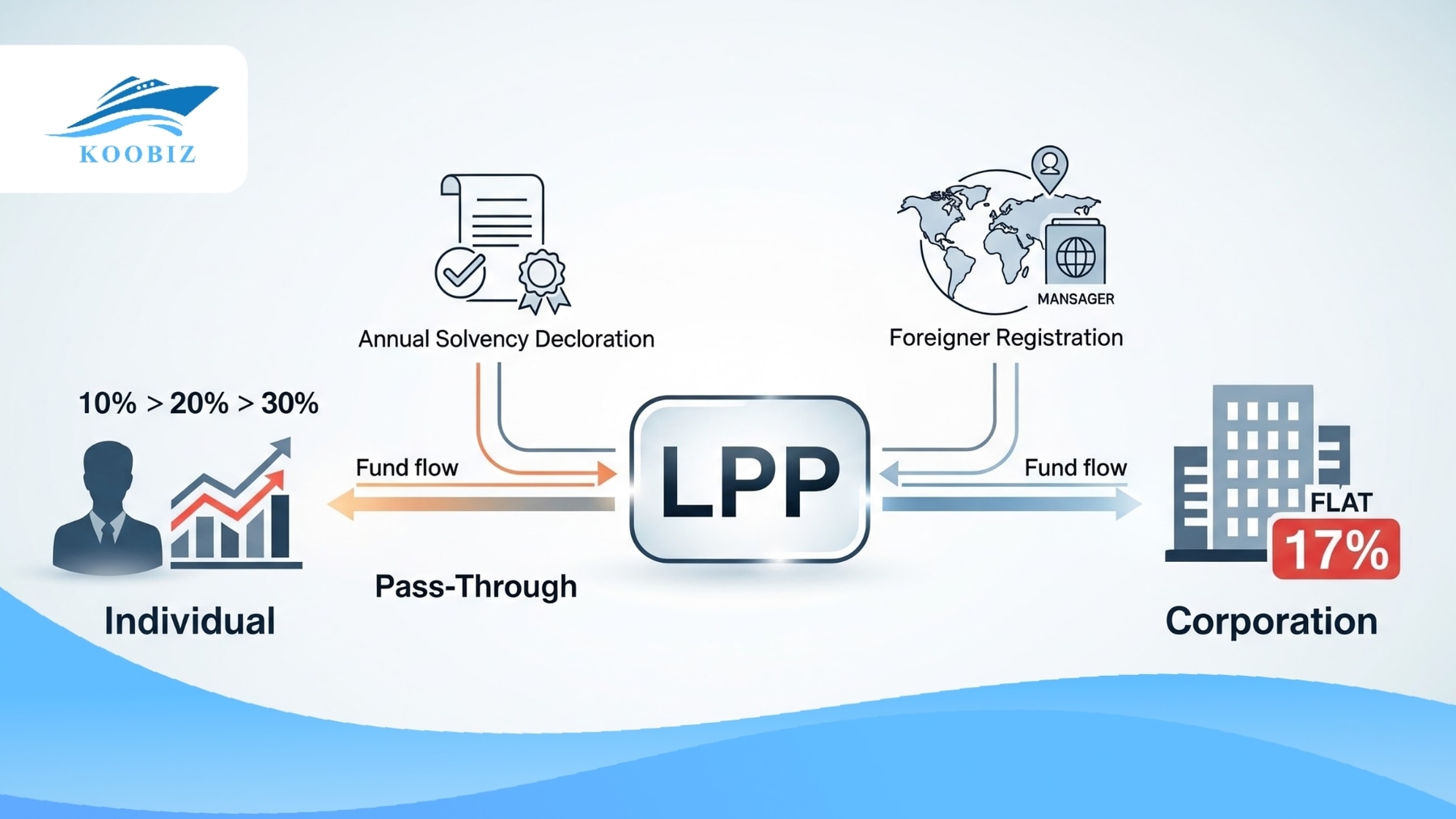
    Managing an LLP involves understanding tax transparency principles and adhering to the annual declaration of solvency to avoid penalties. Unlike a company that pays tax on its own profits, an LLP functions as a “pass-through” entity for tax purposes.

    To clarify the ongoing obligations of an LLP owner, we must look at how taxation and reporting differ from other structures.

    Is an LLP subject to Corporate Income Tax in Singapore?

    No, an LLP is not a separate taxable entity and is not subject to corporate income tax; instead, it is treated as a tax-transparent entity where partners are taxed on their share of the income.

    Specifically, the LLP itself does not file a Corporate Tax Return (Form C-S/C).

    • Individual Partners: Will be taxed at personal income tax rates, which are progressive from 0% to 24%.
    • Corporate Partners: Will be taxed at the corporate tax rate (17%).
    • Note: Since the LLP is not a taxable entity, it cannot claim tax incentives available to Pte Ltd companies

    What is the Annual Declaration of Solvency?

    The Annual Declaration of Solvency is a mandatory statement lodged by the managers stating whether the LLP is able to pay its debts as they fall due during the normal course of business.

    Specifically, this is the primary compliance requirement for LLPs, replacing the complex financial filing required for companies.

    • Procedure: Managers must lodge this declaration via BizFile+ annually.
    • Timeline: It must be lodged within 15 months from the date of registration, and subsequently once every calendar year (not exceeding 15 months from the last lodgement).
    • Penalty: Failure to lodge this declaration is an offense under the LLP Act and can result in late filing penalties or prosecution.

    Can Foreigners Register an LLP in Singapore Without Relocating?

    Yes, foreigners can register an LLP in Singapore without relocating, provided they appoint at least one locally resident manager to meet the statutory requirement.

    This structure allows foreign investors to maintain ownership without physically residing in the country.

    • The Challenge: ACRA requires one manager to be “ordinarily resident” (Citizen, PR, or EP holder). A foreigner living overseas cannot fulfill this role alone.
    • The Solution: Foreigners must engage a Corporate Service Provider (like Koobiz) to provide a Nominee Manager service. This Nominee Manager fulfills the statutory requirement but typically does not have executive power over the business.
    • Visa Implications: Registering an LLP does not automatically grant a work visa. If the foreign partner wishes to move to Singapore to run the business, they must apply for an Employment Pass (EP) or EntrePass, though approval for LLP owners can be stricter than for Pte Ltd shareholders.

    How to Convert a Sole Proprietorship or Partnership to an LLP?

    Converting involves a process of registering a new LLP, transferring the business assets and undertakings to it, and then terminating the old business entity.

    There is no direct “convert button” in the ACRA system; it is a legal transition process.

    1. Register the New LLP: Follow the standard registration steps mentioned above. You can often retain the same business name if the old entity consents to it.
    2. Transfer Assets: Execute a business transfer agreement to move assets, contracts, and client lists from the Sole Proprietorship/Partnership to the new LLP.
    3. Novate Contracts: Ensure existing contracts with suppliers or landlords are updated to reflect the new LLP entity (since the LLP is a separate legal person).
    4. Cessation: Once the transfer is complete, file a “Cessation of Business” for the old Sole Proprietorship or Partnership via BizFile+ to close it formally.

    Ready to Incorporate? Start Your Journey with Koobiz

    Navigating the legalities of partnership agreements, tax compliance, and ACRA regulations can be complex for new business owners. Koobiz specializes in simplifying company incorporation in Singapore, ensuring your business starts on the right legal footing.

    Whether you need assistance with registering your LLP, finding a Nominee Manager, or managing annual compliance, our team provides expert guidance tailored to your needs.

    Visit Koobiz.com to Incorporate Your Company Today

  • Nominee Director in Singapore: Rules, Risks, and Requirements (2026 Guide)

    Nominee Director in Singapore: Rules, Risks, and Requirements (2026 Guide)

    [SUMMARIES]

    • Essential for Compliance: Every Singapore company requires at least one resident director; nominees fulfill this for foreign owners, enabling 100% foreign ownership without local partners.
    • Benefits: Immediate incorporation, full control retention, privacy protection, and faster market entry for overseas entrepreneurs.
    • Roles & Risks: Nominees manage statutory duties such as ACRA filings but also share legal liability. Key risks include trust, transparency, and compliance gaps. These can be reduced with clear agreements and proper oversight.
    • Appointment Process: Choose qualified residents (Citizens/PR preferred), execute NDA/Indemnity, file with ACRA within 14 days, and update Central Registers per 2025 regulations.
    • Replacement: Appoint new director before removing sole resident to avoid breaches; update ACRA and registers promptly.
    • Key Advice: It is safer to use licensed professional companies that provide corporate services, because they know the rules and can help reduce risks when you appoint a nominee director.

    [/SUMMARIES]

    What is a Nominee Director in Singapore?

    A Nominee Director in Singapore is a locally resident individual appointed to meet the legal requirement for every company to have at least one Singapore-based director. They act in a non-executive role solely to fulfil this statutory obligation.

    Nominee director generally does not participate in the commercial management, financial decisions, or daily operations. Their primary function is to ensure the company stays compliant with the Accounting and Corporate Regulatory Authority (ACRA).

    Key characteristics:

    • Statutory Compliance: They serve as the official local representative.
    • Non-Executive: They do not influence business strategy or operations.
    • Safety Mechanism: They allow foreign owners to maintain full control of the business while satisfying local laws.

    Benefits of Having a Nominee Director

    For foreign entrepreneurs and international companies, appointing a Nominee Director is often the most strategic path to entering the Singapore market.

    Benefits of a Nominee Director
    Benefits of a Nominee Director
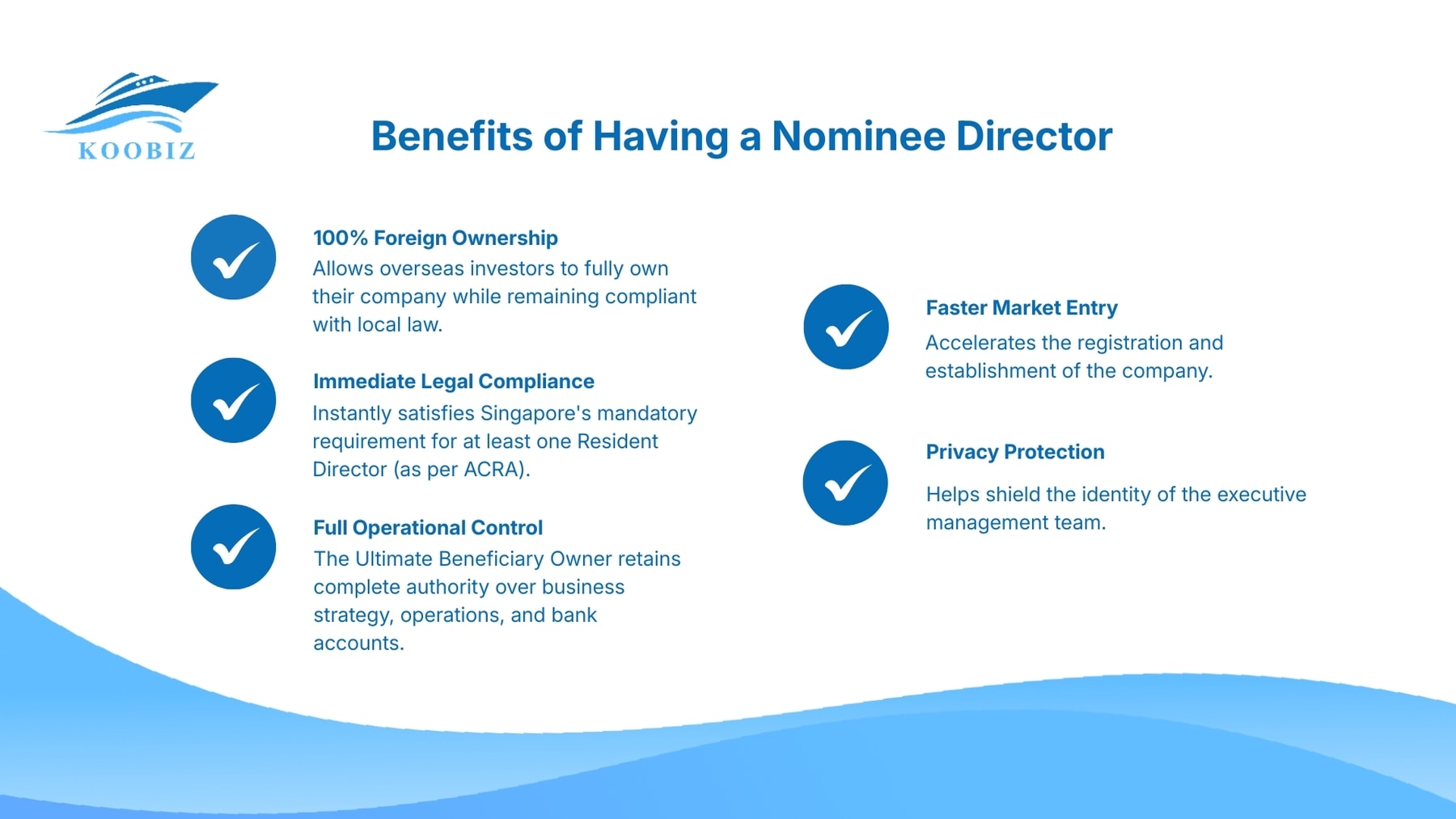
    • 100% Foreign Ownership: You may incorporate and fully own your Singapore company without engaging a local partner.
    • Immediate Legal Compliance:. A nominee fulfills this statutory obligation instantly, keeping your business compliant with ACRA regulations.
    • Full Operational Control: Beneficiary Owners retain complete authority over the company’s bank accounts, strategy, and day-to-day decision-making without interference.
    • Faster Market Entry: You can register your company immediately, even if you are currently overseas.
    • Privacy Protection: For owners seeking privacy, a nominee shields the identity of the executive team, though shareholding structures remain visible.

    Roles and Responsibilities of a Nominee Director

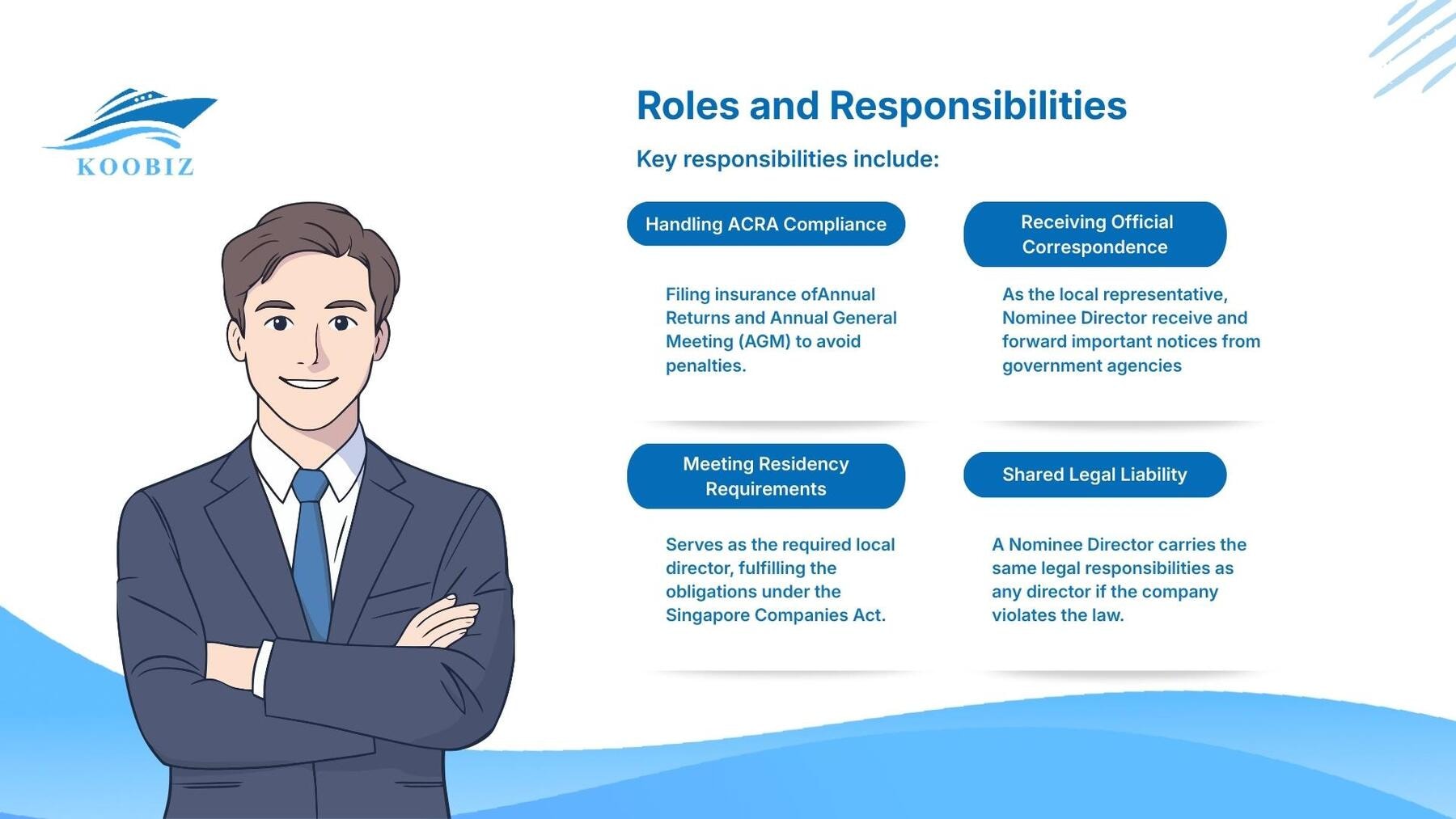
    A Nominee Director’s role is strictly administrative and statutory. Key responsibilities include:

    Nominee Director: Administrative, ACRA compliance, shared legal liability.
    Nominee Director: Administrative, ACRA compliance, shared legal liability.
    • Handling ACRA Compliance: Filing insurance of Annual Returns and Annual General Meeting (AGM) to avoid penalties.
    • Meeting Residency Requirements: Serves as the required local director, fulfilling the obligations under the Singapore Companies Act..
    • Receiving Official Correspondence: As the local representative, Nominee Director receive and forward important notices from government agencies
    • Shared Legal Liability: A Nominee Director carries the same legal responsibilities as any director if the company violates the law.

    Risks of Appointing a Nominee Director in Singapore

    While essential for compliance, this arrangement carries specific risks that business owners must manage:

    • Operational Disconnect (Limited Oversight): Since the nominee is not involved in daily operations, there can be a gap between what the company does and what the director knows. This disconnect can lead to accidental compliance lapses if communication is poor.
    • The “Rogue Director” Risk (Trust Issues): The relationship relies heavily on trust. Without a strong legal agreement, there is a theoretical risk of a nominee acting without authorization or resigning suddenly, leaving the company legally vulnerable.
    • Strict Liability Friction: Because nominees face personal jail time and fines for company breaches, they are extremely risk-averse and may refuse to sign documents that lack clarity.
    • Conflicts of Interest: If you appoint a non-professional nominee (like a friend or associate) who has other business interests, their loyalties may be divided, potentially jeopardizing your company’s confidentiality.
    • Reputation Damage: Your company’s credibility is linked to its directors. Appointing a nominee with a poor track record or connections to suspicious entities can negatively impact your business reputation with banks and partners.

    How to Appoint a Nominee Director in Singapore

    This is the fully updated step-by-step process, revised to include the critical 2025 “Central Register” regulations and the correct advice regarding Employment Pass holders.

    New Process: Revised for
    New Process: Revised for “Central Register 2025” & EP

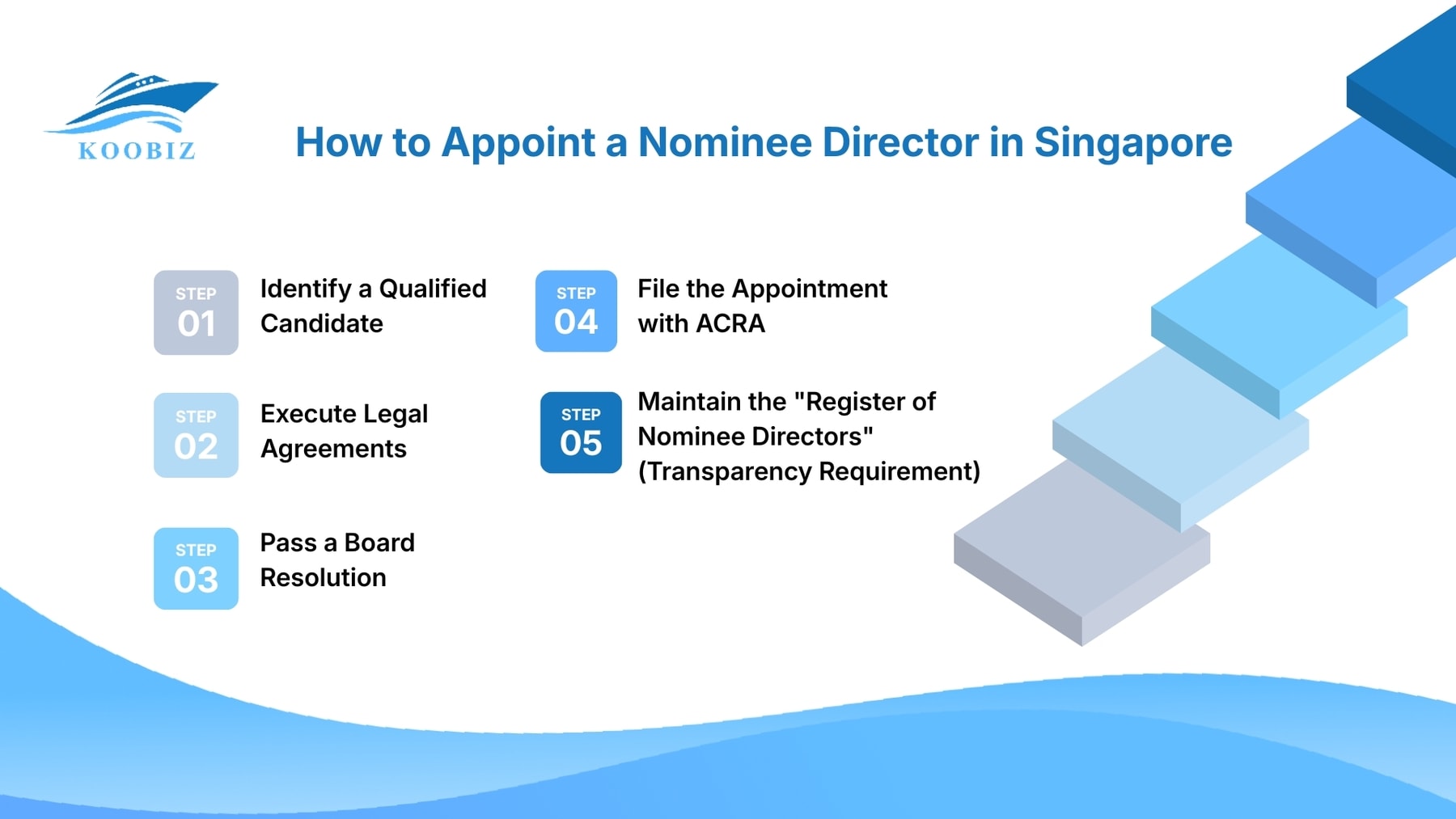
    Step 1: Identify a Qualified Candidate

    You must select an individual who meets the strict residency criteria set by ACRA.

    • Who Qualifies: A Singapore Citizen or Permanent Resident (PR).
    • Who to Avoid: Employment Pass (EP) holders. Using an EP holder as a nominee for an unrelated business without a “Letter of Consent” is a breach of work pass conditions.
    • Best Practice: Engage a licensed Corporate Service Provider (CSP). They provide professional nominees who are pre-vetted, ensuring you avoid the risks of appointing friends or unqualified individuals.

    Step 2: Execute Legal Agreements

    Before the appointment becomes official, you must protect your assets with proper documentation.

    • Nominee Director Agreement (NDA): A contract stating the nominee acts only on your instructions and has no executive power.
    • Deed of Indemnity: This protects the nominee against financial penalties, provided they have acted honestly.
    • Undated Resignation Letter: Have the nominee sign a resignation letter with the date left blank. This effectively gives you the power to remove them immediately whenever you choose.

    Step 3: Pass a Board Resolution

    The company’s existing directors must formally approve the appointment.

    • The Action: Hold a board meeting (or circulate a written resolution) to approve the new director.
    • The Record: This resolution must be signed and filed in the company’s Minute Book by the Company Secretary.

    Step 4: File the Appointment with ACRA

    Once the paperwork is signed, the appointment must be registered with the government.

    • The Deadline: The filing must be submitted within 14 days of the appointment.
    • The Process: Your Company Secretary or Filing Agent will log into the ACRA BizFile+ portal to submit the appointment.
    • The Result: The nominee’s name will appear on the company’s public Business Profile.

    Step 5: Maintain the “Register of Nominee Directors” (Transparency Requirement)

    Crucial Update: Singapore law now requires a secondary layer of disclosure to prevent money laundering.

    • Private Register: You must update your internal Register of Nominee Directors (kept at your registered office).
    • Central Register: You must update the company’s internal Register of Nominee Directors kept at your registered office. Unlike the Register of Controllers, this is not currently filed centrally but must be available to authorities upon request.

    Privacy Note: Unlike the public profile, the detailed information in this Central Register is not open to the public; it is accessible only to law enforcement agencies.

    By following these steps, you ensure your nominee arrangement is legally watertight, transparent to authorities, and secure for your business ownership.

    Replacing or Removing a Nominee Director

    Replacing a Nominee Director is a precise legal process. You must follow the correct order of operations to ensure your company does not breach the “local resident director” requirement during the transition.

    Nominee Director - 6 Legal Steps, Avoid ACRA Breach.
    Nominee Director – 6 Legal Steps, Avoid ACRA Breach.

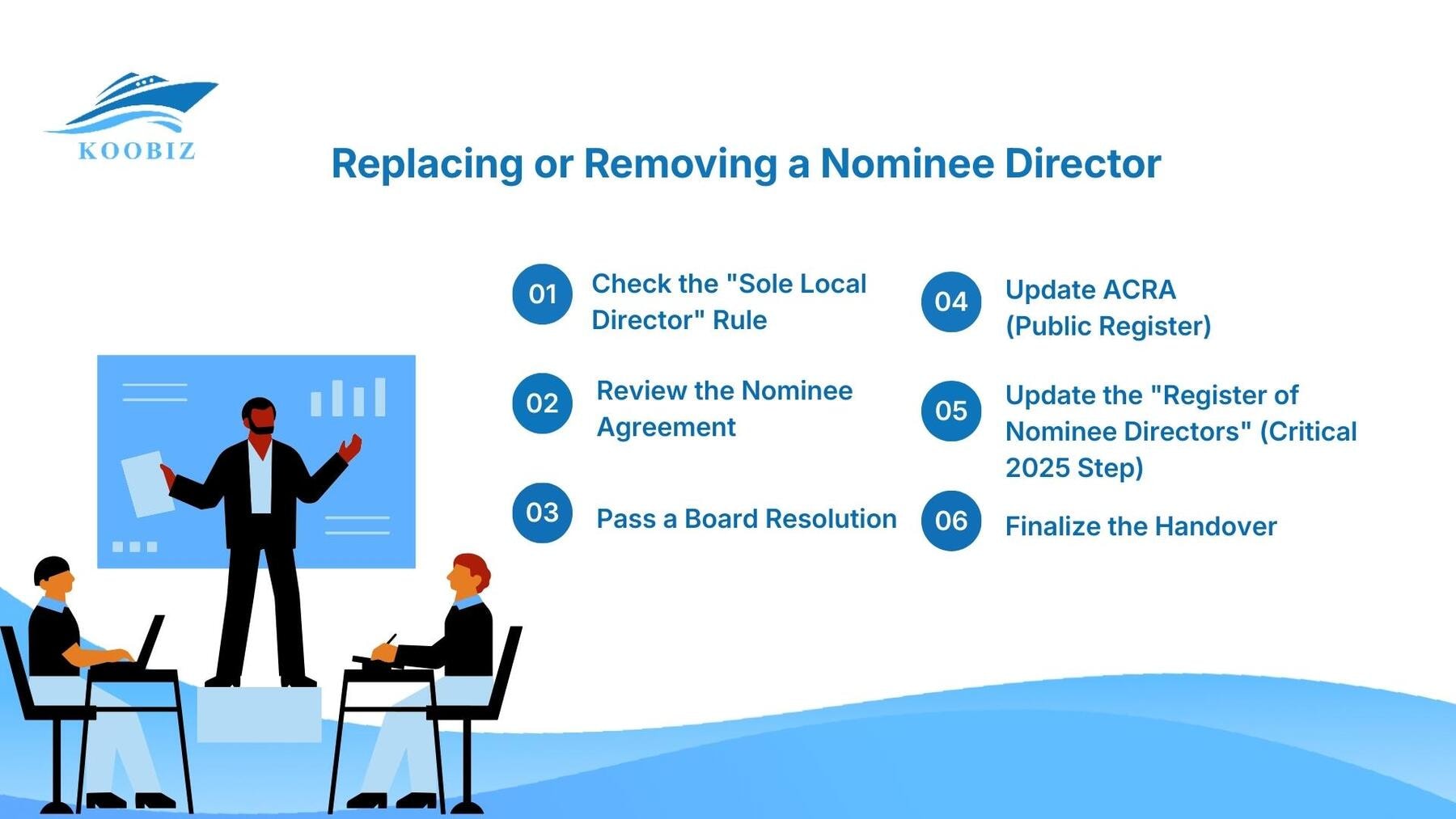
    1. Check the “Sole Local Director” Rule

    Before you do anything, check if the current nominee is the only director residing in Singapore.

    • The Rule: Under Section 145(1) of the Companies Act, a company cannot accept the resignation of its sole local director until a replacement has been appointed.
    • The Action: If they are the only local director, you must appoint a new Singapore-resident director (or a new nominee) before the resignation can take effect.

    2. Review the Nominee Agreement

    Check the termination clause in your Nominee Director Agreement.

    • Most professional agreements include a pre-signed, undated resignation letter.
    • To remove the director, you simply “date” this letter effective as of the day you wish them to leave.

    3. Pass a Board Resolution

    The company’s Board of Directors must formally approve the change.

    • The Meeting: Hold a board meeting (or circulate a written resolution) to accept the resignation of the outgoing director and approve the appointment of the incoming one.
    • The Record: File this resolution in your company Minute Book.

    4. Update ACRA (Public Register)

    Your Company Secretary must log the change with the Accounting and Corporate Regulatory Authority (ACRA).

    • The Deadline: You have 14 days from the effective date of resignation to update ACRA via the BizFile+ portal.
    • The Result: The public register will reflect the new director’s name.

    5. Update the “Register of Nominee Directors” (Critical 2025 Step)

    You must update the transparency registers to reflect that the individual is no longer a nominee.

    • Private Register: Update your internal register kept at the registered office.
    • Central Register: Your Filing Agent must update ACRA’s Central Register of Nominee Directors (usually within 2 business days of the internal update) to remove the nominee’s status.

    6. Finalize the Handover

    • Ensure the outgoing nominee returns any company property or tokens.
    • If they were a bank signatory (rare for professional nominees), strictly remove their authorization from the corporate bank account immediately.

    Following these steps ensures a smooth, compliant transition when removing or switching a nominee director in Singapore.

  • What is a Pte Ltd in Singapore? Definition, Benefits & Requirements (2026 Guide)

    What is a Pte Ltd in Singapore? Definition, Benefits & Requirements (2026 Guide)

    A Private Limited Company (Pte Ltd) is a business entity separate from its owners, offering limited liability and tax benefits.

    Pte Ltd Meaning & Characteristics

    In Singapore, Pte Ltd stands for a Private Limited Company. It is a business structure that operates as a separate legal entity distinct from its shareholders and directors. This means the company has its own rights to own property, enter contracts, and sue or be sued in its own name.

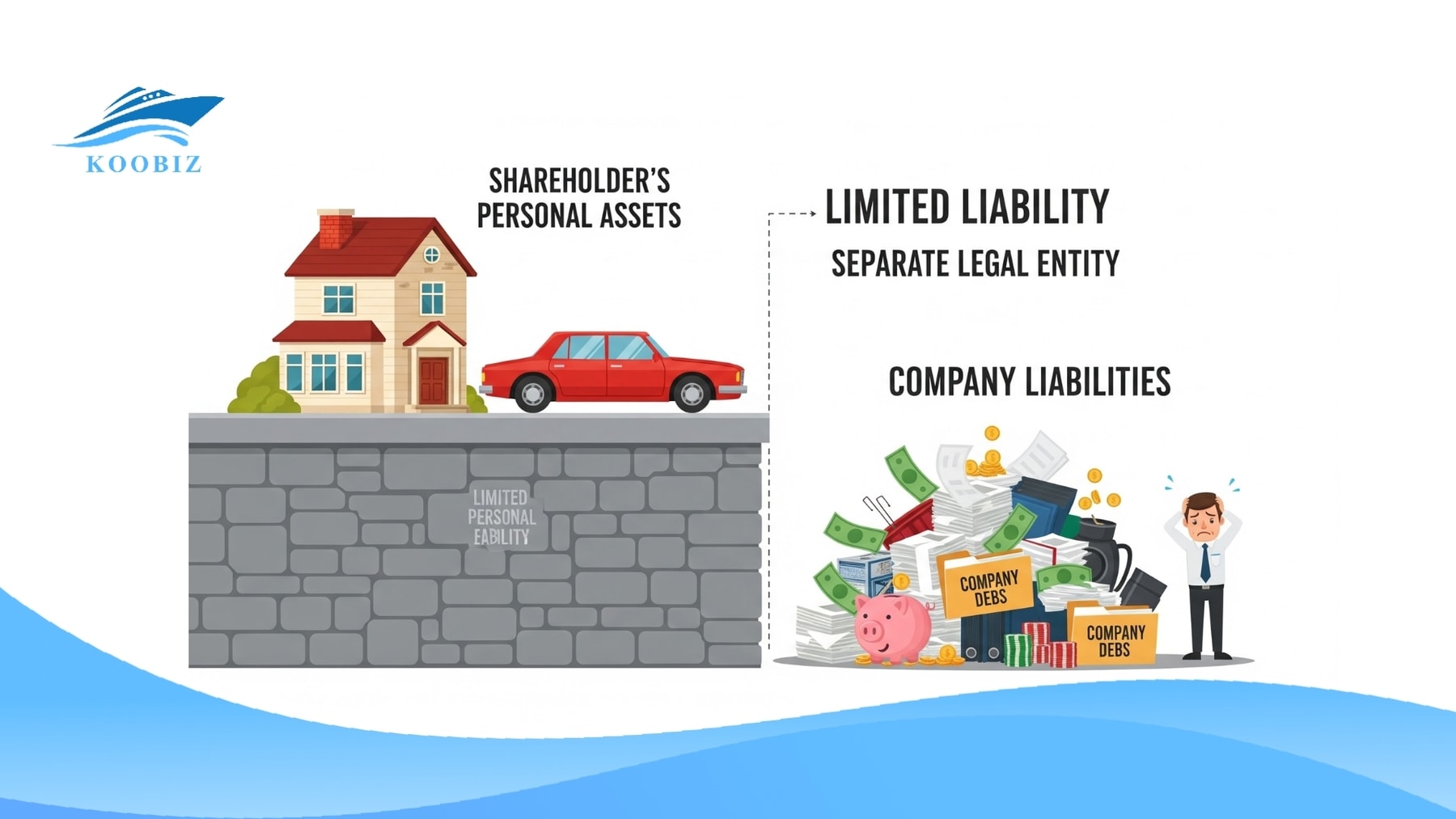
    The defining feature of a Pte Ltd is limited liability. If the business incurs debt or faces legal action, the financial liability of shareholders is limited only to the amount of capital they invested. Their personal assets, such as savings and property, are legally protected and cannot be used to settle company debts.

    Limited liability model protects personal assets
    Limited liability model protects personal assets

    Key Characteristics:

    • Ownership: Shares are held privately by no more than 50 shareholders.
    • Legal Identity: The company is taxed as a separate entity, distinct from the individual owners.
    • Suffix: The company name must end with “Pte. Ltd.” or “Private Limited.”
    • Transferability: Shares can be transferred to new owners, but cannot be offered to the general public.

    Why Choose a Pte Ltd? (The Benefits)

    Choosing a Pte Ltd structure is popular because it offers significant financial and legal protection compared to other entities.

    • Tax Incentives: Singapore offers attractive tax exemptions for new startups (SUTE) and a competitive corporate tax rate capped at 17%. Dividends paid to shareholders are also tax-free.
    • Limited Liability: Shareholders are not personally liable for business debts beyond their share capital, protecting personal wealth like homes and savings.
    • Credibility: The “Pte Ltd” suffix boosts brand image, making it easier to secure bank financing and build trust with suppliers and clients.
    • Perpetual Succession: The company has perpetual existence, meaning it continues to operate legally even if a shareholder passes away or resigns.
    • Capital Raising: It is easier to expand by issuing new shares to investors rather than relying solely on personal loans.

    The Downsides: Considerations Before You Register

    While a Pte Ltd offers robust protection, it comes with stricter regulations and higher operational costs compared to simpler business forms.

    • Higher Compliance Costs: You must hire a qualified Company Secretary within six months and often need professional accounting services, increasing overhead.
    • Administrative Burden: Directors are responsible for mandatory annual filings with ACRA and holding an Annual General Meeting (AGM). Failure to comply leads to penalties.
    • Complex Closing Process: Winding up or striking off a company is a more formal and lengthy legal process, unlike closing a Sole Proprietorship which is relatively simple.
    • Strict Rules: Directors must strictly adhere to the Singapore Companies Act, limiting the operational freedom found in sole proprietorships.

    Comparison: Pte Ltd vs. Sole Proprietorship vs. LLP

    Choosing the right entity depends on your risk tolerance and tax planning needs. The table below highlights the critical differences.

    Feature Pte Ltd Sole Proprietorship LLP
    Legal Status Separate Legal Entity Not separate (Same as owner) Separate Legal Entity
    Liability Limited to share capital Unlimited (Personal assets at risk) Limited to capital contribution
    Tax Rates Corporate Tax (Flat 0-17%) Personal Tax (Tiered 0-24%) Personal Income Tax (Partners)
    Compliance High (AGM, Secretary required) Low (Simple annual renewal) Medium (Annual declaration)
    Best For Scalable businesses & SMEs Low-risk, one-person biz Professional firms (Lawyers, etc.)

    Requirements to Set Up a Pte Ltd in Singapore

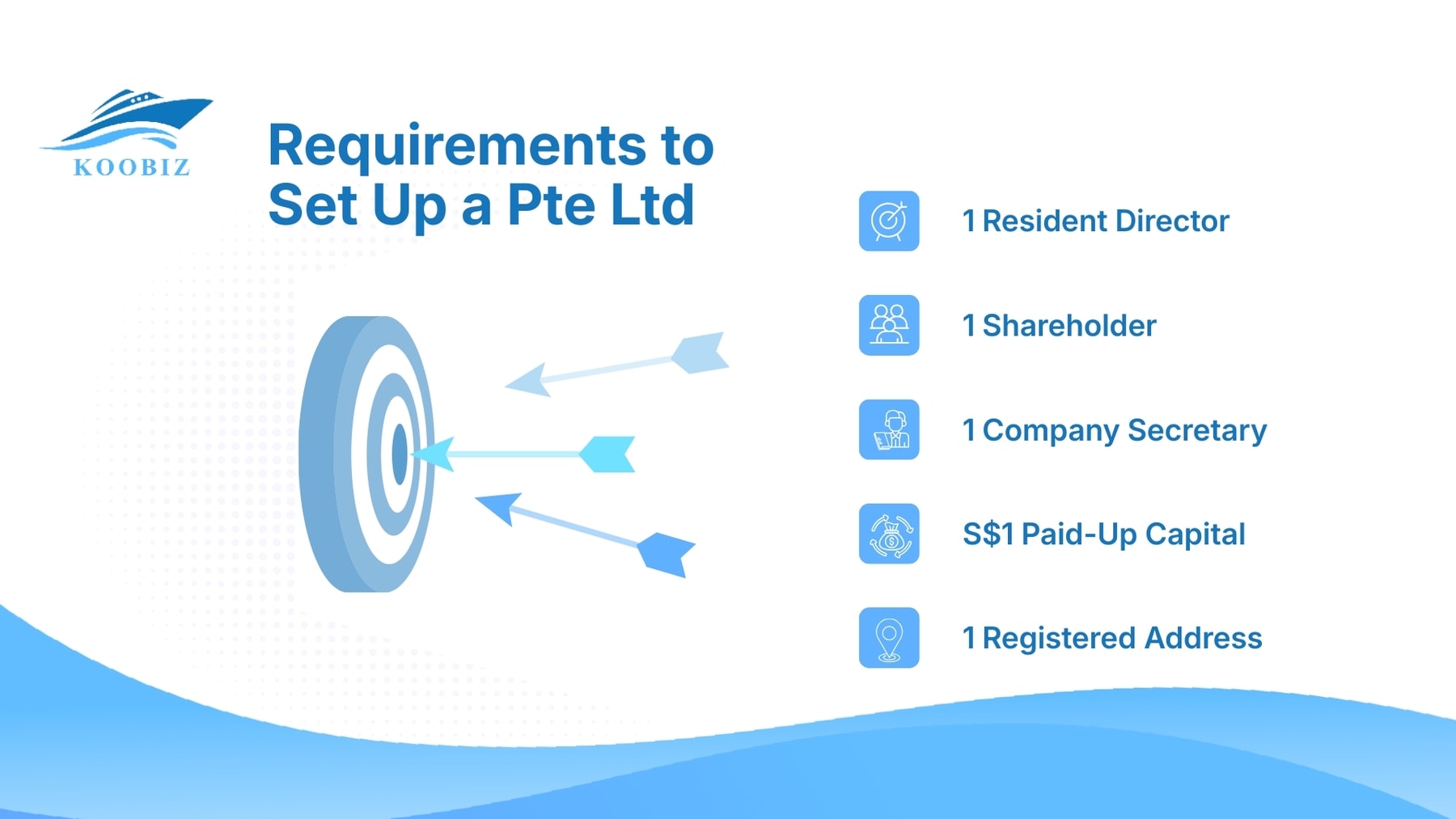
    To incorporate a company, you must meet five statutory requirements mandated by ACRA.

    Requirements to Set Up a Pte Ltd
    Requirements to Set Up a Pte Ltd
    • Resident Director: You need at least one director who is ordinarily resident in Singapore (Citizen, Permanent Resident, or EntrePass holder).
    • Shareholders: A minimum of 1 shareholder is required, up to a maximum of 50. 100% foreign ownership is permitted.
    • Company Secretary: You must appoint a qualified local Company Secretary within six months after incorporation. A sole director cannot also be the secretary.
    • Paid-Up Capital: The minimum paid-up capital is just S$1, which can be increased later.
    • Registered Address: A physical Singapore address is required for official mail; P.O. Boxes are not accepted.

    Quick Overview of the Registration Process

    The registration process is fully digital via ACRA’s BizFile+ portal and typically takes less than a day if all documents are in order.

    1. Name Reservation: Log in to BizFile+ to check and reserve your company name.
    2. Prepare Documents: Prepare the Constitution and have all directors and shareholders sign the Consent to Act (Form 45).
    3. Submit Application: Submit the incorporation details via Singpass. Foreigners without Singpass must engage a Registered Filing Agent (Corporate Service Provider). The government registration fee is S$300.
    4. Approval: Once approved, ACRA will issue a Unique Entity Number (UEN) and a digital BizProfile via email.

    Post-Incorporation: Staying Compliant

    Once your Pte Ltd is registered, you must adhere to key statutory deadlines to avoid penalties or legal issues.

    Immediate Actions

    • First Board Resolution: Holda meeting to confirm the appointment of directors, open a corporate bank account, and adopt the company seal (optional).
    • Issue Share Certificates:These serve as formal proof of ownership for shareholders.
    • CorpPass Registration: Set up CorpPass immediately; it is the digital key for all government transactions
    • Appoint Company Secretary: Must be done within 6 months after incorporation.

    Annual Filing Requirements

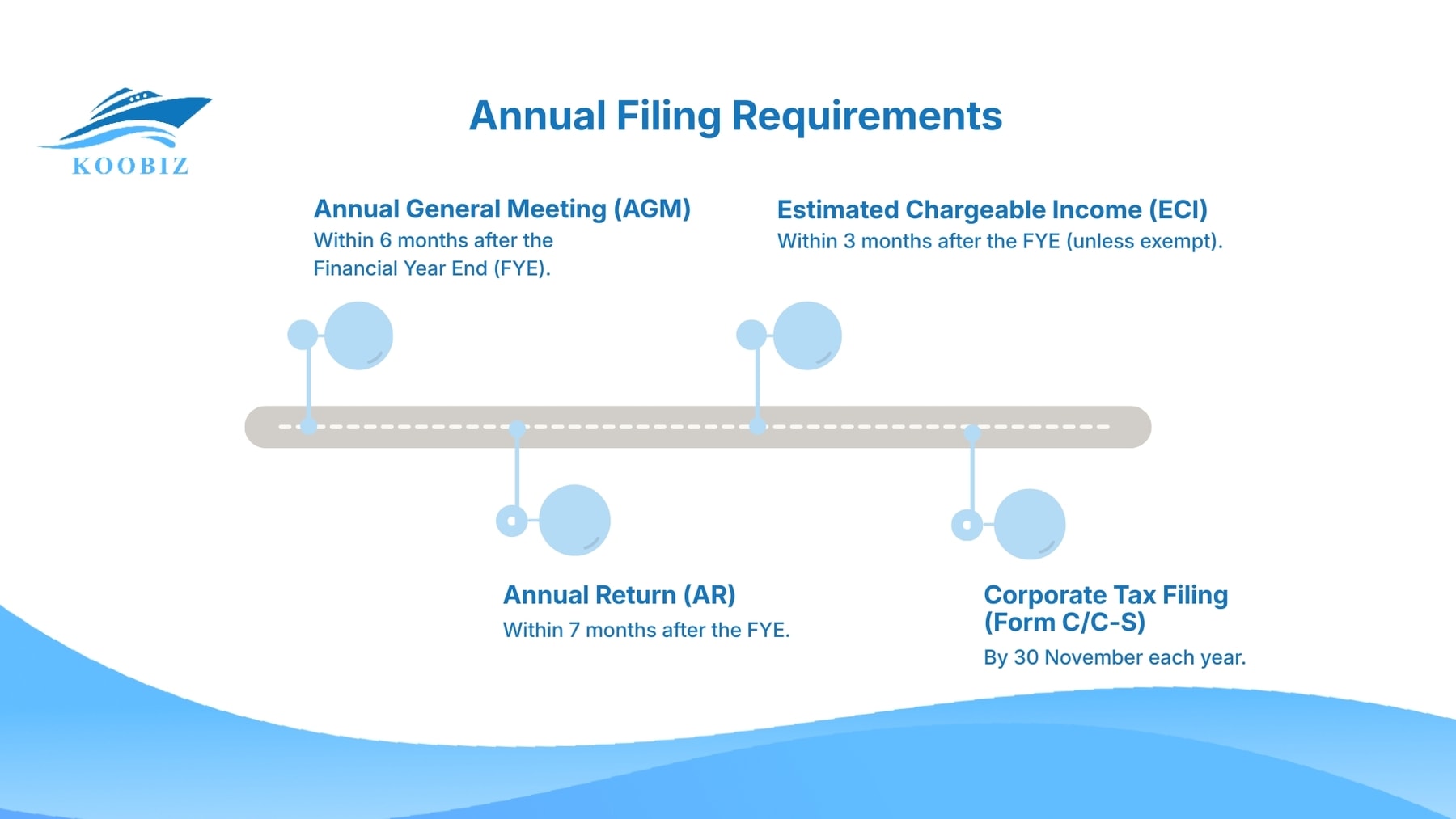
    You must file returns with two key government bodies each year: ACRA and IRAS.

    Annual tax return schedule
    Annual tax return schedule
    Authority Requirement Deadline
    ACRA (Accounting and Corporate Regulatory Authority) Annual General Meeting (AGM) Within 6 months after the Financial Year End (FYE).
    ACRA Annual Return (AR) Within 7 months after the FYE.
    IRAS (Inland Revenue Authority of Singapore) Estimated Chargeable Income (ECI) Within 3 months after the FYE (unless exempt).
    IRAS Corporate Tax Filing (Form C/C-S) By 30 November each year.

    Note: Most startups qualify as a “Small Company” and are exempt from audit if their annual revenue or assets are under S$10 million.

    [SUMMARIES]

    A Pte Ltd constitutes a separate legal entity that safeguards shareholders’ personal assets through limited liability while offering significant tax incentives, such as a capped 17% corporate tax rate and tax-free dividends.

    Incorporation requires meeting specific statutory criteria, including appointing at least one resident director and a qualified company secretary, possessing a registered local address, and having a minimum paid-up capital of S$1.

    Operational maintenance involves stricter ongoing compliance compared to sole proprietorships, necessitating mandatory Annual General Meetings (AGM) and timely filings with ACRA and IRAS to avoid legal penalties.

    [/SUMMARIES]